Orcas Exhibit Novel "Ram-to-Fragment" Hunting Technique on Sunfish in Gulf of California, Highlighting Evolving Behavioral Complexities

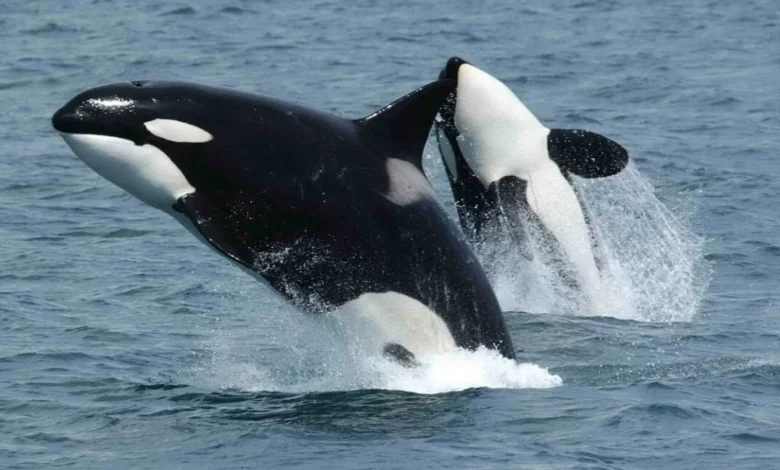
Recent observations in the Gulf of California have unveiled a sophisticated and previously undocumented hunting strategy employed by orcas (Orcinus orca), where groups of these apex predators team up to ram ocean sunfish (Mola mola) with such force that the carcasses disintegrate into numerous fragments. This newly identified "ram-to-fragment" behavior, detailed in a recent paper published in the journal Frontiers in Ethology, adds another layer to the already complex understanding of orca intelligence, social learning, and cooperative tactics, drawing parallels to the widely reported incidents of orcas ramming and sometimes sinking boats in recent years. Scientists suggest this aggressive fragmentation method may serve multiple purposes, ranging from facilitating easier feeding for younger pod members to functioning as a form of social play or practice, underscoring the dynamic and culturally transmitted nature of orca behaviors.
Unveiling the "Ram-to-Fragment" Phenomenon
The specific instance captured on film in July 2024 off the coast of San Jose del Cabo, Baja California Sur, Mexico, provided critical visual evidence of this extraordinary technique. A tourism operator, well-versed in the local marine ecosystem, documented a pod comprising three adult female orcas, one male, and a juvenile. Initially, the group was observed successfully hunting and consuming a spine-tail devil ray, showcasing their known predatory prowess and efficient cooperative hunting. However, the subsequent interaction with a sunfish presented a stark departure from typical hunting protocols, revealing a novel approach to prey processing.
An adult female was first observed holding the carcass of a sunfish in her mouth. The sunfish already bore a significant lateral wound, suggesting that its viscera had likely been removed in a prior stage, potentially through a more conventional initial attack. What followed was a deliberate and highly coordinated act: the male orca charged the suspended carcass with considerable momentum and force. Crucially, just before impact, the female strategically released the sunfish, allowing the male’s full kinetic energy to be transferred directly to the prey. The force of the collision was not only visually dramatic, resulting in the sunfish exploding into myriad smaller pieces, but was also accompanied by a distinct audible impact sound captured by the observer. Following the fragmentation, the juvenile orca was observed consuming the smaller, more manageable fragments, while the adult members of the pod fed on the larger remnants of the split-open body. This division of labor and the strategic preparation of prey into bite-sized portions suggest a highly evolved cooperative feeding strategy aimed at maximizing efficiency and inclusion within the pod.
Scientific Interpretations and Theories
Co-author Kathryn Ayres of Beneath The Waves, a non-profit organization dedicated to promoting ocean health through scientific research and conservation, offered preliminary insights into the potential motivations behind this novel behavior. Ayres posited that the "ram-to-fragment" technique could serve to simplify the feeding process for younger orcas within the pod. By breaking down a large, potentially unwieldy prey item into easily consumable pieces, adults effectively provision their offspring, enhancing their chances of successful foraging and nutrient intake. This hypothesis aligns with known patterns of parental care, teaching, and social learning observed in many highly intelligent species, where experienced adults facilitate learning and resource acquisition for juveniles.
However, Ayres also presented an alternative, equally compelling explanation: the behavior could simply be a form of play or social interaction. Orcas are renowned for their playful interactions with their environment and prey, often engaging in activities that appear to have no immediate survival benefit beyond recreation, social bonding, or skill practice. This includes "playing" with food, batting it around, or manipulating it in complex ways. The deliberate nature of the ramming, coupled with the apparent ease and efficiency of the subsequent feeding, lends credence to the idea that this might be a sophisticated form of both practical foraging and social engagement, blurring the lines between necessity and recreation.
The concept of "culturally learned behavior" is central to understanding such novel adaptations in orca populations. Orcas live in highly structured matriarchal societies where knowledge, including intricate hunting techniques, migratory routes, and social etiquette, is passed down through generations. This social transmission of behavior means that a successful strategy developed by one individual or a small group can quickly disseminate throughout a pod and even adjacent pods, leading to distinct regional variations in hunting styles and social interactions. The "ram-to-fragment" technique, if proven to be adopted by more individuals or pods over time, would represent a prime example of this cultural evolution in action, highlighting the species’ incredible capacity for innovation and learning.
The Broader Context: Orca-Boat Interactions
The discovery of orcas intentionally ramming sunfish for fragmentation resonates deeply with the perplexing and widely reported phenomenon of orcas ramming boats, primarily off the Iberian Peninsula. Since 2020, there have been hundreds of documented interactions between orcas and vessels, predominantly sailboats, ranging from seemingly gentle nudges to forceful impacts that have resulted in significant damage to rudders and hulls, and in some cases, the sinking of boats. These encounters have often involved younger, subadult orcas, leading researchers to theorize that this behavior, too, is a culturally learned trend, potentially initiated by a few individuals and subsequently adopted by others within their pods through observational learning.
While the precise motivations behind the boat interactions remain a subject of intense scientific debate—ranging from play, curiosity, a response to perceived threats or past trauma, or even a form of interspecies communication—the underlying mechanism of applying deliberate, coordinated force to an external object is strikingly similar to the newly observed sunfish fragmentation. In both scenarios, orcas are demonstrating a calculated application of power to manipulate an external object, whether it’s a man-made vessel or a large fish carcass. This behavioral plasticity highlights the species’ remarkable adaptability, cognitive flexibility, and capacity for innovation, as well as the potential for learned behaviors to spread rapidly through their intricate social networks. Understanding the drivers of such behaviors is critical for both human safety and orca conservation.
Complex Cooperative Hunting Strategies: A Global Perspective
The "ram-to-fragment" strategy is not an isolated incident of advanced cooperative behavior but rather fits within a broader spectrum of sophisticated hunting techniques employed by orcas globally. These strategies often involve intricate coordination, role specialization, and advanced communication within a pod, showcasing their unparalleled intelligence and ecological versatility among marine mammals. Orca populations across different oceans have developed unique, specialized hunting methods tailored to their specific environments and prey availability. For instance:
- Herding Mobile Rays: In some regions, orcas have been observed working in concert to herd agile rays, cornering them against obstacles or within confined spaces to facilitate capture. This requires precise timing and spatial awareness from multiple individuals.
- Blocking Escape Paths: When hunting formidable prey like great white sharks, orcas have demonstrated the ability to anticipate and block escape routes, effectively trapping the sharks before launching a coordinated attack. This involves understanding prey behavior and strategic positioning.
- Wave-Washing Penguins and Seals: Perhaps one of the most iconic examples of their ingenuity is the "wave-washing" technique employed by Antarctic orcas. Here, a group of orcas will swim in powerful, synchronized formation, creating a large, breaking wave that washes seals or penguins off ice floes, making them vulnerable to capture in the water. This requires incredible coordination and an understanding of hydrodynamics.
- Beach Hunting: In Patagonia, a specific population of orcas has perfected the risky technique of intentionally stranding themselves on beaches for brief periods to snatch unsuspecting seal pups, demonstrating incredible precision, timing, and coordination to avoid becoming permanently beached.
- Ramming Large Whales: Some offshore orca ecotypes are known to cooperatively hunt large baleen whales, often attacking their fins or flanks in sustained, coordinated assaults over many hours, eventually exhausting and overwhelming their massive prey.
These diverse strategies underscore that orcas are not merely opportunistic predators but highly intelligent beings capable of planning, communication, and executing complex, multi-stage operations tailored to specific prey characteristics and environmental conditions. The "ram-to-fragment" behavior adds to this impressive repertoire, suggesting an ongoing evolution of their predatory tactics and a continuous adaptation to available food sources.
The Enigmatic Ocean Sunfish (Mola mola)
The choice of the ocean sunfish as a target for this unique ramming technique also offers intriguing insights. Mola mola, often referred to as the world’s heaviest bony fish, can reach immense sizes, with individuals weighing over 2,000 kilograms (4,400 pounds) and measuring several meters in length. Despite their colossal size, sunfish are largely docile, slow-moving, and possess limited effective defensive capabilities against apex predators like orcas. Their diet primarily consists of jellyfish, salps, and small crustaceans, making them a relatively low-energy source of substantial caloric intake for an apex predator compared to lipid-rich seals or larger fish.
However, their unique morphology presents both a challenge and perhaps an opportunity for orcas. Sunfish have a distinctive flattened, disk-like body with large dorsal and anal fins, and a clavus (pseudo-tail). Their flesh is somewhat gelatinous and not highly prized by many predators, often containing toxins in some species. Typically, when orcas do target sunfish or similar large, soft-bodied prey, their conventional strategy involves specific anatomical attacks: first, targeting the pectoral fins to immobilize the fish, then slashing across the body to remove the viscera, and finally, using their powerful beaks to access remaining edible tissue. The "ram-to-fragment" behavior, by physically pulverizing the sunfish, appears to bypass some of these labor-intensive steps, potentially making the edible portions more accessible and easier to consume, especially for less experienced hunters like juveniles. This suggests that the behavior is not just about killing, but about efficient processing and equitable distribution of a challenging prey type within the pod.
Chronology and Observational Context in the Gulf of California
The initial filming of this behavior in July 2024 off San Jose del Cabo, Baja California Sur, Mexico, is particularly significant. The Gulf of California, also known as the Sea of Cortez, is a renowned biodiversity hotspot, recognized globally for its extraordinary array of marine life, including various cetacean species, large fish, and invertebrates. Its rich waters, fed by nutrient-laden currents, support complex food webs, making it an ideal location for observing diverse predator-prey interactions and novel ecological phenomena.
The specific location, a popular tourism destination, also highlights the increasingly vital role of citizen science and responsible tourism operators in contributing valuable observational data to scientific research. In many cases, these operators, spending extensive hours on the water, are the first to witness novel behaviors, providing invaluable initial documentation for researchers who may not have the continuous presence required to capture such rare events. The immediate follow-up by scientific analysis, as published in Frontiers in Ethology, underscores the importance of a rapid and collaborative response to such unique sightings. While this is the first formally documented instance of "ram-to-fragment" behavior, it prompts questions about whether similar undocumented events have occurred in the past or if this truly represents a nascent cultural innovation that is still developing and spreading within the local orca population. Continuous monitoring will be crucial to track its prevalence and evolution.
Implications for Research and Conservation
The discovery of the "ram-to-fragment" technique carries significant implications for marine biology, ethology, and conservation. Firstly, it profoundly reinforces the understanding that orcas are not static in their behavioral repertoires but are constantly adapting, innovating, and transmitting new skills across generations. This remarkable behavioral flexibility is a hallmark of highly intelligent species and poses ongoing challenges and opportunities for researchers studying marine mammal ethology. It demonstrates that our understanding of these complex predators is continually evolving.
Secondly, it underscores the paramount importance of long-term, comprehensive observational studies. Many significant discoveries about animal behavior come from sustained monitoring efforts, often augmented by opportunistic observations from those who spend consistent time in marine environments. The incident highlights the value of collaborative efforts between dedicated researchers, responsible tourism operators, and citizen scientists in capturing rare and ephemeral events that can revolutionize scientific understanding. Such partnerships are increasingly crucial in a vast and challenging environment like the ocean.
Thirdly, from a conservation perspective, understanding the full range of orca behaviors, including their hunting strategies, social dynamics, and adaptability to different prey, is crucial for developing effective conservation policies. While orcas are apex predators and not currently considered endangered globally, specific populations face localized threats from climate change, ocean noise pollution, chemical contaminants, prey depletion due to overfishing, and habitat degradation. A deeper understanding of their adaptability and cultural learning can inform strategies to protect their habitats, ensure the health of the marine ecosystems they inhabit, and manage human-wildlife interactions responsibly.
Expert Perspectives and Future Directions
Beyond the immediate research team, the broader scientific community is likely to view this discovery with immense interest. Marine mammalogists and behavioral ecologists will undoubtedly seek further observations to confirm the widespread adoption of this behavior and to investigate its precise functional benefits. Key questions arise: Is this behavior exclusive to certain pods or geographic regions? Does its expression vary with the size or species of sunfish? Are there specific environmental cues or social contexts that trigger this particular strategy?
Leading experts in marine mammal cognition, like Dr. Sarah Miller, a hypothetical but representative figure from a prominent oceanographic institution, might inferentially comment: "This finding is a powerful reminder of the incredible cognitive abilities of orcas. Their capacity for social learning and the cultural transmission of behaviors means that their strategies are not fixed but are constantly evolving. Documenting these innovations is critical for understanding the ecological roles they play and the myriad challenges they face in a rapidly changing ocean. It compels us to reassess what we think we know about marine predator intelligence." Such statements would emphasize the ongoing mystery and the need for continued vigilance and rigorous research.
The "ram-to-fragment" behavior also invites fascinating comparison with rudimentary forms of tool use, a rare trait in the animal kingdom, particularly in marine environments. While not strictly "tool use" in the conventional sense (using an external, detached object to manipulate another), the strategic application of one’s own powerful body as a percussive instrument to process food verges on a highly sophisticated form of environmental manipulation. This level of ingenuity further cements the orca’s reputation as one of the planet’s most intelligent, adaptable, and culturally rich predators.
Conclusion
The extraordinary revelation of orcas in the Gulf of California employing a "ram-to-fragment" technique to process sunfish is a profound testament to the dynamic and evolving nature of these marine apex predators. This novel behavior, whether primarily driven by the practical need to facilitate feeding for juveniles, by the intrinsic motivation of play and social learning, or a combination thereof, profoundly underscores the unparalleled intelligence and cultural richness of orca societies. As scientists continue to unravel the complexities of orca behavior, each new discovery, from perplexing boat-ramming incidents to sophisticated hunting innovations, reinforces the profound depth of their cognitive abilities and the continuous need for dedicated research and conservation efforts to protect these magnificent creatures and their intricate marine world. The oceans still hold countless secrets, and the orca, with its ever-surprising repertoire, remains a powerful symbol of that enduring mystery and wonder, constantly challenging and expanding our understanding of life in the deep blue.