The Peloponnese Awakening: How Ancient Myths and Modern Trails are Reshaping Greece’s Best Kept Secret

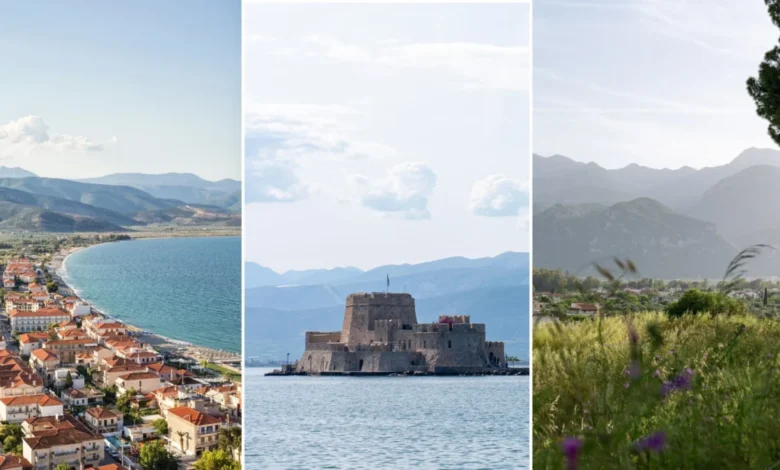
The emerald, sapphire, and cobalt-hued waters surrounding the Peloponnese Peninsula have long been a sanctuary for those seeking the quietude of the Mediterranean’s past. On the uninhabited island of Daskalio, the morning air is often filled with the sounds of 1970s Greek classics by Stelios Kazantzidis and Marinella, drifting from the BBQ boats that ferry visitors from the nearby village of Tolo. As Captain Giorgos Georgidakis grills souvlaki and his family serves spanakopita made from traditional recipes, the scene feels timeless. Yet, this region—roughly the size of Slovenia and home to 860 miles of jagged, twisting coastline—is currently standing at the precipice of a significant transformation.

For decades, the Peloponnese remained a well-kept secret among domestic travelers and a handful of intrepid foreigners. However, a convergence of high-profile cinematic interest, massive infrastructure investment, and a grassroots movement to preserve ancient culture is shifting the peninsula’s trajectory. According to data from the Bank of Greece, only three out of every 100 foreign travelers reached this westernmost peninsula in 2025, despite its proximity to Athens. With the release of Christopher Nolan’s blockbuster epic, The Odyssey, which revisits the 3,000-year-old Homeric tale, the world’s eyes are turning toward the rugged mountains and mythical landscapes where the king of Ithaca once roamed.
Cinematic Tourism and the Revival of Nostos
The impact of major film productions on local economies is a documented phenomenon, and the Peloponnese is the latest beneficiary. Shot partially on location in southernmost Messinia, The Odyssey has turned ancient sites into modern landmarks. Movie-set locations such as Nestor’s Cave, where Matt Damon’s Odysseus battles the Cyclops, and Methoni Castle, where Telemachus—played by Tom Holland—awaits his father’s return, have seen a surge in interest.

The film highlights two central Greek concepts: xenia, the sacred law of hospitality, and nostos, the theme of homecoming. These are not merely literary devices but lived realities for the people of the Peloponnese. Local residents and returning members of the diaspora are embracing a modern homecoming, investing their lives and capital back into the land to ensure its survival.
The Peloponnese Trail Network: A 1,200-Mile Vision
Central to the region’s revitalization is the Peloponnese Trail Network, the largest hiking infrastructure project in Greece. Spearheaded by community leaders like Nikos Stakias, the project aims to connect nearly 1,200 miles of ancient footpaths to the peninsula’s myriad small villages. Stakias, who spent two decades working in the hospitality sectors of England, Cyprus, and Athens, returned to his birthplace to champion a slower, more sustainable pace of life.

The network is designed to distribute tourism beyond the coastal hubs and into the heart of the five administrative regions. Travelers can now navigate 11 officially opened trails, including:
- The Argolis Trail: A 64-mile path in the northeast that leads hikers to Epidaurus, one of Greece’s best-preserved ancient theaters. This 4th-century BC site was once a sanatorium where theatrical performances were prescribed as a form of therapy.
- The Parnon Trail: A 143-mile circular route through the southeast, crossing the massive Mount Parnon range. This trail connects remote mountain villages like Pera Melana to the climbing mecca of Leonidio.
- The Ottoman-era Stone Paths: Trails that lead to the Palamidi fortress in Nafplio, offering panoramic views of the Argolic Gulf and the first capital of modern Greece.
These trails do more than provide exercise; they offer a sensory journey through wild rosemary, thyme, and sage, and through groves of lemon and olive trees that have sustained the population for millennia.

Economic Resilience and Luxury Development
The economic landscape of the Peloponnese has been a story of endurance. Following the devastation of World War II and the subsequent Greek Civil War, the region faced waves of emigration. The 2008 financial crisis further exacerbated this "brain drain," forcing young Greeks to seek opportunities in Northern Europe and Australia. Some villages, like Vamvakou in Laconia and Lasta in Arcadia, were reduced to single-digit populations, nearly becoming "ghost villages."
The tide began to turn with the vision of Captain Vassilis Constantakopoulos, a Messinian shipowner who sought to transform his birthplace into a premier travel destination. His development, Costa Navarino, served as an anchor for sustainable luxury. Today, that vision has expanded, with global brands such as W Hotels and Mandarin Oriental establishing a presence in 2022 and 2023. Projections for 2026 suggest that Four Seasons and Six Senses will follow, contributing to a luxury hub in Porto Heli that represents over €2 billion in planned investments.

This influx of capital is intended to do more than build hotels; it is designed to provide the infrastructure necessary to keep the local population from fleeing to Athens. By creating high-end hospitality jobs and supporting local agriculture, the region is attempting to balance modernization with the preservation of its rural character.
Preserving the Intangible: Language and Craft
In the town of Leonidio, tucked between towering limestone cliffs known as Kokkinovrachos (Red Rock), the fight to save the Peloponnese’s soul is being fought through education. Eleni Manou, an author and educator, is a direct descendant of the ancient Spartans. She is one of the few remaining speakers of Tsakonian, a rare dialect that predates modern Greek by three millennia and is derived directly from the Doric Greek spoken by Spartans.

"Language is not just words; it’s a culture alive," Manou emphasizes. With less than 2,500 people still carrying the dialect, Manou has published children’s books and organized workshops to ensure the Bronze Age language does not vanish. Her efforts are supported by the annual Melitzazz Festival in July, which celebrates Tsakonian traditions.
Similarly, in the village of Geraki, the ancient art of weaving is experiencing a resurgence. Chrysoula Stamatopoulou of Geraki Weaving leads a group of weavers who use vertical looms to create kilims—heirloom rugs featuring geometric designs like the "tree of life." This practice, which has been continuous in the village for 5,000 years, was once on the brink of extinction. Today, students from across Europe travel to Geraki to learn the craft for free, ensuring that the tradition—famously associated with Penelope in Homer’s Odyssey—remains a functional part of Greek heritage.

A Chronology of the Peloponnese’s Historical Significance
To understand the weight of the current revival, one must look at the timeline of the peninsula’s historical contributions:
- 1600–1100 BC: The Mycenaean civilization, the first advanced civilization in mainland Greece, flourishes in Argolis.
- 776 BC: The first Olympic Games are held in Olympia, in the western Peloponnese.
- 431–404 BC: The Peloponnesian War between Athens and Sparta reshapes the Greek world.
- 1249 AD: The Byzantine stronghold of Mystras is founded, later becoming the last center of Byzantine scholarship and culture.
- 1821 AD: The Greek War of Independence begins in the Mani Peninsula of the Peloponnese.
- 1829 AD: Nafplio is declared the first capital of the independent Greek state.
- 2010s–2020s: The "Revival of Vamvakou" and the establishment of the Peloponnese Trail Network signal a new era of community-led development.
Analysis of Implications: The Future of the Peninsula
The "homecoming" of the Peloponnese is a multifaceted event. For the travel industry, it represents the opening of a "new" Mediterranean frontier that offers an alternative to the over-tourism seen in the Cyclades. For the local population, it is an opportunity to reclaim an identity that was nearly lost to economic hardship.

However, the rapid influx of luxury brands and the spotlight of Hollywood bring challenges. Social entrepreneurs like Maria Monastirioti, who left the stress of Athens for the Peloponnese, argue that the "blessed land" must remain accessible. Her work in organizing gastronomic experiences—such as teaching visitors to make trachanokeftedes (fermented milk pasta balls)—focuses on agrotourism that benefits the village women directly.
The success of the Peloponnese will ultimately depend on whether it can maintain the delicate balance between the high-octane growth promised by international investors and the quiet, ankle-deep emerald waters of places like Daskalio. As the sanctuary of Helen and the battlegrounds of Hercules become the backdrop for 21st-century tourism, the peninsula is proving that its story is far from over. It is, as the locals suggest, a land in the midst of a grand nostos—a return to its rightful place at the heart of the Greek narrative.