Andy Burnham’s Cabinet Reshuffle Sees Lisa Nandy Remain as Culture Secretary Amidst Sectoral Flux

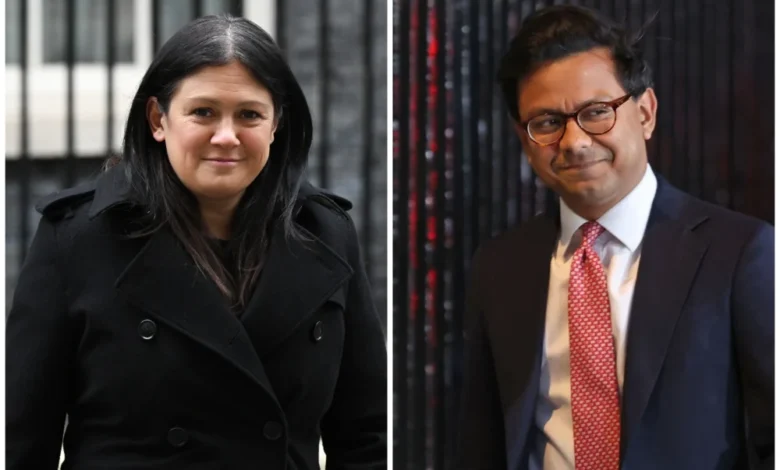
The United Kingdom’s cultural landscape, a dynamic tapestry woven from media, arts, and digital innovation, finds a measure of continuity as Prime Minister Andy Burnham, in a significant cabinet reshuffle, has opted to retain Lisa Nandy as the Secretary of State for Culture, Media and Sport. This decision signals a strategic move to maintain stability within a sector currently navigating a complex confluence of global economic pressures, technological advancements, and pivotal regulatory decisions. Nandy’s continued tenure underscores the government’s recognition of her experience in steering the department through a period marked by both considerable challenges and transformative opportunities.
Nandy, a Member of Parliament for Wigan since 2010, was first appointed to the prominent Culture portfolio in July 2024 by former Prime Minister Keir Starmer, a move that occurred shortly after the Labour party’s decisive general election victory. Her appointment at that time marked her as the twelfth minister to hold the post in less than a decade, a testament to the rapid ministerial turnover that has characterized the department in recent years. Despite this historical volatility, Nandy’s two-year tenure has already established her as one of the longest-serving ministers in the role, providing a much-needed period of sustained leadership. Prior to her elevation to Culture Secretary, Nandy had a notable career in shadow cabinet roles, serving as the Shadow Secretary of State for International Development and the Shadow Housing Minister, roles that equipped her with a broad understanding of public policy and governmental operations.
The period since Nandy’s initial appointment has been anything but tranquil for the UK’s screen sector. The industry has been grappling with the lingering economic fallout from the Hollywood writer and actor strikes, which significantly disrupted global production pipelines and talent availability. Compounding these issues has been the persistent challenge of post-pandemic inflation, which has eroded profit margins and increased operational costs across the board. Furthermore, a noticeable downturn in the advertising market has placed considerable pressure on traditional media outlets, while broadcasters and streamers have responded with significant budget cuts, impacting commissioning and investment in new content.
In this challenging environment, Nandy has been at the forefront of several high-stakes policy initiatives. A central focus of her departmental remit has been the intricate process of renewing the BBC’s Royal Charter. This comprehensive review encompasses not only the future governance structure of the public service broadcaster but, critically, its funding mechanism. The outcome of this renewal will have profound implications for the BBC’s ability to operate and compete in an increasingly fragmented media landscape. Beyond the BBC, Nandy has been actively engaged with the significant corporate restructuring within the media conglomerates, most notably the proposed merger of Paramount and Warner Bros. Discovery’s UK operations. Nandy has publicly stated her “mindedness to intervene” in this deal, indicating a government stance focused on safeguarding competition and public interest within the UK media market. The sheer scale of these impending mergers and acquisitions underscores the dynamic and often consolidated nature of the modern media industry.
Beyond the Paramount/Warner Bros. Discovery discussions, the UK media sector has witnessed other seismic shifts. Comcast-owned Sky’s recent, yet to be regulatorily approved, acquisition of the public service broadcaster ITV represents another monumental development. This move has the potential to reshape the landscape of free-to-air television and public service broadcasting in the UK. Simultaneously, the impending spin-off of ITV’s highly successful production arm, ITV Studios, has generated considerable interest, with multiple potential bidders reportedly circling the lucrative entity, signalling a strategic divestment aimed at unlocking shareholder value and allowing ITV to focus on its core broadcasting operations.
In a notable strategic alignment with the evolving technological landscape, Prime Minister Burnham has also appointed Kanishka Narayan as the inaugural Minister for Artificial Intelligence (AI). This new ministerial portfolio, jointly situated within the Cabinet Office and the Department for Business, Innovation, Science and Trade, reflects the government’s explicit commitment to fostering AI development and integration across the economy and society. Narayan’s prior experience as Parliamentary Under-Secretary of State in the Department for Science, Innovation and Technology, coupled with his election as the MP for the Vale of Glamorgan in July 2024, positions him to lead this critical new area of policy.
The establishment of a dedicated AI minister signifies a proactive approach to harnessing the potential of artificial intelligence while simultaneously addressing its ethical, societal, and economic implications. This move aligns with a global trend of governments recognizing AI as a transformative force that requires focused policy attention and strategic investment. The joint departmental oversight of this new role suggests a cross-governmental approach to AI, aiming to integrate its development and regulation across various sectors, from innovation and trade to public services and national security.
Continuity Amidst Change: Nandy’s Enduring Role
Lisa Nandy’s reappointment as Culture Secretary is a significant indicator of Prime Minister Burnham’s priorities. The decision to keep her in post suggests a desire for experienced leadership to navigate the ongoing complexities of the cultural sector. Her understanding of the challenges faced by public service broadcasters, the creative industries, and the digital economy is seen as invaluable. The government will be looking to her to continue the work of ensuring a robust and competitive media environment that serves the public interest.
Chronology of Key Events and Appointments
- July 2024: Labour wins the general election. Keir Starmer appoints Lisa Nandy as Secretary of State for Culture, Media and Sport.
- Post-July 2024: Nandy oversees ongoing discussions regarding the BBC’s Royal Charter renewal and the Paramount/Warner Bros. Discovery merger.
- Recent Months: Sky announces its intention to acquire ITV; ITV prepares for the spin-off of ITV Studios.
- Current Period: Prime Minister Andy Burnham announces a cabinet reshuffle, retaining Lisa Nandy as Culture Secretary. Kanishka Narayan is appointed as the first Minister for AI.
Sectoral Challenges and Supporting Data
The UK’s creative industries are a significant contributor to the national economy, generating billions of pounds in revenue and employing hundreds of thousands of people. However, recent economic headwinds have presented substantial obstacles.
- Screen Sector Output: The UK screen sector, encompassing film, television, and video games, has historically been a strong performer. However, data from industry bodies like the British Film Institute (BFI) and Pact (the Association of Commercial Broadcasters and Indies) have indicated potential slowdowns in production investment and a contraction in advertising revenue for broadcasters in the last fiscal year. Specific figures are expected to be released in upcoming industry reports, but anecdotal evidence points to a tightening of budgets.
- Inflationary Impact: Inflationary pressures have increased the cost of production materials, studio space, and talent. For example, reported increases in the cost of goods and services by the Office for National Statistics (ONS) have directly impacted production budgets, often by as much as 5-10% year-on-year for certain expenditures.
- Advertising Market: The advertising market, a crucial revenue stream for many media companies, has seen a decline in spending by brands, particularly in the latter half of the previous fiscal year. Reports from bodies like the Institute of Practitioners in Advertising (IPA) have highlighted a cautious approach from advertisers due to economic uncertainty.
- Broadcaster and Streamer Budgets: Facing these economic pressures, many broadcasters and streaming services have announced plans to reduce their content spending. This has a ripple effect throughout the production ecosystem, impacting independent production companies and their ability to secure commissions.
Official Responses and Inferences
While specific statements from all parties involved in the mergers and acquisitions are not yet public, the government’s approach, as articulated through Nandy’s statements and the creation of the AI ministry, suggests a clear set of priorities.
- Government Stance on Media Mergers: Nandy’s statement about being "minded to intervene" in the Paramount/Warner Bros. Discovery deal signals a government intent to scrutinize large-scale media consolidation. The Competition and Markets Authority (CMA) will likely play a key role in assessing the impact of such mergers on market competition, consumer choice, and the diversity of media ownership. The Sky-ITV deal will also undergo rigorous regulatory scrutiny.
- Commitment to Public Service Broadcasting: The ongoing dialogue around the BBC’s Royal Charter renewal indicates a government commitment to the principle of public service broadcasting. The challenge will be to ensure the BBC remains relevant and financially sustainable in a rapidly evolving digital landscape.
- AI Strategy: The appointment of a dedicated Minister for AI underscores the government’s ambition to position the UK as a global leader in AI. This will likely involve policies aimed at research and development, talent acquisition, ethical guidelines, and the responsible deployment of AI technologies across various sectors. Statements from the Department for Business, Innovation, Science and Trade are expected to elaborate on the specific objectives of this new ministerial focus.
Broader Impact and Implications
Lisa Nandy’s continued leadership at the Department for Culture, Media and Sport provides a vital element of stability in a sector undergoing profound transformation. Her experience will be crucial in navigating the intricate regulatory processes surrounding the major media deals, ensuring that the UK’s media landscape remains diverse, competitive, and serves the interests of the public. The government’s approach to these mergers will have long-term implications for content creation, media pluralism, and consumer access to information and entertainment.
The establishment of the AI ministry and the appointment of Kanishka Narayan signal a proactive stance on a technology that promises to reshape industries and society. The success of this initiative will depend on the government’s ability to foster innovation while establishing a robust ethical and regulatory framework. This dual focus is critical to maximizing the benefits of AI and mitigating potential risks, such as job displacement, algorithmic bias, and data privacy concerns.
In essence, Prime Minister Burnham’s decisions regarding the Culture portfolio and the new AI ministry reflect a strategic vision for the UK’s cultural and technological future. The continuity in the Culture Secretary role, coupled with the dedicated focus on AI, suggests a government intent on both preserving established strengths and embracing future opportunities, all while navigating a complex global economic and technological environment. The coming months will be pivotal as these policy initiatives begin to take shape and their impact on the UK’s vibrant cultural and digital sectors becomes clearer.