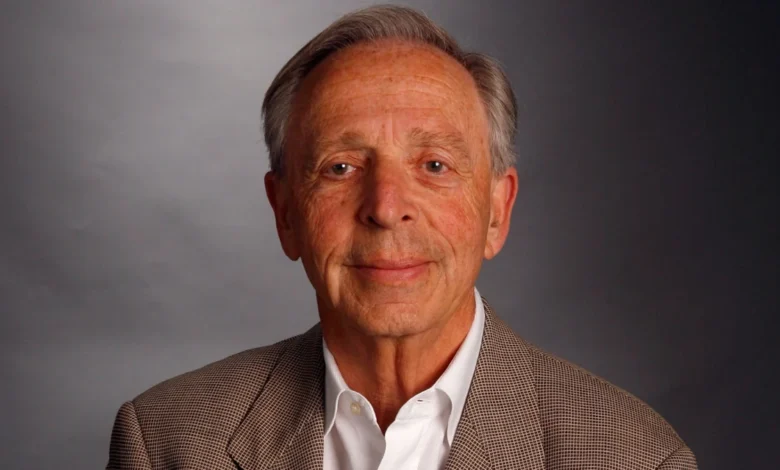
Peter Lassally, a legendary producer whose keen insight and steady hand guided some of television’s most iconic late-night programs, including The Tonight Show Starring Johnny Carson and The Late Show with David Letterman, has died. He was 93. His passing on Sunday, July 19, marks the end of an era for a man who was instrumental in shaping the landscape of late-night television for decades.
Lassally’s influence extended beyond the Carson and Letterman eras. He also produced The Late Late Show with Craig Ferguson, continuing his impactful work in the genre until his retirement at the age of 82, coinciding with Ferguson’s departure and the subsequent handover to James Corden. His enduring presence in the industry, even into his later years, underscored his passion and dedication to the craft of television production.
A Life Forged in Adversity and Resilience
Lassally’s remarkable journey began not in the glitz of Hollywood, but amidst profound hardship. Born in Hamburg, Germany, in 1932, to a Jewish family, his childhood was irrevocably altered by the rise of the Nazi regime. The family’s desperate flight from persecution led them to the Netherlands, where his sister shared a classroom with Anne Frank. The shadow of the Holocaust loomed large, and during World War II, Lassally, his mother, and his sister endured the unimaginable horrors of imprisonment. They were held first in the Westerbork transit camp and later in the Theresienstadt concentration camp.
Against all odds, Lassally and his family survived the Holocaust. In 1947, they immigrated to the United States, seeking refuge and a new beginning in New York. This harrowing experience, while a source of immense trauma, also instilled in him a profound appreciation for life and a remarkable resilience that would define his character and career.
From Usher to Executive Producer: A Television Dynasty
Lassally’s entry into the world of entertainment was humble yet auspicious. He began his career as an NBC page and an usher at the famed Radio City Music Hall, a period he shared with future television icon Regis Philbin. This early exposure to the inner workings of broadcast television ignited a lifelong passion. Following a stint in radio, he found his footing working for the immensely popular entertainer Arthur Godfrey, learning the nuances of live performance and audience engagement.
His pivotal role in late-night television began in 1972 when he joined The Tonight Show Starring Johnny Carson. He quickly ascended the ranks, eventually becoming the executive producer of the program. Under his stewardship, The Tonight Show solidified its status as a cultural touchstone, a nightly ritual for millions of Americans. Carson’s inimitable style and Lassally’s expert guidance created a chemistry that became synonymous with late-night excellence.
When Johnny Carson bid farewell to The Tonight Show in 1992, Lassally transitioned to work with David Letterman, initially on NBC’s Late Night with David Letterman. He was a driving force behind Letterman’s momentous move to CBS in 1993, which culminated in the launch of The Late Show with David Letterman. This move was a significant shift in the late-night landscape, and Lassally’s role in facilitating it was crucial. He also played a key role in championing Craig Ferguson for the host position of The Late Late Show, recognizing Ferguson’s unique comedic voice and potential.
The "Late-Night Whisperer": A Talent for Cultivating Stars
Lassally earned the moniker "the late-night whisperer" for his uncanny ability to nurture talent and guide hosts to their greatest potential. He was more than just a producer; he was a confidante, a mentor, and a trusted advisor to many of the era’s most celebrated comedians. Figures like Garry Shandling and Jon Stewart, who had a holding deal with Letterman’s company, benefited from Lassally’s keen observations and strategic guidance.
Shandling, in a 2012 interview with NPR, reflected on Lassally’s exceptional skill: "One of Peter’s real strengths is getting the host to understand how to listen, how to ask the questions that an audience might want to hear, and to listen to the answer and to not be thinking ahead with the joke." This emphasis on active listening and genuine engagement was a hallmark of Lassally’s producing philosophy, contributing to the authenticity and depth of the interviews he oversaw.
Lassally himself articulated his approach to working with talent in a 2014 interview with the Television Academy: "One of the qualities that get me through showbusiness is I respect talent, I’m in awe of talent. If you are really talented, I will put up with your craziness, because if you’re that talented you’re not a normal person, there’s something wacky about you. It helped me through at least 50 years of showbusiness in that I was willing to put up with craziness if I respected you and I’ve worked for some great broadcasters starting with Godfrey and then Johnny Carson and David Letterman and Tom Snyder." This philosophy allowed him to foster environments where creativity could flourish, even amidst the eccentricities that often accompany genius.
A Legacy of Awards and Family
Lassally’s illustrious career was recognized with numerous accolades. He was nominated for 13 Emmy Awards throughout his career, securing two wins: in 1992 for his work on The Tonight Show, and in 1994 for The Late Show. These awards are a testament to his consistent excellence and the profound impact he had on the television industry.
Beyond his professional achievements, Lassally’s family was the cornerstone of his life. He is survived by his children from his marriage to Alice Lassally: his daughter Andrea Gibbin and his son Tom Lassally, who himself is a prominent figure in the industry, working at 3 Arts. He also leaves behind four cherished grandchildren: Walker Gibbin, Eloise Gibbin, Annabel Lassally, and Owen Lassally.
The family released a poignant statement reflecting on Lassally’s life and values: "For Peter, family represented something profoundly meaningful. Having survived the Holocaust and rebuilt his life in America, he never took for granted the opportunity to create the kind of loving, secure family that war had threatened to destroy. Watching his children build lives of their own and seeing his grandchildren grow into adulthood brought him immense joy. He delighted in family gatherings, thoughtful conversations, and the simple pleasure of being together. Those closest to him knew that no professional accomplishment ever meant more to him than the people around his own table."
This statement powerfully underscores the man behind the celebrated producer. His experiences of profound loss and survival clearly shaped his deep appreciation for the bonds of family and the quiet joys of domestic life.
The family further elaborated on his enduring spirit: "Peter built a life defined not by the horrors he endured as a child, but by resilience, generosity, curiosity, and optimism. Friends often remarked on his wit, humility, and remarkable ability to make others feel at ease. His life stood as a testament to both survival and reinvention—an immigrant who escaped unimaginable persecution and went on to influence one of America’s most beloved cultural institutions." This encapsulates the extraordinary trajectory of his life, from refugee to a titan of American entertainment.
A Look Back at a Historic Career
Peter Lassally’s career spanned a transformative period in television history. His involvement with The Tonight Show Starring Johnny Carson from 1972 to 1992 placed him at the epicenter of late-night television’s golden age. Carson’s tenure, during which Lassally served as executive producer, is widely considered one of the most successful and influential periods in the history of the genre. The show consistently dominated ratings and set the standard for celebrity interviews, topical humor, and overall entertainment value. Lassally’s ability to maintain the show’s consistent quality and adapt to evolving comedic sensibilities was crucial to its enduring success.
The transition to David Letterman’s camp marked another significant chapter. Lassally’s role in the move to CBS was not merely logistical; it was strategic. He understood the potential of Letterman’s unique brand of humor and his ability to connect with a different demographic. The Late Show with David Letterman became a formidable competitor, pushing the boundaries of late-night television with its innovative format and Letterman’s signature blend of irony and intelligence. Lassally’s support for Ferguson’s tenure on The Late Late Show further demonstrated his commitment to diverse voices and comedic approaches within the late-night format.
His relationships with comedians extended beyond the on-air talent. He was a trusted sounding board for many, including Garry Shandling, whose own groundbreaking work on shows like The Larry Sanders Show often explored the inner workings of television production. Lassally’s insights into the dynamics of the industry and the pressures faced by performers undoubtedly contributed to his reputation as a supportive and understanding figure.
Broader Impact and Enduring Influence
The legacy of Peter Lassally is deeply intertwined with the evolution of American popular culture. Late-night television, under his guidance, served as a vital platform for comedy, political commentary, and cultural discourse. He helped shape the comedic voices of generations and provided a nightly escape and source of information for millions.
His personal story of survival and reinvention is also a powerful narrative of the American immigrant experience. Having escaped the horrors of Nazi persecution, he not only rebuilt his life but also contributed significantly to the cultural fabric of his adopted country. His success is a testament to his indomitable spirit and his capacity for growth and adaptation.
The "late-night whisperer" may have left the airwaves, but his influence will continue to resonate. The standards of excellence he helped establish, the talents he championed, and the stories he helped tell will undoubtedly continue to inspire future generations of television producers and comedians. His passing is a loss to the entertainment industry, but his remarkable life and enduring contributions will be remembered and celebrated.