A groundbreaking experiment conducted by a PhD student at the University of Sydney has successfully synthesized cosmic dust from scratch, offering unprecedented insights into the chemical origins of life. By meticulously recreating the extreme conditions found in the vicinity of stars and supernova remnants within a laboratory setting, Linda Losurdo, a candidate in materials and plasma physics, has managed to produce carbon-rich dust that mirrors the composition of material drifting through interstellar space. This pioneering research, published in the esteemed The Astrophysical Journal of the American Astronomical Society, has the potential to revolutionize our understanding of how the fundamental chemical ingredients for life might have emerged long before the formation of Earth.
Simulating the Cosmos in a Bottle
The core of Losurdo’s experiment involved a controlled simulation of the energetic environment prevalent in the cosmos. She combined three key gases: nitrogen, carbon dioxide, and acetylene. These elements were chosen for their abundance in astrophysical environments and their crucial role in the formation of complex molecules. The carefully prepared gas mixture was then subjected to a powerful electrical charge, generating a plasma known as a glow discharge. This process mimics the intense energy fluxes that occur near young, massive stars or in the aftermath of stellar explosions, events that are primary factories for cosmic dust.
The electrical stimulation effectively fragmented the initial gas molecules, allowing their constituent atoms and smaller molecular fragments to recombine. Over the course of approximately one hour, this energetic dance of atoms led to the formation of new, larger, and more complex chemical structures. This newly synthesized material gradually settled onto silicon chips strategically placed within the laboratory apparatus. The resulting deposit was a fine, carbon-rich dust, strikingly similar in appearance and composition to the interstellar dust particles that astronomers observe and study.
Cosmic Dust: A Cradle for Life’s Building Blocks
The significance of this laboratory-produced dust lies in its chemical makeup. It contains complex combinations of carbon, hydrogen, oxygen, and nitrogen—collectively known as CHON molecules. These CHON elements are the fundamental building blocks of organic matter and are essential components of all known life. The presence of these molecules in the laboratory dust provides compelling evidence that the very seeds of life could have been sown in the harsh, energetic environments of deep space, predating the existence of our solar system.
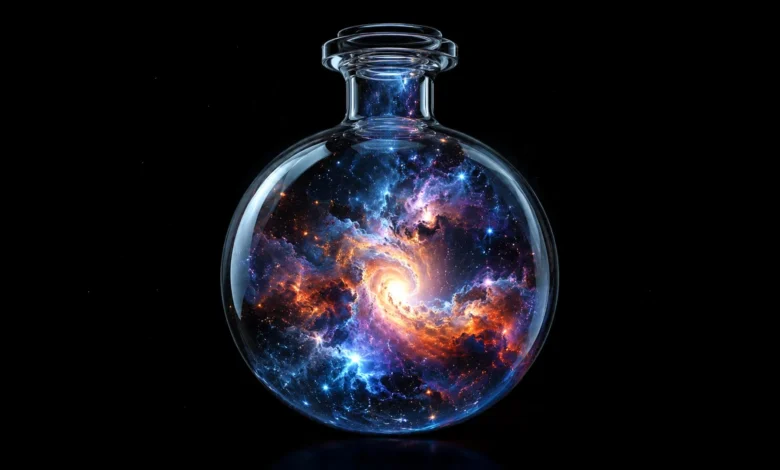
"We no longer have to wait for an asteroid or comet to come to Earth to understand their histories," Ms. Losurdo explained. "You can build analogue environments in the laboratory and reverse engineer their structure using the infrared fingerprints. This can give us huge insight into how ‘carbonaceous cosmic dust’ can form in the plasma puffed out by giant, old stars or in cosmic nurseries where stars are being born and distribute these fascinating molecules that could be vital for life. It’s like we have recreated a little bit of the Universe in a bottle in our lab."
The Infrared Fingerprint: A Cosmic Signature
A critical aspect of Losurdo’s research involved verifying the authenticity of the synthesized dust. In space, astronomers identify and characterize different types of cosmic dust by analyzing the infrared light they emit. Each type of molecule and its arrangement possesses a unique spectral signature in the infrared range, much like a human fingerprint. These "infrared fingerprints" allow scientists to deduce the chemical composition and structure of celestial materials.
Remarkably, the laboratory-produced dust yielded the same distinctive infrared signatures observed in real cosmic dust samples found in space. This precise match is a strong validation of the experiment’s success, indicating that the simulated conditions accurately replicate the processes believed to occur in actual cosmic environments. This ability to generate a tangible analogue allows researchers to bypass the limitations of direct observation and gain a deeper understanding of the chemical evolution of interstellar matter.
Tracing the Ancestry of Terrestrial Life
The question of how life originated on Earth remains one of science’s most profound mysteries. Several hypotheses exist, including the possibility that the first organic molecules formed on Earth itself, or that they were delivered to our planet via comets, asteroids, and meteorites. The latter scenario is particularly compelling, as evidence suggests that early Earth was subjected to a heavy bombardment of extraterrestrial objects.
Between approximately 4.56 billion and 3.5 billion years ago, Earth experienced a period of intense impact events. Scientists theorize that these objects, originating from asteroids and comets, carried significant quantities of organic material, potentially seeding the nascent planet with the precursors to life. However, the exact origin and the specific processes that created this extraterrestrial organic material have remained elusive.
Losurdo’s work directly addresses this uncertainty. "Covalently bonded carbon and hydrogen in comet and asteroid material are believed to have formed in the outer envelopes of stars, in high-energy events like supernovae, and in interstellar environments," Ms. Losurdo stated. "What we’re trying to understand are the specific chemical pathways and conditions that incorporate all of the CHON elements into the complex organic structures we see in cosmic dust and meteorites."
Recreating Extreme Conditions: The Laboratory Apparatus
The meticulous experimental setup was a collaborative effort between Linda Losurdo and her supervisor, Professor David McKenzie, a renowned figure in plasma physics. The process began by evacuating air from specialized glass tubes using a vacuum pump, thereby approximating the near-emptiness of space.
Following this, the tubes were filled with the precisely measured mixture of nitrogen, carbon dioxide, and acetylene. For an hour, this gaseous environment was subjected to a potent electrical potential of approximately 10,000 volts. This high voltage generated a glow discharge plasma, a state of matter where gases are ionized and highly energetic. The intense energy within the plasma acted as a catalyst, breaking apart the original molecules and initiating the formation of new, more complex chemical bonds.
Implications for Astrobiology and Planetary Science
The ability to synthesize cosmic dust in a controlled laboratory environment opens up a wealth of new research avenues. It allows scientists to investigate phenomena that are difficult or impossible to study directly in space, such as the precise intensity of ion impacts and the range of temperatures involved in dust formation.
"By making cosmic dust in the lab, we can explore the intensity of ion impacts and temperatures involved when dust forms in space," Professor McKenzie commented. "That’s important if you want to understand the environments inside cosmic dust clouds, where life-relevant chemistry is thought to be happening. This also helps us interpret what a meteorite or asteroid fragment has been through over its lifetime. Its chemical signature holds a record of its journey, and experiments like this help us learn how to read that record."
Building a Cosmic Fingerprint Library
Beyond shedding light on the origins of life’s ingredients, Losurdo’s research has a broader implication for astronomical observation. The team plans to develop a comprehensive database of infrared fingerprints generated by various types of laboratory-created cosmic dust. This database will serve as an invaluable tool for astronomers.
By comparing the spectral signatures observed in distant star-forming regions or around dying stars with the laboratory-generated fingerprints, astronomers can pinpoint the locations where specific types of dust are being produced. This will enable them to reconstruct the physical and chemical processes occurring in these celestial environments with greater accuracy.
Furthermore, this library of fingerprints will significantly enhance scientists’ ability to decipher the histories embedded within meteorites and asteroid fragments. The chemical composition of these extraterrestrial samples acts as a chronicle of their journeys through space, recording details about the temperatures, radiation levels, and particle impacts they endured. Losurdo’s work provides a key to unlocking these ancient cosmic narratives.
A Milestone in Understanding Our Cosmic Heritage
The successful synthesis of cosmic dust in a Sydney laboratory represents a significant milestone in our quest to understand our cosmic heritage. It provides a tangible link between the vast, energetic processes of the universe and the fundamental chemistry that underpins life on Earth. This research not only offers crucial clues about the early stages of solar system formation but also contributes to the ongoing debate about the potential for life beyond our planet.
Losurdo’s exceptional work was recognized with an award for best presentation at the international Annual Meeting of the Meteoritical Society held late last year, underscoring the importance and impact of her research within the scientific community.
The authors of the study reported no competing interests. They expressed gratitude for support from the University of Sydney node of Microscopy Australia and acknowledged funding from the Australian Research Council for this groundbreaking endeavor.