Best Cloud Monitoring Tools
Top Cloud Monitoring Tools: Optimizing Performance, Security, and Cost
Cloud monitoring is no longer a luxury; it’s a critical necessity for any organization leveraging cloud infrastructure. Effective cloud monitoring tools provide deep visibility into the health, performance, security, and cost of cloud resources. This visibility is paramount for troubleshooting issues proactively, ensuring application availability, optimizing resource utilization, and maintaining a robust security posture. The best cloud monitoring tools offer a comprehensive suite of features that span infrastructure monitoring, application performance monitoring (APM), network monitoring, security monitoring, and cost management. Choosing the right tools depends heavily on specific needs, existing technology stack, budget, and technical expertise. This article delves into the leading cloud monitoring solutions available today, highlighting their strengths, key features, and ideal use cases, to empower organizations in selecting the most suitable options for their unique cloud environments.
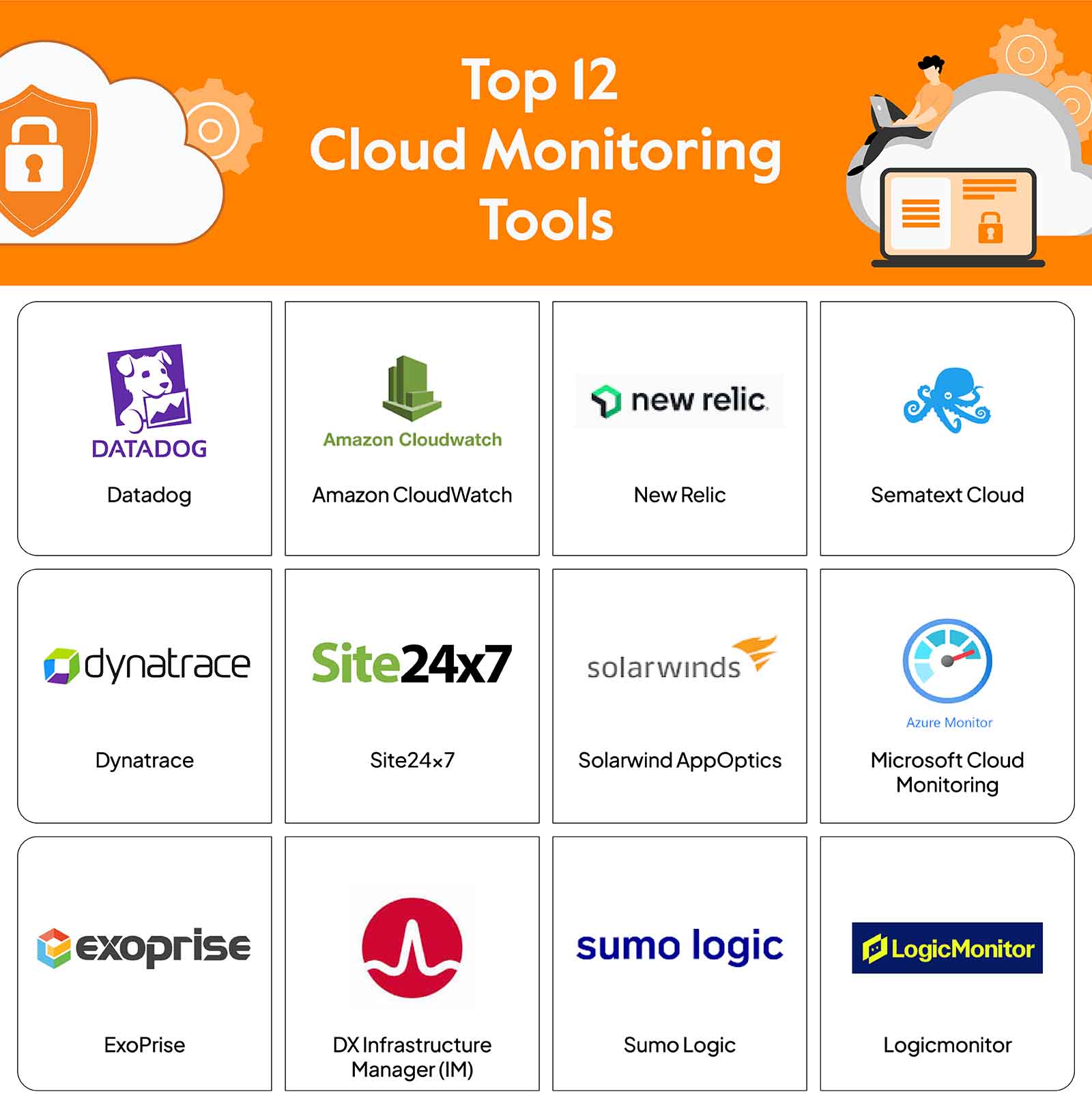
Datadog stands out as a unified observability platform that excels in providing a single pane of glass for monitoring cloud infrastructure, applications, logs, and security. Its strength lies in its extensive integration capabilities with a vast array of cloud services and technologies, including AWS, Azure, Google Cloud, Kubernetes, Docker, and numerous SaaS applications. Datadog offers real-time infrastructure metrics, distributed tracing for APM, and advanced log management with AI-powered anomaly detection. The platform’s powerful dashboarding and visualization tools allow for customizable views, enabling teams to quickly identify and diagnose performance bottlenecks. For security monitoring, Datadog provides threat detection, compliance monitoring, and security incident response capabilities, integrating security signals directly into performance workflows. Its cost management features, while not as granular as dedicated cost optimization tools, offer insights into cloud spend related to monitored resources, facilitating better budgeting and resource allocation. Datadog’s synthetic monitoring and real user monitoring (RUM) provide end-to-end performance insights from an end-user perspective. The platform’s agent-based architecture ensures comprehensive data collection across distributed environments. Its advanced alerting system, powered by machine learning, reduces alert fatigue by identifying meaningful deviations from normal behavior. For organizations seeking a holistic approach to observability that unifies infrastructure, applications, and security, Datadog is a top-tier contender. The platform’s continuous evolution and commitment to integrating new technologies make it a future-proof solution for dynamic cloud landscapes.
New Relic is another comprehensive observability platform with a strong focus on application performance monitoring. Its APM capabilities are among the most mature in the industry, offering deep insights into code-level performance, transaction tracing, and error tracking. New Relic excels at helping developers and operations teams understand how their applications are performing in real-time, identifying performance regressions, and pinpointing the root cause of application issues. Beyond APM, New Relic also provides robust infrastructure monitoring for cloud environments, including metrics, events, logs, and traces (MELT). Its cloud integrations cover major providers like AWS, Azure, and Google Cloud, along with container orchestration platforms like Kubernetes. The platform’s distributed tracing capabilities are essential for understanding request flows across microservices architectures. New Relic’s synthetic monitoring allows for proactive testing of application availability and performance from various geographic locations. Its security monitoring features are evolving, with capabilities for detecting vulnerabilities and analyzing security events. For cost management, New Relic offers insights into resource consumption, helping organizations understand the performance implications of their cloud spend. The platform’s user interface is intuitive, and its powerful querying language (NRQL) enables sophisticated data analysis. New Relic’s focus on developer experience and its comprehensive APM suite make it an excellent choice for organizations prioritizing application performance and developer productivity. The platform’s ability to correlate application performance with underlying infrastructure health provides a crucial advantage in troubleshooting complex cloud-native applications.
Dynatrace is an AI-powered, unified observability platform that leverages its proprietary Davis AI engine to provide automated root cause analysis and intelligent alerting. Its strengths lie in its full-stack, automatic instrumentation, which minimizes manual configuration and speeds up deployment. Dynatrace monitors everything from the underlying infrastructure and applications to user experience and security. Its application observability offers deep code-level insights, distributed tracing, and transaction analysis. For cloud environments, Dynatrace provides comprehensive monitoring of AWS, Azure, and Google Cloud, along with containers and serverless functions. The platform’s unique approach to topology mapping provides a dynamic and real-time view of the entire technology stack, facilitating a clear understanding of dependencies. Dynatrace’s security monitoring capabilities are integrated into its observability, offering continuous security monitoring and automatic detection of vulnerabilities and threats. Its cost monitoring features help tie performance and availability back to cloud spend. The platform’s emphasis on AI-driven automation reduces the operational burden on teams, allowing them to focus on strategic initiatives rather than reactive troubleshooting. Dynatrace’s ability to automatically detect and analyze problems across complex microservices architectures makes it a powerful tool for large and dynamic cloud deployments. The platform’s proactive problem detection and automated remediation suggestions significantly reduce Mean Time To Resolution (MTTR).
Splunk Observability Cloud offers a unified platform for monitoring infrastructure, applications, logs, and security, building on Splunk’s strong foundation in log management and SIEM. Its key advantage is its ability to ingest and analyze vast amounts of data from diverse sources, providing correlated insights across the entire technology stack. Splunk’s infrastructure monitoring covers AWS, Azure, and Google Cloud, along with containerized environments. Its APM capabilities provide distributed tracing, error tracking, and code-level performance analysis. Splunk’s log management is industry-leading, enabling efficient searching, filtering, and analysis of logs for troubleshooting and security investigations. The platform’s security monitoring features are robust, leveraging its SIEM capabilities for threat detection, anomaly analysis, and incident response. Splunk’s cost monitoring offers visibility into cloud spend, although it may require integration with dedicated cost management tools for deeper optimization. The platform’s powerful search language (SPL) allows for deep data exploration. Splunk’s ability to bring together operational and security data provides a unique advantage in identifying and responding to security incidents that impact application performance. For organizations with significant existing Splunk investments, Splunk Observability Cloud offers a natural extension for unified monitoring. The platform’s flexibility in data ingestion and analysis makes it suitable for complex and heterogeneous cloud environments.
Prometheus is an open-source monitoring and alerting system that has become a de facto standard for monitoring cloud-native applications, particularly in Kubernetes environments. Its strengths lie in its pull-based metric collection model, its flexible query language (PromQL), and its powerful alerting engine. Prometheus excels at collecting time-series metrics from a wide range of services and applications. Its integration with Kubernetes is seamless, making it ideal for monitoring containerized workloads. The ecosystem around Prometheus is vast, with numerous exporters available to collect metrics from various technologies. While Prometheus itself primarily focuses on metrics and alerting, it often works in conjunction with other tools for logging (e.g., Loki) and tracing (e.g., Jaeger, Tempo) to achieve a more comprehensive observability solution. Grafana is commonly used alongside Prometheus for powerful dashboarding and visualization. Prometheus is free and open-source, making it an attractive option for organizations with budget constraints or a preference for open-source solutions. However, it requires more manual configuration and management compared to commercial platforms. For organizations deeply invested in Kubernetes and seeking a highly customizable and cost-effective monitoring solution, Prometheus is an excellent choice, provided they have the expertise to manage and integrate it with other components. The community support for Prometheus is strong, ensuring ongoing development and a wealth of resources.
Grafana, while often used in conjunction with Prometheus, is also a powerful standalone open-source visualization and analytics platform that can connect to a wide range of data sources, including cloud provider metrics, databases, and logs. Its primary strength is its exceptional dashboarding capabilities, allowing users to create highly customizable and interactive visualizations of their data. Grafana supports numerous data sources, including Prometheus, InfluxDB, Elasticsearch, AWS CloudWatch, Azure Monitor, and Google Cloud Monitoring, making it a versatile tool for bringing together data from disparate cloud services. It offers real-time data streaming and historical data analysis. Grafana’s alerting features enable users to set up sophisticated alerts based on their visualized data. While Grafana itself doesn’t collect data, its ability to aggregate and visualize data from various monitoring tools makes it an indispensable component of many cloud monitoring stacks. For organizations that need a flexible and powerful way to visualize their cloud metrics, logs, and traces from multiple sources, Grafana is an essential tool. Its open-source nature and extensive plugin ecosystem contribute to its widespread adoption. The ease with which users can build compelling dashboards to communicate complex data is a significant advantage.
AWS CloudWatch is Amazon Web Services’ native monitoring and observability service. It provides comprehensive monitoring for all AWS resources, including EC2 instances, Lambda functions, RDS databases, and S3 buckets. CloudWatch collects and tracks metrics, collects and monitors log files, and sets alarms based on threshold values. Its strengths lie in its deep integration with the AWS ecosystem, making it seamless for AWS users to get started. CloudWatch offers real-time metrics, log analysis, and event correlation. Its anomaly detection features can help identify unusual patterns in metrics. For users heavily invested in AWS, CloudWatch is often the first and most cost-effective monitoring solution. However, its capabilities can become more limited when monitoring multi-cloud or hybrid cloud environments. CloudWatch Application Insights provides automated monitoring for .NET and SQL Server applications hosted on AWS. For organizations solely operating within AWS, CloudWatch is a powerful and cost-effective starting point, offering essential visibility into their cloud infrastructure. The platform’s integration with other AWS services like Lambda and S3 simplifies data ingestion and analysis for serverless and storage workloads.
Azure Monitor is Microsoft Azure’s comprehensive cloud monitoring solution. It collects, analyzes, and acts on telemetry from Azure and on-premises environments. Azure Monitor offers metrics, logs, application performance monitoring (APM) through Application Insights, and event tracing. Its strengths are its deep integration with Azure services, providing a unified view of Azure resources. Application Insights provides detailed insights into application performance, availability, and usage. Azure Monitor also supports the ingestion of logs and metrics from on-premises servers and other cloud providers, although its primary focus is on Azure. Its robust alerting and analytics capabilities enable proactive problem identification and troubleshooting. For organizations heavily invested in the Azure ecosystem, Azure Monitor is a natural and powerful choice for monitoring their cloud infrastructure and applications. The platform’s integration with Azure services like Azure Kubernetes Service (AKS) and Azure Functions ensures comprehensive coverage for modern cloud workloads.
Google Cloud Operations Suite (formerly Stackdriver) is Google Cloud’s integrated suite of monitoring, logging, tracing, and debugging tools for Google Cloud Platform (GCP). It provides deep visibility into GCP resources, applications, and infrastructure. Key components include Cloud Monitoring for metrics and alerting, Cloud Logging for log management, Cloud Trace for distributed tracing, and Cloud Profiler for application performance analysis. Its strengths are its tight integration with GCP services, offering a seamless experience for GCP users. Cloud Operations Suite provides real-time insights, anomaly detection, and automated alerting. For organizations primarily operating on GCP, this suite offers a comprehensive and cost-effective solution for observability. Its unified interface simplifies the management of various monitoring aspects. The platform’s ability to analyze performance issues at the code level through Cloud Trace and Cloud Profiler is a significant advantage for developers.
Choosing the right cloud monitoring tools involves a careful evaluation of an organization’s specific needs, including the scale and complexity of their cloud deployments, the types of applications being monitored, existing technical expertise, security requirements, and budget. A comprehensive strategy often involves a combination of tools, leveraging native cloud provider services for basic monitoring and third-party solutions for more advanced APM, log management, security, and multi-cloud visibility. The trend towards unified observability platforms that consolidate infrastructure, application, log, and security monitoring is accelerating, offering significant benefits in terms of efficiency and insight. Investing in robust cloud monitoring is crucial for maintaining operational excellence, ensuring application reliability, and optimizing cloud spend in today’s dynamic cloud landscape.



:max_bytes(150000):strip_icc()/ICO_WhippedCreamDispensers_05-a5c767b84b7642eea6785f9c34874983.jpg)