Super Typhoon Sinlaku Ravages Northern Mariana Islands Amid Federal Funding Crisis and Climate Extremes

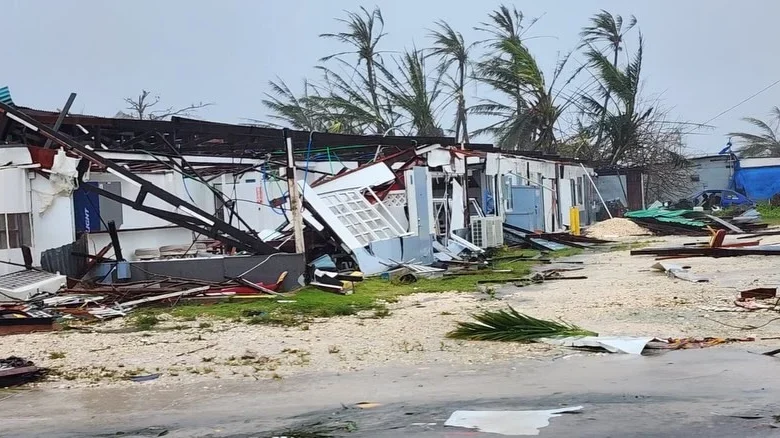
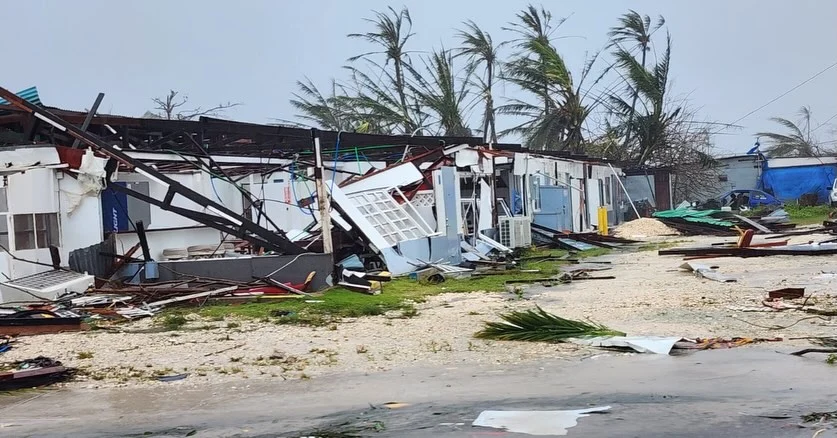
The strongest storm of 2026, Super Typhoon Sinlaku, slammed into the Commonwealth of the Northern Mariana Islands (CNMI) this week, unleashing a multi-day assault that has left the Pacific archipelago in a state of humanitarian and infrastructure crisis. With sustained winds reaching 185 mph, the Category 5 monstrosity lingered over the islands for more than 48 hours, trapping residents in flooded homes and severing vital lifelines, including electricity, cellular communication, and potable water systems. The slow-moving nature of the storm has exacerbated the destruction, forcing thousands of families to shelter in place as they waited for the eyewall to pass and the surge to recede.
The Path of Destruction: A Chronology of Sinlaku
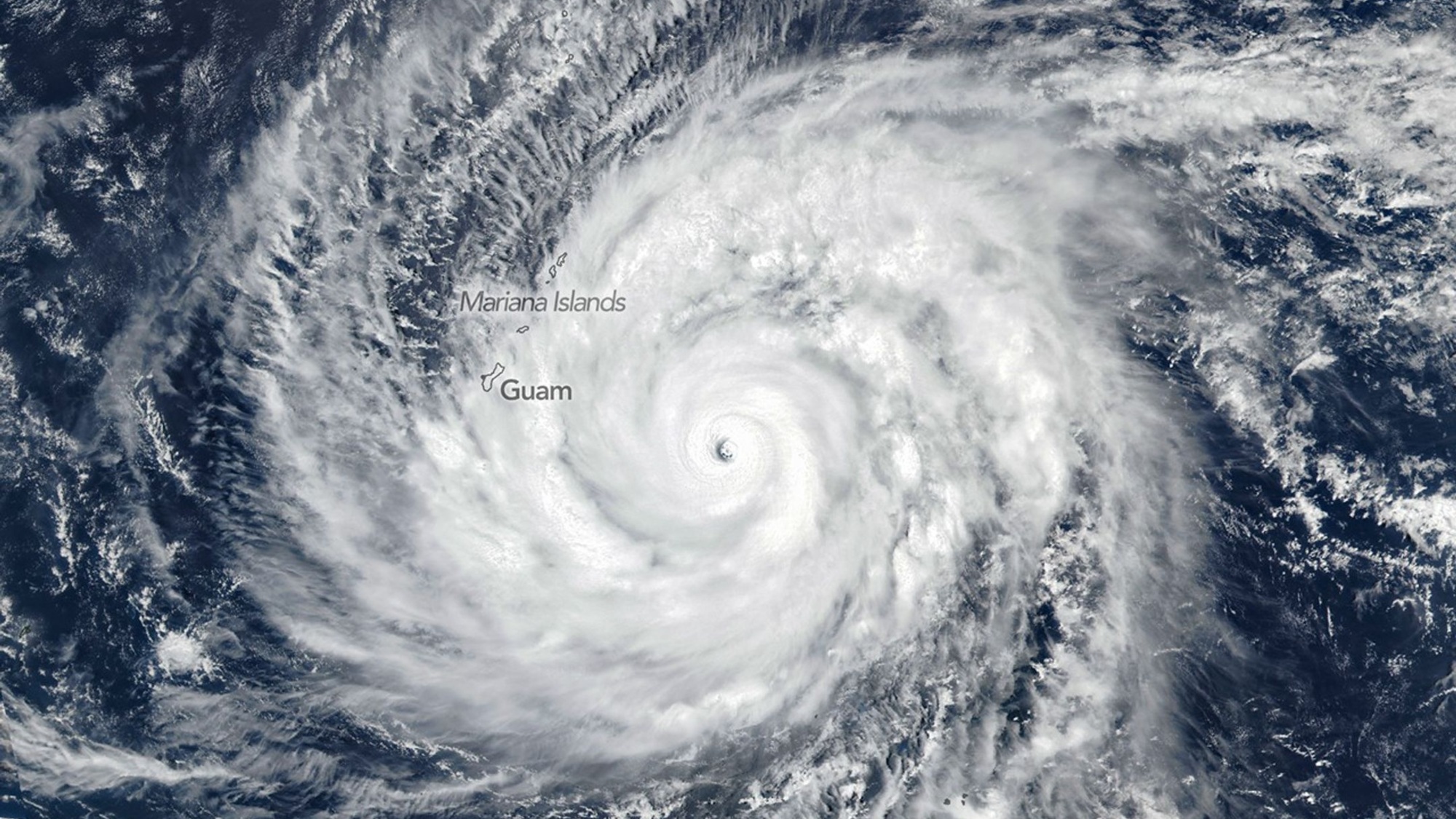
Super Typhoon Sinlaku began its life as a tropical disturbance southeast of the Mariana Islands archipelago. Benefiting from record-high sea surface temperatures, the system underwent a period of rapid intensification that stunned meteorologists. By the time it reached the Federated States of Micronesia, it had already attained super typhoon status.
The storm’s first major impact occurred in Chuuk, where the outer bands brought torrential rains and high surf. Local authorities confirmed that the storm left at least one person dead and a fisherman missing at sea. As Sinlaku churned northwest, it passed just north of Guam. While Guam was spared a direct hit from the eyewall, the island was lashed by tropical storm-force winds and significant storm surges that inundated coastal roads and knocked out power to several villages.
The brunt of the storm’s fury was reserved for the islands of Saipan and Tinian in the CNMI. The trajectory of Sinlaku hauntingly mirrored that of Super Typhoon Yutu in 2018, which remains the most powerful storm to ever strike a U.S. territory. For Saipan, the capital of the CNMI, the experience was a traumatic repetition of history. Residents reported that the storm felt interminable; unlike typical typhoons that pass within hours, Sinlaku’s forward motion slowed to a crawl, subjecting the islands to destructive forces for two full days.
Scientific Context: Rapid Intensification and Anomalous Timing
The emergence of a Category 5 super typhoon in April has raised significant alarm among the scientific community. Historically, the typhoon season in the western Pacific does not reach its peak until June or July. The appearance of such a powerful system so early in the year is being cited as a clear indicator of shifting climatic patterns.
According to Daniel Swain, a climate scientist at the California Institute for Water Resources, the environmental conditions preceding Sinlaku were extreme. Ocean surface temperatures in the region were recorded at 3 to 5 degrees Fahrenheit above the recent average. In the context of tropical meteorology, warm water serves as the primary fuel for cyclonic systems. The "hurricane fuel" provided by these elevated temperatures allowed Sinlaku to intensify at a rate rarely seen in the early spring months.
While scientists maintain that individual storms cannot be attributed solely to climate change, the consensus is that a warming planet increases the frequency of rapid intensification events. The ability of a storm to jump from a Category 1 to a Category 5 within a 24-hour window—as Sinlaku did—is becoming a more common and dangerous phenomenon, leaving coastal communities with less time to prepare and evacuate.
A Territory on the Brink: Economic and Political Vulnerability
The arrival of Super Typhoon Sinlaku could not have come at a more precarious moment for the Northern Mariana Islands. The CNMI, home to approximately 50,000 people including Indigenous Chamorros and Carolinians, has been grappling with a severe and prolonged economic downturn. The islands’ economy is heavily dependent on tourism, particularly from East Asia. However, arrivals have plummeted to less than half of their pre-COVID-19 levels, leading to business closures and a significant "brain drain" as residents migrate to the U.S. mainland in search of work.
Political leaders in the CNMI, including the commonwealth’s non-voting delegate to Congress, Kimberlyn King-Hinds, have been pleading for federal intervention for months. The islands have requested a federal bailout and policy adjustments to stimulate tourism, such as easing flight restrictions from China and visa requirements for the Philippines. To date, the response from the Trump administration has been noncommittal, leaving the territory to face a natural disaster with depleted local coffers.
Furthermore, the recovery from Super Typhoon Yutu in 2018 is still incomplete. Seven years after that storm leveled infrastructure, some students in the CNMI are still attending classes in temporary tent structures. The damage from Sinlaku threatens to erase the modest progress made in rebuilding, potentially resetting the clock on the islands’ recovery by a decade.
Federal Response Amidst a Departmental Shutdown
The federal government’s ability to respond to the crisis is currently hampered by a partial shutdown of the Department of Homeland Security (DHS), the parent agency of the Federal Emergency Management Agency (FEMA). The shutdown, rooted in a legislative stalemate over immigration policy and border security, has created uncertainty regarding the long-term availability of disaster relief funds.
Despite the political gridlock in Washington D.C., FEMA has moved to deploy resources. Prior to the storm’s landfall, President Trump approved an emergency declaration for the archipelago. FEMA reported that it has approximately 90 personnel on the ground in Guam and the CNMI. The agency’s distribution center in Guam is currently stocked with:
- 1.1 million liters of water
- 723,000 meals
- 5,300 cots and 3,600 blankets
- 4,400 tarps
- 78 generators (with an additional 42 en route to Saipan)
However, a FEMA spokesperson expressed concern that the ongoing funding dispute could eventually limit the agency’s operational capacity. The spokesperson urged Congress to restore DHS funding to ensure that American communities do not suffer "the next disaster alone."
The "Colonial" Status and the Fight for Agency
The disaster has reignited a long-standing debate over the political status of U.S. territories. Advocates for the CNMI argue that their lack of voting representation in the federal government makes them an afterthought in national policy. Adi Martínez-Román, co-director of the nonprofit Right to Democracy, noted that because residents of the territories cannot vote for president and have no representation in the U.S. Senate, they are often not viewed as a true constituency by federal lawmakers.
"It is so difficult for us to have agency in federal policies," Martínez-Román said. She highlighted that for more than a year, the current administration has been reducing FEMA staff and cutting hazard mitigation programs, which are essential for islands facing rising sea levels and intensifying storms.
Sheila Babauta, a Chamorro climate justice advocate, echoed these sentiments, noting that the community is fighting on multiple fronts. Beyond the immediate threat of typhoons, the islands are dealing with coastal erosion, the potential for deep-sea mining, and increased militarization of the region. "Our community is strong, but even warriors need rest," Babauta remarked, emphasizing the psychological toll of constant crisis management.
Impact on Infrastructure and Long-term Recovery Analysis
Initial reports from Saipan and Tinian indicate that the damage to the power grid is extensive. In previous storms, the lack of a buried or hardened power infrastructure led to months-long blackouts. While some efforts were made post-Yutu to strengthen the grid, the sheer force of Sinlaku’s 185-mph winds likely caused catastrophic failure of many overhead lines.
The disruption of cell service and running water has created a communications vacuum. Ed Propst, a former commonwealth legislator and Saipan resident, described the scene as surreal. He noted that even those with solar panels have seen their systems destroyed by flying debris. Propst shared accounts of neighbors trapped in homes requiring basic supplies like baby formula, and properties transformed into "lakes" by the relentless rain.
The long-term implications for the CNMI are stark. Without a significant infusion of federal aid and a shift in economic policy, the islands face a "perpetual recovery" cycle where one disaster strikes before the damage from the last has been repaired. This cycle is exacerbated by the administration’s efforts to remove references to climate change from federal planning documents, which advocates say prevents the implementation of effective mitigation strategies.
Conclusion: A Community Defined by Resilience
As the winds of Super Typhoon Sinlaku finally begin to die down, the residents of the Northern Mariana Islands are beginning the grim task of assessing the damage. The path ahead is fraught with political and economic obstacles, but the local spirit remains a point of pride.
"We’ve been through this before, and we know what it takes to get through it again," said Propst. The immediate focus remains on search and rescue and the restoration of basic services, but the larger question of how the U.S. government will support its most remote citizens in an era of extreme weather remains unanswered. For the people of Saipan, Tinian, and the surrounding islands, the storm may have passed, but the struggle for a sustainable and secure future is only just beginning.