Jon Stewart Lampoons President Trump’s Unusual Demeanor During Psychedelic Drug Bill Signing

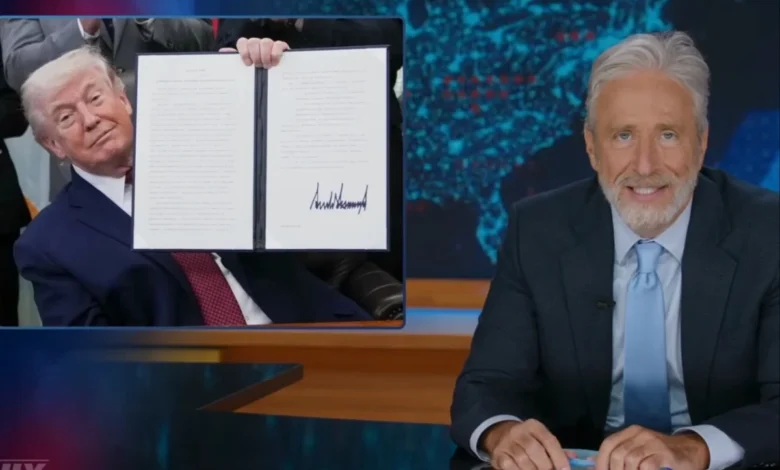
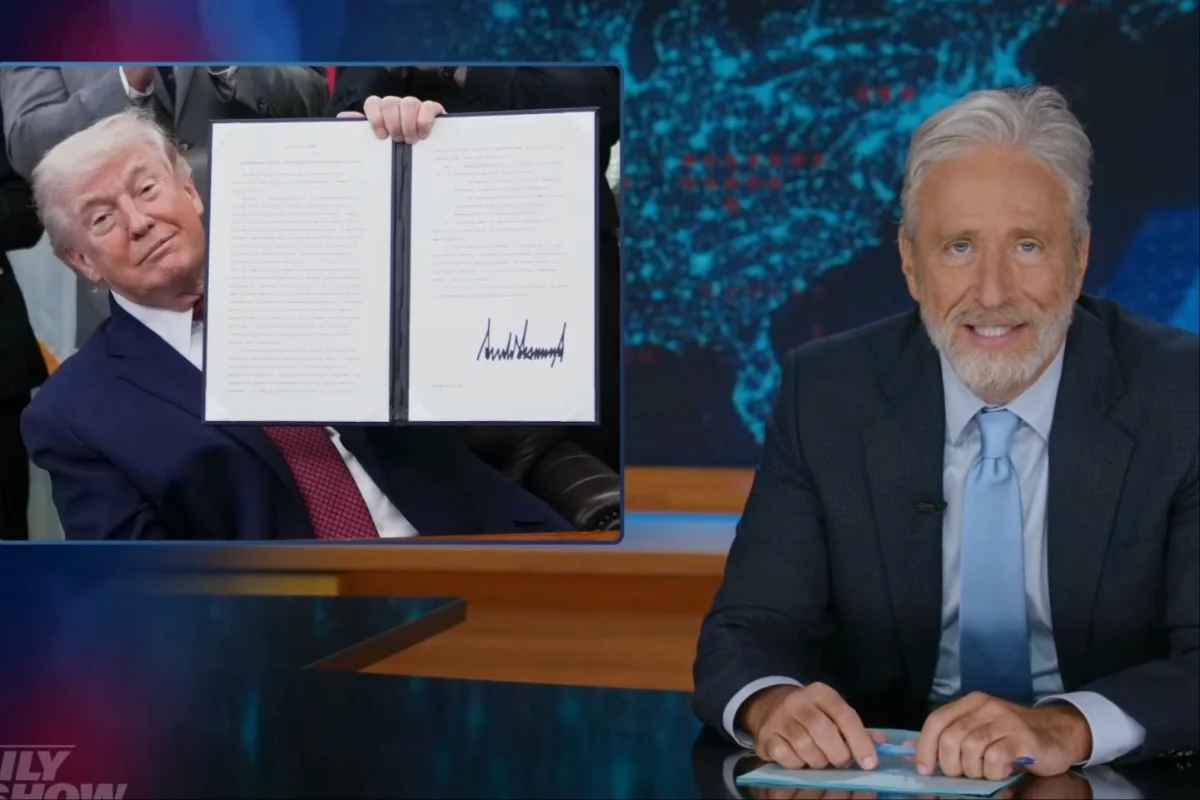
On Monday night’s episode of The Daily Show, host Jon Stewart turned his sharp satirical gaze upon President Donald Trump, dissecting a recent bill signing ceremony that featured the President’s unusually candid and eccentric remarks regarding psychedelic drug treatments. The segment focused on a bill that expedites the Food and Drug Administration (FDA) approval process for novel psychedelic drug treatments aimed at veterans suffering from post-traumatic stress disorder (PTSD), depression, anxiety, and addiction. Stewart used the President’s own words and on-screen footage to highlight what he perceived as revelatory insights into Trump’s psyche, while also acknowledging the potentially significant implications of the signed legislation.
The comedic commentary began with Stewart’s acknowledgment of the bill itself, framing it as a bipartisan effort to address critical mental health challenges facing the nation’s veterans. He explained that the legislation’s passage was a positive development, particularly given the increasing recognition of the therapeutic potential of substances like psilocybin and MDMA in treating severe psychological conditions. However, Stewart quickly pivoted to the President’s participation in the signing, which became the focal point of his critique.
President Trump’s Remarks on Psychedelic Therapy
During the bill signing in the Oval Office, President Trump made several notable statements that caught Stewart’s attention. The President referenced a study concerning ibogaine, a psychoactive compound derived from the iboga plant, known for its potential in treating addiction. Trump quoted the study, stating that users "experienced an 80% to 90% reduction in symptoms of depression and anxiety within one month." This statistical claim, presented without immediate context or qualification, led to Trump’s spontaneous and seemingly personal interjection: "Can I have some, please? I’ll take it. I’ll take it, whatever it takes."
This remark, delivered with a tone of personal interest and perhaps weariness, was the primary source of Stewart’s amusement and analysis. Stewart quipped, "Oh wow. He’s depressed, too," directly addressing the President through his commentary. He then extended a sympathetic, albeit sarcastic, invitation: "Hey, don’t be depressed, sir. Trump won’t be president forever." Stewart continued to interpret these moments, suggesting that "there are little moments in these Oval Office gatherings that are somewhat revelatory of the president’s psyche, and really a good starting place for any accredited mental health professional."
The President, seemingly responding to an implicit question about his own mental state or workload, stated to aides present, "I don’t have time to be depressed. If you stay busy enough, maybe that works too. That’s what I do." This comment, framed by Stewart as an attempt to brush off the notion of personal distress, was also subject to Stewart’s characteristic dissection.
Stewart’s Satirical Analysis and Speculation
Stewart then launched into a series of comedic exaggerations and hypothetical scenarios, questioning the potential effects of psychedelics on a figure like President Trump. He mused, "I don’t think Donald Trump should treat that with hallucinogens, but if he did, would we even notice? If he took them, he’d be like, ‘They’re eating the cats and dogs! Right near my beautiful ballroom. By the way, did you know I’m Jesus?’" This humorous extrapolation played on Trump’s well-documented self-aggrandizement and his tendency towards grand pronouncements.
Furthering the jest, Stewart suggested that perhaps the President had already experienced some altered state, given his intense focus on the bill signing. "You know what, though? Maybe he’s already taken them, given how intensely he focused on the signing of this bill. I mean, he signed the shit out of this bill," Stewart remarked, referring to the perceived deliberation and perhaps theatricality of Trump’s signature on the document.
The Signature and its Reception
The video segment then cut back to the actual footage of President Trump signing the bill. The President took an extended period to sign his name, elaborating on the act with a direct challenge to his political rival: "That’s a good one. See that, Joe? You think Biden can do that?" This inclusion of a political jab during a ceremony focused on veteran healthcare was noted by Stewart.
Stewart responded to this display with further humor, riffing on the idea of a psychedelic-influenced signature: "’Have you ever really looked at your signature, on weed?’" He then reiterated his observation about the peculiar nature of the signing, stating, "And look, I think this is a good thing that he did, and this is not political, but that was weird as shit the way he signed that." This sentiment, that the act of signing itself was unusual, underscored the segment’s focus on Trump’s eccentric behavior.
Background: The Psychedelic Therapy Movement and Veteran Mental Health
The bill signed by President Trump, often referred to as the "Veterans’ Mental Health and Addiction Support Act" or similar iterations, represents a significant step in a broader movement to explore the therapeutic applications of psychedelic substances. For decades, these substances were largely stigmatized and illegal, but a resurgence of scientific research, particularly over the past two decades, has demonstrated promising results in treating conditions like PTSD, depression, and anxiety.
Key Developments in Psychedelic Research:
- Early 2000s Onward: Renewed scientific interest, spurred by organizations like the Multidisciplinary Association for Psychedelic Studies (MAPS), began investigating the efficacy of MDMA-assisted therapy for PTSD.
- FDA Designations: In recent years, the FDA has granted "Breakthrough Therapy" designations to both MDMA and psilocybin for the treatment of PTSD and treatment-resistant depression, respectively. These designations expedite the development and review of drugs that are intended to treat serious or life-threatening diseases when preliminary clinical evidence indicates that the drug may demonstrate substantial improvement over available therapies.
- Veteran-Specific Initiatives: A growing body of anecdotal evidence and preliminary research suggests that psychedelic-assisted therapies could be particularly beneficial for veterans, many of whom experience severe and persistent PTSD due to combat trauma. The high rates of suicide and substance abuse among veterans have created a pressing need for innovative treatment approaches.
- The Bill’s Provisions: Legislation like the one signed by Trump aims to cut through bureaucratic red tape, allowing for faster research, clinical trials, and ultimately, potential treatment access for veterans. This includes facilitating the FDA’s review process for novel psychedelic compounds and potentially expanding access to these therapies within the Department of Veterans Affairs (VA) healthcare system.
Chronology of Events
While the exact date of the bill signing event was not specified in the original report, it is understood to have occurred recently, preceding the Monday night broadcast of The Daily Show. The sequence of events as presented by Stewart was:
- Bill Signing Ceremony: President Trump participates in a formal ceremony to sign legislation that expedites FDA approval for psychedelic drug treatments for veterans.
- Presidential Remarks: During the ceremony, Trump discusses a study on ibogaine and expresses personal interest in its therapeutic benefits, stating, "Can I have some, please? I’ll take it."
- Presidential Rationale: Trump explains his busy schedule as a reason he cannot afford to be depressed.
- Presidential Signature: Trump signs the bill with an unusually deliberate and prolonged action, then makes a pointed remark about Joe Biden’s ability to do the same.
- Jon Stewart’s Monologue: The Daily Show host Jon Stewart dissects the President’s remarks and actions, offering satirical commentary and analysis.
Supporting Data and Implications
The context for President Trump’s remarks and the significance of the bill can be further understood by examining statistics related to veteran mental health and the emerging field of psychedelic therapy:
- Veteran Mental Health Crisis: According to the Department of Veterans Affairs, suicide rates among veterans remain significantly higher than those in the general population. PTSD is a prevalent condition among veterans, with estimates suggesting that up to 30% of Vietnam veterans, 10-20% of Iraq and Afghanistan veterans, and a similar percentage of Gulf War veterans have experienced PTSD. Addiction is also a widespread issue, often co-occurring with PTSD and depression.
- Efficacy of Psychedelic Therapies:
- MDMA-assisted therapy for PTSD: Clinical trials have shown that MDMA, when combined with psychotherapy, can significantly reduce PTSD symptoms. In one Phase 3 trial by MAPS, 67% of participants no longer met the diagnostic criteria for PTSD after three sessions of MDMA-assisted therapy.
- Psilocybin for Depression and Anxiety: Studies on psilocybin, the psychoactive compound in "magic mushrooms," have demonstrated rapid and sustained reductions in symptoms of depression and anxiety in patients with life-threatening illnesses. Research also indicates potential for treating major depressive disorder.
- Ibogaine for Addiction: While research is less extensive and more controversial due to potential cardiac risks, ibogaine has shown promise in treating opioid and other substance use disorders, sometimes leading to significant reductions in withdrawal symptoms and cravings. The 80-90% reduction cited by President Trump aligns with some of the more optimistic, though not universally established, findings regarding ibogaine’s impact on addiction and related psychiatric symptoms.
Implications of the Bill:
- Accelerated Research and Development: By fast-tracking FDA processes, the bill could significantly shorten the timeline for new psychedelic therapies to become available for veterans.
- Potential for New Treatment Options: This legislation opens the door for veterans suffering from intractable mental health conditions to access treatments that have shown promise where conventional therapies have failed.
- De-stigmatization: The President’s direct engagement with the topic, even in a somewhat unusual manner, could contribute to a broader societal conversation and de-stigmatization of psychedelic research and treatment.
- Political Nuance: While Stewart focused on the comedic and psychological aspects, the bill itself represents a rare area of bipartisan potential, with advocates on both sides of the aisle recognizing the urgent need to address veteran mental health.
Official Responses and Broader Impact
Beyond President Trump’s comments, the signing of such legislation typically garners attention from veteran advocacy groups, mental health organizations, and the scientific community. While specific reactions to Trump’s remarks were not detailed in the original report, it is logical to infer that veteran organizations would welcome the legislative action itself, prioritizing the potential benefits for service members.
The broader impact of this event lies in its contribution to the ongoing national dialogue about mental health treatment. By bringing psychedelic therapies into the forefront of presidential attention, the bill signing, however controversially framed by President Trump’s demeanor, has the potential to:
- Increase Public Awareness: The spotlight cast by the President and The Daily Show ensures that the therapeutic potential of psychedelics and the challenges faced by veterans are brought to a wider audience.
- Encourage Further Research: The legislative push can inspire more researchers and institutions to explore these novel treatment modalities.
- Advocate for Policy Changes: Successes in veteran-focused legislation can serve as a model for expanding access to psychedelic therapies for other populations suffering from mental health conditions.
In conclusion, Jon Stewart’s segment on The Daily Show highlighted a moment where President Trump’s characteristic blend of candor and eccentricity intersected with a significant legislative development in mental health. While Stewart used the President’s remarks as fodder for his satirical commentary, the underlying bill addresses a critical and growing need for innovative treatments for veterans, signaling a potentially transformative shift in how psychedelic substances are perceived and utilized in mainstream medicine. The unusual nature of the bill signing, from the President’s personal interjections to his peculiar signing style, served to draw attention to both the man and the moment, underscoring the complex interplay of politics, personality, and progress in addressing profound societal issues.