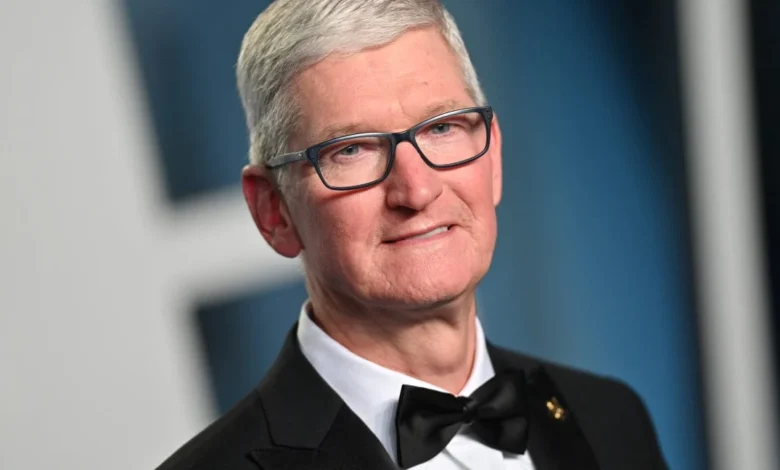
Apple Inc. today announced a significant leadership transition, with Chief Executive Officer Tim Cook set to step down from his role effective September 1, 2026. The Cupertino-based technology giant has named John Ternus, currently Apple’s Senior Vice President of Hardware Engineering, as the company’s next CEO, confirming a succession plan that has been the subject of industry speculation for an extended period. While Cook will relinquish the chief executive title, he will maintain a pivotal presence within the company, transitioning to the newly designated position of Executive Chairman. This strategic move aims to ensure continuity and leverage Cook’s extensive experience and global network as Apple navigates a complex technological and regulatory landscape.
A Decade of Transformative Leadership: Tim Cook’s Legacy
Tim Cook’s ascension to the CEO role in August 2011 marked a critical juncture in Apple’s history, as he took the reins from co-founder Steve Jobs amidst his declining health. Jobs, the visionary who had famously returned to rescue Apple in 1997 and propelled it to global dominance with products like the iPod, iPhone, and iPad, passed away just weeks after Cook’s appointment. The immense pressure on Cook to follow such an iconic figure was palpable, with many questioning whether Apple could sustain its innovation and growth without its charismatic co-founder. Over the past fifteen years, Cook has not only met but profoundly exceeded expectations, steering Apple through an era of unprecedented expansion and diversification.
Under Cook’s leadership, Apple’s market capitalization has soared from approximately $350 billion in 2011 to consistently hover above $3 trillion in recent years, making it one of the world’s most valuable companies. This exponential growth was fueled by a combination of factors. Cook, a master of supply chain management and operations from his tenure as COO, refined Apple’s manufacturing and logistics to an unparalleled degree of efficiency, enabling the company to scale production to meet immense global demand.
Beyond operational excellence, Cook diversified Apple’s product portfolio and revenue streams. While the iPhone remained the company’s cash cow, Cook oversaw the successful launch and maturation of entirely new product categories, including the Apple Watch, which revolutionized the wearables market, and AirPods, which quickly became the world’s most popular wireless earbuds. More recently, the unveiling of the Apple Vision Pro headset in 2023 signaled Apple’s ambitious entry into spatial computing, demonstrating a continued commitment to pioneering new technological frontiers.
Perhaps one of Cook’s most significant strategic shifts was the aggressive expansion into services. Recognizing the potential for recurring revenue and higher margins, Apple significantly grew its services division, which now includes Apple Music, Apple TV+, Apple Arcade, iCloud, Apple Pay, and the App Store. Services revenue, which was a relatively small component when Cook took over, has blossomed into a multi-billion-dollar business, reporting over $85 billion in fiscal year 2023, representing nearly 22% of Apple’s total net sales. This strategic pivot provided a crucial buffer against the cyclical nature of hardware sales and cemented Apple’s ecosystem dominance.
Cook also championed Apple’s stance on privacy, positioning it as a core differentiator and ethical imperative. Under his leadership, Apple implemented stringent privacy features, often putting it at odds with advertising companies and government agencies globally. Furthermore, he spearheaded ambitious environmental initiatives, committing Apple to carbon neutrality across its entire supply chain by 2030 and significantly increasing its use of recycled and renewable materials in products. His tenure also saw increased efforts towards diversity and inclusion within Apple’s workforce and leadership.
Despite these successes, Cook’s era was not without its challenges. Apple faced escalating antitrust scrutiny from regulators worldwide concerning its App Store policies, market dominance, and alleged anti-competitive practices. The company also grappled with geopolitical tensions, particularly concerning its deep reliance on manufacturing in China and the fluctuating demand in key international markets. Critics occasionally questioned the pace of "breakthrough" innovation compared to the Jobs era, a narrative that the Vision Pro launch aimed to counter.
John Ternus: The Architect of Apple’s Hardware Future
The selection of John Ternus as the next CEO underscores Apple’s enduring commitment to hardware innovation and design excellence. Ternus, who joined Apple in 2001, has steadily risen through the ranks, accumulating deep institutional knowledge and a reputation as a highly respected, technically adept leader. As Senior Vice President of Hardware Engineering, a role he assumed in 2021, Ternus has been instrumental in the development of nearly every major Apple product over the past two decades.
His influence spans critical product lines, including the iPhone, iPad, Mac, and AirPods. Most recently, Ternus played a pivotal role in the engineering and development of the Apple Vision Pro, a complex and groundbreaking device that integrates cutting-edge display, processing, and sensor technologies. His expertise lies in bringing intricate hardware designs to fruition, ensuring that Apple’s products maintain their signature blend of aesthetic appeal, robust performance, and user experience.
Ternus is known internally for his collaborative leadership style, his meticulous attention to detail, and his profound understanding of the engineering challenges inherent in creating Apple’s sophisticated devices. Unlike Cook, whose background is in operations, or Jobs, whose genius lay in product vision and marketing, Ternus represents the engineering backbone of Apple. His appointment signals that while services will remain critical, the company’s foundational strength in creating world-class physical products will continue to be a primary focus.
In his statement accompanying the announcement, Ternus expressed a deep reverence for Apple’s heritage: "I am humbled to step into this role, and I promise to lead with the values and vision that have come to define this special place for half a century." This statement reflects an understanding of Apple’s unique culture and its half-century legacy of innovation, suggesting a commitment to preserving the core identity while navigating future challenges.
The Executive Chairman Role: A Bridge to the Future
Tim Cook’s transition to Executive Chairman is a carefully crafted move designed to provide stability and strategic continuity during this significant leadership change. Apple explicitly stated that "As executive chairman, Cook will assist with certain aspects of the company, including engaging with policymakers around the world." This role is far from ceremonial; it leverages Cook’s unparalleled experience, particularly in global diplomacy and government relations.
In an increasingly regulated tech environment, with antitrust investigations proliferating across the U.S., Europe, and Asia, Cook’s continued involvement in policymaker engagement is invaluable. His established relationships with world leaders, his articulate defense of Apple’s business practices, and his experience in navigating complex geopolitical landscapes will provide crucial support to Ternus, allowing the new CEO to focus on product development and operational leadership without being immediately bogged down by the intense external pressures that characterize the tech industry today.
This transition model is not unprecedented in the corporate world. Figures like Amazon founder Jeff Bezos moved to an Executive Chairman role, allowing for a smooth leadership handover while retaining strategic oversight and influence. For Apple, it provides the best of both worlds: fresh leadership with a deep hardware background, combined with the seasoned guidance and external relations expertise of a highly successful outgoing CEO.
A Chronology of Apple Leadership Transitions
Apple’s leadership history has been punctuated by pivotal moments:
- 1976: Apple Computer Company founded by Steve Jobs, Steve Wozniak, and Ronald Wayne.
- 1985: Steve Jobs departs Apple after a power struggle with the board and CEO John Sculley.
- 1997: Steve Jobs returns to Apple as interim CEO (iCEO) after the company acquires NeXT.
- 2000: Jobs becomes permanent CEO, beginning a transformative era for the company.
- August 24, 2011: Tim Cook is named CEO as Steve Jobs resigns due to health issues, becoming Chairman of the Board.
- October 5, 2011: Steve Jobs passes away.
- September 1, 2026: Tim Cook transitions to Executive Chairman; John Ternus becomes CEO.
This timeline illustrates Apple’s deliberate approach to succession, particularly in the post-Jobs era, emphasizing internal promotions and a phased handover.
Market and Industry Reactions
Initial reactions from financial analysts and investors are likely to be tempered by the distant effective date of the transition and the continued presence of Tim Cook as Executive Chairman. The long lead time (over two years) provides ample opportunity for a smooth handover and for Ternus to further solidify his public profile and strategic vision. The market typically favors stability, and Cook’s ongoing role minimizes the perception of a sudden vacuum.
Investors will likely scrutinize Ternus’s first strategic moves as CEO for indications of how he intends to balance Apple’s established strengths in hardware and services with new growth areas like artificial intelligence, augmented reality, and health technology. His background in hardware engineering might suggest a renewed emphasis on groundbreaking physical products, potentially exciting segments of the market looking for Apple to deliver its "next big thing" beyond iterative updates.
Internally, the announcement is expected to be well-received. Ternus is a respected veteran within Apple, known for his deep technical expertise and collaborative nature. His promotion from within reinforces Apple’s culture of developing leaders and provides a sense of continuity for employees who have grown accustomed to stable leadership.
Broader Implications and Future Outlook
The transition to John Ternus as CEO marks the beginning of a new chapter for Apple, one that will undoubtedly shape the trajectory of the global technology industry. The choice of a hardware engineering expert signals Apple’s unwavering commitment to the tangible products that define its brand, even as software and services continue to drive a significant portion of its revenue and ecosystem value.
One of the most significant implications will be how Ternus navigates the evolving landscape of artificial intelligence. While Apple has made strides in integrating AI into its operating systems and silicon, it faces intense competition from companies like Google, Microsoft, and OpenAI, which are pushing the boundaries of generative AI. Ternus will be tasked with ensuring Apple maintains its competitive edge, potentially through innovative hardware-software integrations that leverage AI to create unique user experiences.
Furthermore, the future of spatial computing, spearheaded by the Vision Pro, will fall squarely under Ternus’s leadership. This nascent category represents a multi-year investment for Apple, and its success will depend on Ternus’s ability to drive both hardware advancements and developer adoption for the visionOS platform.
The transition also highlights Apple’s robust succession planning. Unlike some tech companies that have experienced tumultuous leadership changes, Apple has demonstrated a methodical and thoughtful approach, first with Cook taking over from Jobs, and now with Ternus succeeding Cook. This deliberate strategy aims to preserve Apple’s core values and operational excellence while injecting fresh perspectives at the helm.
As Tim Cook transitions from CEO to Executive Chairman, his fifteen-year tenure will be remembered as an era of unprecedented financial growth, strategic diversification into services, and a steadfast commitment to user privacy and environmental responsibility. John Ternus steps into a role of immense responsibility, inheriting a technological powerhouse with a global reach. His challenge will be to build upon Cook’s legacy, navigating a rapidly changing tech landscape, fostering the next wave of innovation, and ensuring Apple continues to enrich the lives of its customers and redefine the future of technology for decades to come. The industry will be watching closely as this carefully orchestrated leadership transition unfolds over the next two years.