Texas Democrat Jon Rosenthal’s Historic Election to the Railroad Commission Signals a Shift in Energy Oversight


The 2026 midterm elections in Texas delivered a political earthquake that reverberated far beyond the state capitol, culminating in a total sweep of statewide offices by the Democratic Party. While the victories of Governor-elect Gina Hinojosa and Senator-elect James Talarico garnered national headlines, a quieter but perhaps more consequential shift occurred in the race for the Texas Railroad Commission. Jon Rosenthal, a mechanical engineer and former Democratic state representative, secured a seat on the three-member board, becoming the first Democrat to serve on the commission since 1990. This development marks a definitive turning point for an agency that has, for decades, operated as a bastion of Republican ideology and industry-friendly deregulation.
A Legacy of Regulatory Capture and Industry Influence
The Texas Railroad Commission (RRC) is something of an anomaly in American governance. Despite its name, the agency has had little to do with the rail industry since the mid-20th century. Instead, it serves as the primary regulatory body for the state’s massive oil and gas sector. As of 2024, Texas production accounts for nearly 50 percent of all crude oil extracted in the United States, positioning the RRC as one of the most powerful—and least scrutinized—regulatory entities in the country.
For years, the commission has faced intense criticism from environmental groups and transparency watchdogs. The agency is widely viewed as "captured" by the industry it regulates, a perception reinforced by the substantial campaign contributions oil and gas companies provide to their preferred candidates. The internal culture of the commission has historically favored a "drill-first" mentality, often prioritizing industry growth over stringent environmental safeguards or public engagement.
The Path to Victory: A Contentious Campaign
Rosenthal’s victory was not merely a result of party alignment; it was heavily influenced by the extreme positions of his Republican opponent, Bo French. French, a former local party chair, became a lightning rod for controversy throughout the campaign. In September 2026, French posted disparaging, racially charged remarks on social media regarding South Asian students celebrating at a University of Texas football game.
This incident was not an isolated case. Public records revealed that in 2025, French had circulated an online poll questioning whether "Jews" or "Muslims" posed a greater threat to the United States. These comments triggered a bipartisan backlash, with prominent Republican figures distancing themselves from his candidacy. The resulting scandal provided Rosenthal with a significant fundraising surge and broadened his appeal among suburban, moderate voters who might otherwise have leaned Republican.

A Chronology of the Commission’s Recent Controversies
The election of a Democrat to this seat comes at a time when the RRC is under fire for its efforts to restrict public access. The following timeline outlines the recent friction between the commission and the public:
- 2024: Texas solidifies its role as the nation’s primary oil producer, with the RRC facing increased pressure to manage the environmental fallout of aging infrastructure.
- August 2026: The RRC adopts a controversial new public participation policy, effectively removing the guarantee of public comment periods at monthly meetings. Under the new rules, public comment is only permitted if a commissioner explicitly requests it to be added to the agenda.
- September 2026: Commissioner Wayne Christian, a staunch conservative and architect of the new policy, faces intense scrutiny for skipping a legislative hearing where his agency’s transparency record was to be debated.
- October 2026: The national outcry over Bo French’s social media activity peaks, creating a pivot point for the RRC race.
- November 2026: Jon Rosenthal wins the seat, pledging to undo the "shameful" restrictions on public participation.
The "Drill, Baby, Drill" Democrat
Despite being a Democrat, Rosenthal is not a firebrand environmentalist seeking to dismantle the oil and gas industry. A mechanical engineer with 25 years of experience in the sector, he identifies as a "drill, baby, drill" Democrat. His platform is built on the premise that the industry can—and must—operate within a framework of rigorous safety, environmental accountability, and transparency.
Rosenthal’s central policy ambition is to double the RRC’s biennial budget, increasing it from approximately $500 million to $1 billion. He argues that this injection of funding is essential to address the growing crisis of "orphaned" wells—inactive, abandoned wells that leak methane and threaten groundwater quality. Current data suggests that while the RRC has achieved record-breaking plugging rates, the number of new orphaned wells being created annually continues to outpace the agency’s cleanup capacity. By "turbo-charging" these efforts, Rosenthal believes the state can mitigate long-term environmental hazards that currently fall on the shoulders of taxpayers.
Institutional Challenges and Potential Alliances
Rosenthal enters the commission as a minority of one. He will serve alongside two Republicans, Wayne Christian and Christi Craddick. Christian has been the most vocal proponent of the commission’s recent deregulatory path, while Craddick is viewed as a more traditional, if still industry-aligned, conservative.
Industry analysts and advocacy groups, such as the watchdog organization Commission Shift, believe there is room for tactical cooperation. There are historical instances where Christian and Craddick have disagreed on permit approvals and minor policy adjustments. If Rosenthal can build a bridge with Craddick on issues of transparency and public access, he may be able to force a shift in the commission’s operational culture.
Virginia Palacios, executive director of Commission Shift, notes that even small changes could be transformative. "If we have someone like Jon Rosenthal who ran his campaign on the idea that open meetings should be open, you could potentially have two commissioners that would vote for a more inclusive public meeting policy," she suggested. Rosenthal’s specific proposal to hire regional community liaisons is aimed at making the agency responsive to the Texans who live closest to drilling sites—a group that has long felt ignored by the commission’s Austin-based leadership.
Legislative Hurdles: The "Valuable Player" Strategy
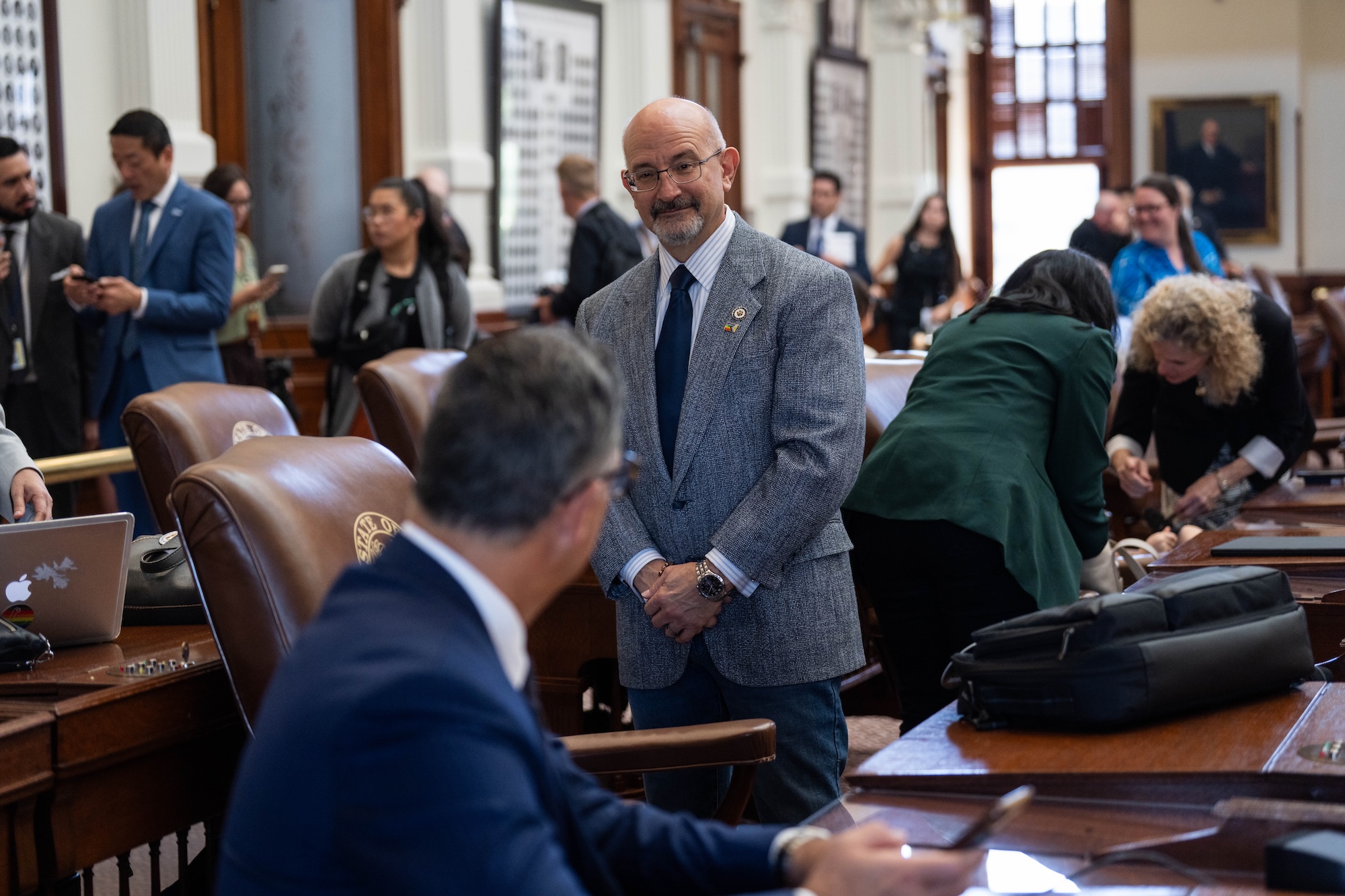
Rosenthal’s most ambitious goals, particularly the doubling of the agency’s budget, require legislative approval. The Texas House, now under Democratic control, will likely be receptive to his proposals. However, the Texas Senate remains in Republican hands, creating a potential gridlock.
Rosenthal remains optimistic, citing his years of experience in the Texas House. He believes he is uniquely positioned to act as a bridge between the regulators and the lawmakers. "I might be one of the Railroad Commission’s more valuable players," Rosenthal said at a post-election press conference. "I know how to talk to Democrats because I am one. And it will be my job to help educate my former colleagues about how important this is."
The success of his tenure will ultimately depend on his ability to navigate the complex, often opaque world of Texas energy politics. He faces a dual challenge: persuading a skeptical Republican legislature to invest in his vision for the agency, and proving to environmentalists that his "drill-safe" approach is more than just industry-friendly rhetoric.
The Broader Impact of the 2026 Sweep
The change in leadership at the Railroad Commission is a microcosm of the broader political shift in Texas. As the state continues to grow, the tension between its status as an energy powerhouse and the mounting costs of environmental oversight will only intensify. By inserting a voice that advocates for transparency into a historically closed-door agency, the electorate has signaled a demand for a more modern, accountable approach to energy regulation.
Whether this will lead to a new era of environmental stewardship or remain a marginal shift in the face of deep-seated industry influence remains to be seen. However, for the first time in over three decades, the boardroom of the Texas Railroad Commission will include a member who answers to the public rather than just the donors. As the state legislature prepares for its next session, all eyes will be on the commission to see if the rhetoric of change can be translated into concrete regulatory action.