The New Science of Crowdsourcing Ecosystem Complexity Through the Who Eats Whom Platform

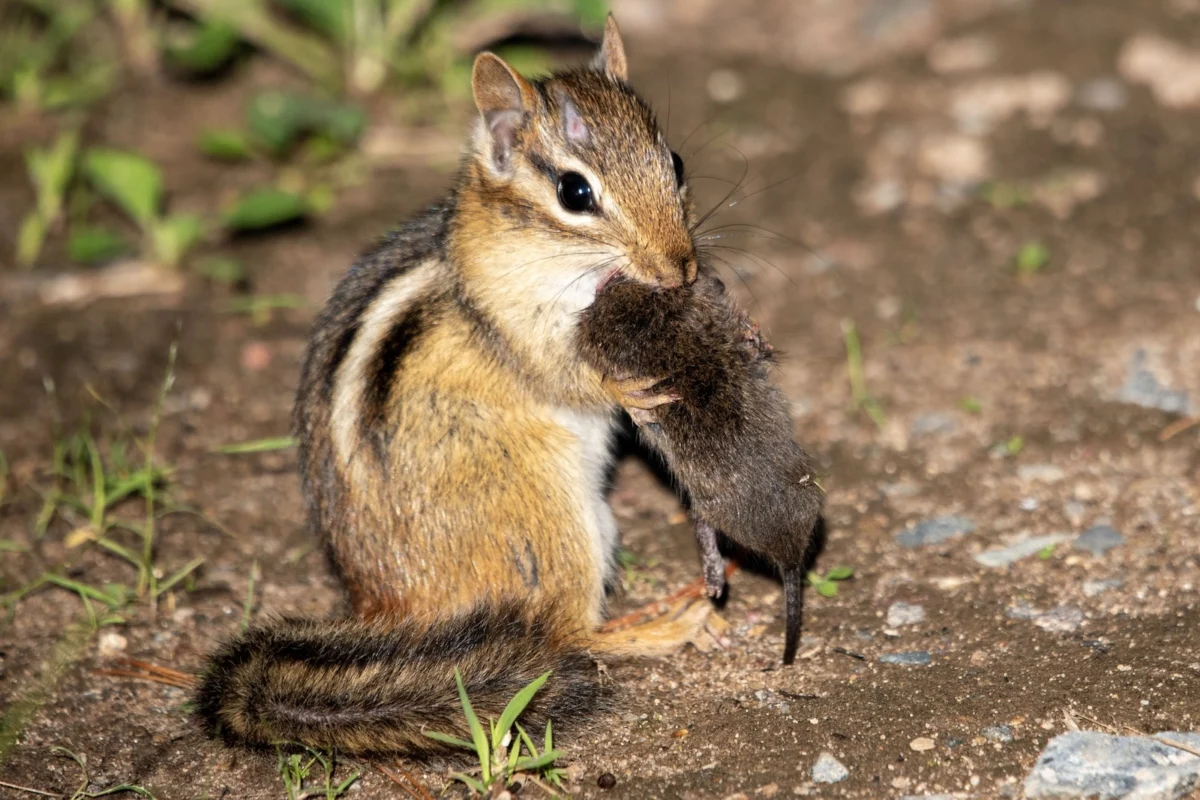
The traditional food chain model taught in elementary science classrooms—a simplified, linear progression of predator and prey—often fails to reflect the chaotic, interconnected, and messy reality of biological survival. In the natural world, energy does not flow in a straight line; it moves through a dense, multidimensional web characterized by parasitic relationships, scavenging, and even instances of cannibalism. For generations, ecologists have labored to map these interactions, often relying on labor-intensive fieldwork, such as hours of patient observation at nesting sites or the unglamorous, time-consuming process of dissecting animal scat to identify prey remains. However, a new digital initiative is fundamentally altering this methodology. By leveraging the ubiquity of smartphone technology and the power of crowdsourced data, the Who Eats Whom project is providing researchers with an unprecedented view of how ecosystems function, evolve, and respond to the mounting pressures of a changing climate.
From Field Journals to Global Databases
Historically, the study of trophic interactions—the feeding relationships between organisms—was limited by the physical constraints of human observation. An ecologist might spend an entire summer tracking a single predator, only to witness a handful of successful hunts. This anecdotal data, while valuable, lacked the scale necessary to build comprehensive models of entire biomes.
The advent of community science, or "citizen science," has begun to bridge this gap. Platforms like iNaturalist have mobilized millions of nature enthusiasts, hikers, and amateur photographers to document biodiversity with unprecedented frequency. Who Eats Whom, developed by ecologists at North Carolina State University and now hosted with contributions from Colorado State University, acts as an analytical filter for this massive influx of visual data. By tapping into the millions of geotagged, species-identified photos uploaded to iNaturalist, the project creates an automated, searchable index of predatory events.
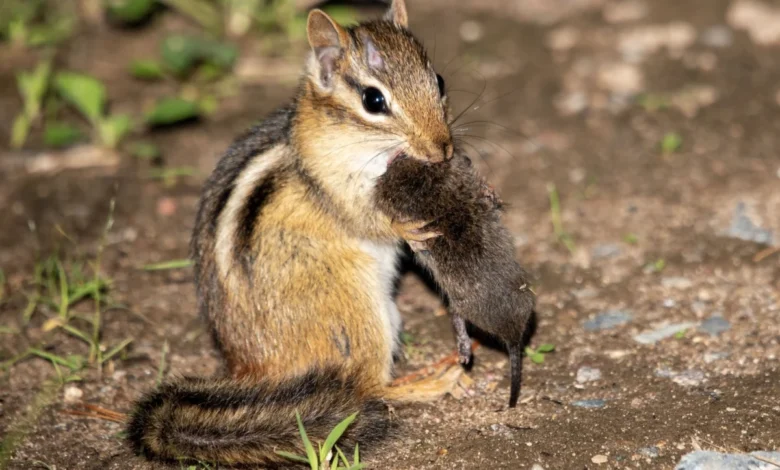
The shift in data acquisition is profound. Instead of one researcher watching a snake for ten hours, the project aggregates thousands of images uploaded by individuals across the globe. This allows for a longitudinal analysis that was previously impossible. Researchers can now observe a brown rat being captured by an American ermine in Ontario, or a red-tailed hawk descending on a snake in a suburban backyard in the United States, and integrate these individual "snapshots" into a global, interactive food web.
Chronology of an Evolving Digital Tool
The development of Who Eats Whom represents a milestone in digital ecology. While the initial groundwork for digital biodiversity recording began with the launch of iNaturalist in 2008, the specific synthesis of trophic data into an interactive, web-based platform is a more recent development.
- 2008–2015: The rise of iNaturalist creates a global repository of biodiversity observations, but the data remains largely fragmented and focused on species identification rather than interaction.
- 2019–2021: Researchers begin the conceptualization of extracting "interaction" metadata from the millions of images available. Initial pilot studies prove that photos often capture not just the organism, but its behavior.
- 2023–2024: The Who Eats Whom platform reaches maturity, officially incorporating over 17,000 documented interactions across 5,700 species spanning more than 100 countries.
- 2024: The publication of findings in the journal PLOS Biology formalizes the project’s methodology, providing a framework for how crowdsourced data can contribute to formal ecological research and climate change modeling.
The Power of Crowdsourcing and Ecological "Messiness"
The core strength of the Who Eats Whom platform lies in its ability to capture the "messiness" of nature. Traditional food chains ignore the role of decomposers, parasites, and opportunistic scavengers. In reality, an eagle might be a predator, but it is also a host to ticks and intestinal worms. When that eagle dies, the energy stored in its body is harvested by ants, beetles, and bacteria.
Bradley Allf, an ecologist and lead author of the recent study, notes that the platform reveals relationships that are often overlooked. "There’s all kinds of complicated ways that energy moves through real food webs, and we’re trying to document that messiness as much as we can," Allf stated. By analyzing the interactive web, a user can see that a red-tailed hawk predates on an American robin, but can then trace the robin’s diet back to specific plants like the yaupon holly. This reveals how plant health, pollinator health, and predator survival are inextricably linked.
This connectivity is particularly vital when examining pollinators. For instance, the Western honey bee is a crucial agricultural link, yet it is often predated upon by the goldenrod crab spider. Simultaneously, the bee facilitates the reproduction of various flora. By mapping these connections, researchers can identify "keystone" interactions—relationships that, if broken, could lead to the collapse of local biodiversity.
Implications for Conservation and Climate Change
The climate crisis is causing a global "reshuffling" of species. As temperatures rise, many animals are migrating toward the poles or higher altitudes to find cooler environments. This movement disrupts existing food webs; a predator may arrive in a new territory only to find its traditional prey missing, or a native species may be overwhelmed by a new, invasive competitor.
Aditi Mallavarapu, a computer scientist and co-author of the PLOS Biology study, emphasizes that the platform is as much about identifying gaps as it is about documenting presence. "We are not only looking at what is being observed, but also noticing what is not being observed," she said. By comparing current data to historical records, scientists can detect shifts in feeding patterns that may signal environmental distress.
Furthermore, the database serves as an early-warning system for invasive species. Invasive predators, such as the lionfish in the Atlantic, can devastate local reef ecosystems. If citizens upload photos of these invasive species consuming native fish, researchers can track the spread and impact of the invasion in real-time. This provides conservationists with the empirical evidence needed to prioritize management efforts. As Peter Roopnarine of the California Academy of Sciences noted, the challenge is often the ephemeral nature of these events—they may only happen once in a specific location, and without a witness, they are lost to science. Smartphone-wielding citizens effectively serve as an "army of observers" that can document these rare occurrences.
Moving Beyond Habitat Preservation
The implications of this research extend to the very philosophy of conservation. For decades, the dominant strategy has been the preservation of habitat—setting aside land or marine areas and hoping for the best. However, as Allf points out, this is no longer sufficient. "Species don’t just need space—they don’t just need a habitat," he explains. "They need the relationships that allow them to survive."
If a conservation zone is protected but the prey species within it vanish due to climate-driven migration, the predators within that zone will eventually die off. Understanding these trophic dependencies is essential for creating "resilient" landscapes. Conservationists must now consider the food web as a whole, ensuring that the entire chain of life—from the pollinators and primary producers to the apex predators—is supported.
As the Who Eats Whom project continues to expand, it transforms the act of nature observation into a collaborative scientific enterprise. It empowers individuals to contribute to the global understanding of ecology while simultaneously highlighting the fragility of the natural world. In a time of rapid environmental transition, these snapshots of interaction provide the data-driven insights necessary to move from passive preservation to active, informed management of the Earth’s interconnected ecosystems. Whether it is a vulture feeding on a scavenged carcass or a spider capturing a bee, these small moments of "who eats whom" are the essential threads that hold the tapestry of life together.