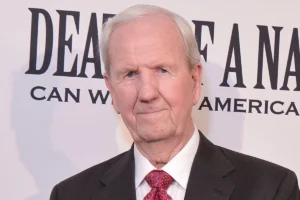
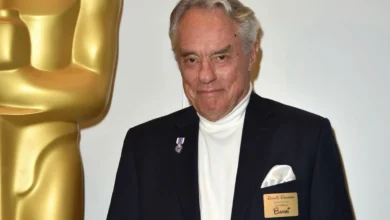
Gerald R. Molen, Oscar-Winning Producer of Schindler’s List and Jurassic Park, Dies at 91

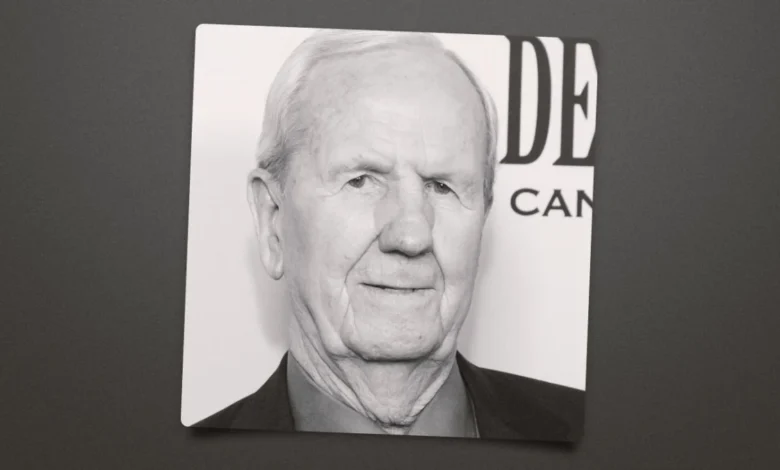
Gerald R. Molen, an industry titan whose career bridged the golden era of studio transportation coordination with the pinnacle of modern cinematic blockbusters, has passed away at the age of 91. Molen died on Monday in Bigfork, Montana, where he had been a longtime resident, as announced by his great-niece, Rachel Lorraine Pullan.
As an Oscar-winning producer, Molen helped shape the landscape of contemporary cinema through enduring creative partnerships with visionary directors, most notably Steven Spielberg. His formidable body of work includes monumental cultural touchstones such as Schindler’s List, Jurassic Park, Rain Man, and Minority Report. Spanning more than half a century in the entertainment business, Molen’s journey from a young boy hiding behind hay bales on the Republic Pictures backlot to the head of production at Amblin Entertainment is a quintessential Hollywood story defined by perseverance, meticulous logistical expertise, and an unwavering commitment to storytelling on a grand scale.
Early Life and the Call of the Studio Lot
Born on January 6, 1935, in Great Falls, Montana, Gerald Robert Molen experienced a childhood that serendipitously placed him on a collision course with the motion picture industry. In 1947, Molen and his family relocated to North Hollywood, a move that would fundamentally alter the trajectory of his life. His parents, Gerald Sr. and Edith, established a local cafe situated directly across the street from Republic Pictures in Studio City, a bustling hub of filmmaking activity at the time.
The proximity of the cafe to the studio gates provided young Molen with unique access to the inner workings of Hollywood. Befriending the studio guards, he frequently found himself smuggled onto the active lot, secreted away behind bales of hay or beneath wagons on Western soundstages and backlots. These formative experiences instilled in him a lifelong fascination with the cinematic arts. Following his graduation from high school, Molen answered the call to duty by enlisting in the United States Marine Corps. After serving for ten months, he returned to civilian life and officially entered the film industry in 1957, securing a position as a truck driver hauling furniture at Republic Pictures.
From Transportation Captain to Production Management
Molen’s entry into Hollywood was forged through the rigorous, unglamorous trenches of studio logistics. In 1959, he transitioned to Universal Studios, marking the beginning of a decades-long ascent through the production ranks. His early contributions to cinema often went unseen on screen, but they were critical to the physical execution of major motion pictures.
A notable piece of Hollywood lore from this period involves Alfred Hitchcock’s landmark thriller Psycho (1960). While working at Universal, Molen served as a driving double for Anthony Perkins, piloting the car heading toward the Bates Motel while Hitchcock himself occupied the back seat, issuing direct instructions to the young driver.
Through hard work and organizational acumen, Molen steadily climbed the studio hierarchy, eventually rising to become the head of transportation at Universal. In this capacity, and as a transportation coordinator, captain, and supervisor, he oversaw logistics for a prestigious slate of critically acclaimed and commercially successful films throughout the 1970s and early 1980s. His credits during this era included such diverse and demanding productions as Escape to Witch Mountain (1975), Hal Ashby’s Bound for Glory (1976) and Coming Home (1978), Peter Bogdanovich’s Being There (1979), Robert Redford’s Ordinary People (1980), and Sydney Pollack’s Absence of Malice (1981).
Demonstrating a sharp eye for physical production and administrative management, Molen successfully transitioned into the role of unit production manager. This phase of his career saw him managing the day-to-day operations of complex sets for prominent films like The Postman Always Rings Twice (1981), Sydney Pollack’s comedy classic Tootsie (1982), and the critically praised drama A Soldier’s Story (1984). It was during this tenure as a unit production manager that he crossed paths with Steven Spielberg on the 1985 adaptation of Alice Walker’s The Color Purple, a collaboration that would permanently redefine his professional life.
The Spielberg Partnership and Amblin Entertainment Years
Impressed by his organizational skill and calm demeanor under pressure on The Color Purple, Spielberg offered Molen his first official producing assignment as an associate producer on the 1987 sci-fi family film *batteries not included. This initial step opened the door to a legendary creative partnership.
Molen’s reputation was further cemented when he served as a producer on Spielberg’s big-budget fantasy adventure Hook (1991). Following the film’s release, Molen was appointed head of production at Spielberg’s production banner, Amblin Entertainment. In this executive capacity, he assumed oversight of a phenomenal slate of commercial hits and family-friendly classics that dominated the box office throughout the 1990s.
During his leadership at Amblin, Molen shepherded a diverse array of projects, including live-action adaptations of beloved properties such as The Flintstones (1994), The Little Rascals (1994), Little Giants (1994), and Casper (1995). He also managed the logistical hurdles of Jan de Bont’s blockbuster disaster movie Twister (1996) and produced Spielberg’s own prehistoric blockbuster sequel, The Lost World: Jurassic Park (1997). Reflecting on this prolific period in a 2023 interview, Molen remarked, “It was the best job in Hollywood, because any movie [Spielberg] directed I got to produce, and any movie the company did I got to oversee.”
Academy Recognition and Major Cinematic Milestones
The crowning achievement of Molen’s producing career arrived in 1993 with the release of Schindler’s List. Directed by Spielberg and shot in stark black-and-white, the historical drama chronicled the efforts of German industrialist Oskar Schindler to save more than one thousand Polish-Jewish refugees during the Holocaust. The film was both a critical triumph and a cultural landmark. At the 66th Academy Awards in 1994, Molen shared the Oscar for Best Picture alongside Spielberg and co-producer Branko Lustig.
While his name is permanently linked with the Spielberg canon, Molen also cultivated a successful independent producing track record outside of Amblin. Notably, he served as a producer on Barry Levinson’s 1988 drama Rain Man, which starred Dustin Hoffman and Tom Cruise. The film swept the Academy Awards, securing the Best Picture trophy alongside wins for Best Director, Best Actor, and Best Original Screenplay, marking another significant Best Picture feather in Molen’s cap.
His diverse producing filmography over the decades included Tony Scott’s high-octane racing drama Days of Thunder (1990), the inspirational religious drama The Other Side of Heaven (2001), the romantic comedy Just Like Heaven (2005), and large-scale action features such as The Meg (2018) and its 2023 sequel, Meg 2: The Trench. In addition to his behind-the-scenes contributions, Molen made memorable cameo appearances in several films he helped bring to life, including Rain Man, Days of Thunder, Jurassic Park (1993), Amistad (1997), and Catch Me If You Can (2002).
Later Career, Political Documentaries, and Industry Critique
In the later chapters of his life, Molen channeled his producing talents into nonfiction filmmaking that reflected his personal political and ideological convictions. He served as a producer on two politically charged documentary features written and directed by conservative commentator Dinesh D’Souza: 2016: Obama’s America (2012) and Hillary’s America: The Secret History of the Democratic Party (2016). Both films were heavily critical of the Democratic Party and its leadership, sparking robust public discourse and achieving notable commercial success within the political documentary genre. Molen articulated his perspective on producing the Obama documentary through an opinion piece published in The Hollywood Reporter.
Molen’s worldview increasingly set him apart from the prevailing cultural consensus within the entertainment industry. In 2014, he drew widespread media attention when he distributed an open letter to nearly nine hundred Christian and conservative leaders. In the correspondence, Molen openly criticized Hollywood for promoting what he termed "depravity" and asserted that contemporary media practices had inflicted "much damage to America."
"Throughout my years in Hollywood, I tried to live my life differently and be a part of projects that I would be proud to have my grandchildren watch," Molen wrote in the letter. "It hasn’t been easy, but I’ve at least tried to stand against the tide of depravity that has too often flourished there."
Despite navigating the cultural shifts of an evolving industry, Molen remained respected for his foundational contributions to cinematic history and his old-school approach to production management.
Legacy and Impact on Modern Filmmaking
Gerald R. Molen’s passing marks the end of an era for traditional Hollywood studio craftsmanship. Rising from the practical demands of studio transportation and unit management to the apex of Academy Award recognition, Molen demonstrated how rigorous organizational talent could enable the realization of cinematic masterpieces.
Whether orchestrating the complex physical logistics of 1970s dramas, managing the massive studio machinery of Amblin Entertainment during its 1990s golden age, or bringing deeply sensitive historical narratives like Schindler’s List to the silver screen, Molen left an indelible imprint on the global film landscape. His contributions extended far beyond individual credits; they helped establish production safety nets, logistical pipelines, and managerial frameworks that modern Hollywood continues to rely upon.
Molen is predeceased by his wife of nearly seventy years, Pat Molen, who passed away in January 2024 at the age of 86. He is survived by a broad network of loving family members, including his great-niece Rachel Lorraine Pullan, as well as the countless colleagues, collaborators, and film enthusiasts whose lives and screens were touched by his lifelong dedication to the motion picture medium.