How Marcus Bell Channelled Muhammad Ali and Rudyard Kipling for Prime Video’s The Greatest

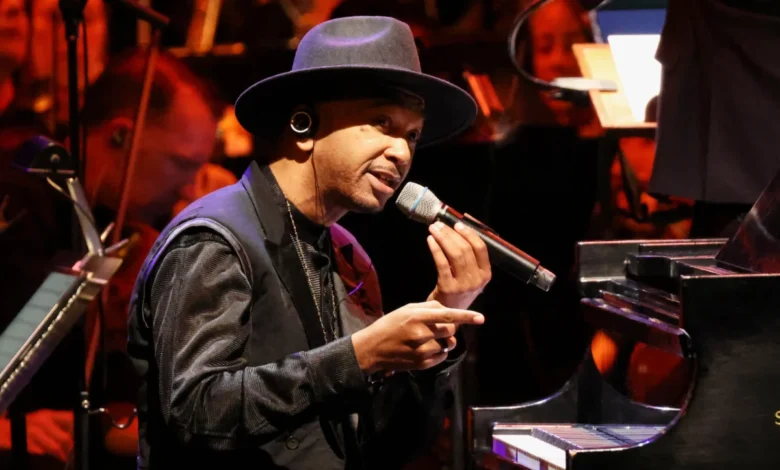
Drafting a musical composition worthy of mirroring the cultural and athletic magnitude of Muhammad Ali is widely regarded as one of the most formidable challenges a modern songwriter can undertake. When composer Marcus “Bellringer” Bell accepted the assignment to create original music for Prime Video’s acclaimed eight-episode biographical drama series, The Greatest, he knew standard approaches would fall short. To capture the essence of a sporting icon whose life transcended the squared circle, Bell bypassed conventional pop tropes and instead looked backward across generations, drawing direct inspiration from a literary titan: Victorian-era author Rudyard Kipling.
Bell revealed the intricate, deeply personal creative process behind the song “Walk With Kings” during an appearance at Deadline’s Sound & Screen Film showcase. The high-profile event, designed to spotlight exceptional cinematic and television compositions, dedicated a specific segment to exploring the auditory landscape of Amazon’s prestige drama, which centers on the formative years and monumental bouts of the boxing legend famously known as "The Greatest."
The Genesis of a Masterpiece: From a Virginia Childhood to Imperial Literature
The roots of “Walk With Kings” stretch far beyond the Hollywood soundstages and streaming executive suites, originating instead in the quiet neighborhoods of Virginia where Bell spent his formative years. Speaking to the audience at Sound & Screen, Bell recounted a childhood memory that would ultimately alter the trajectory of his professional career.
“It started when I was 9 years old,” Bell recalled during the panel discussion. “There was a woman named Ms. Noble that lived across the street from where I grew up in Virginia. Ms. Noble was the neighborhood grandmother. She’d call my mom, ‘I got a pound cake. Can Marcus come over?’ That kind of woman. She gave me, for my ninth birthday, a poem called If.”
The gift was not merely a sentimental gesture; it was the introduction to Rudyard Kipling’s renowned 1895 didactic poem, If—. Decades later, Bell discovered a profound historical parallel that bound his own upbringing to that of his subject. He learned that Muhammad Ali—born Cassius Clay—held Kipling’s If— as his absolute favorite piece of literature, frequently quoting its guiding principles on humility, resilience, and personal integrity.
Kipling’s famous lines, which serve as the philosophical bedrock of Bell’s song, resonate powerfully through the decades: “If you can talk with crowds and keep your virtue, / Or walk with Kings nor lose the common touch… Yours is the Earth and everything that’s in it, / And which is more you’ll be a Man, my son!”
For Bell, reading the poem as a child provided an immediate mirror for his own aspirations, a framework for navigating a world filled with systemic barriers. “I read the poem and I could see myself in the poem,” Bell explained. “I could see something more to aspire to as well. So I wrote a song from that experience for those people in underrepresented communities that aspire for greatness.”
A Legacy of Activism: Bridging Tennis, Boxing, and Melody
The emotional weight of “Walk With Kings” is further amplified by Bell’s own familial lineage, which intersects with the civil rights struggles and athletic milestones of the 1960s. During the Sound & Screen presentation, the composer drew direct lines between his mother’s historic athletic career and the political activism embodied by Muhammad Ali.

“It was a spiritual journey,” Bell reflected, detailing the parallels between sport and social justice. “My mother was a national tennis champion in the ’60s and played in the U.S. Open. She was a civil rights activist. Caroline Williams, she was like the first Williams. [In] ’61, she was the national tennis champion. That was the year that Ali won the gold medal. So tennis was her activism and boxing was Muhammad Ali’s activism. And that piano over there and my pen, my activism.”
This synthesis of physical endurance, social justice, and artistic expression forms the core thematic architecture of Prime Video’s The Greatest. Rather than presenting a superficial, hagiographic portrayal of a sports star, the eight-episode series meticulously contextualizes Ali’s rise within the turbulent geopolitical and racial landscape of mid-century America.
Structuring the Narrative: The Ascent to the Sonny Liston Bout
Prime Video’s The Greatest carefully structures its overarching narrative arc toward one of the most pivotal moments in sports history: Muhammad Ali’s legendary 1964 World Heavyweight Championship bout against the fearsome and heavily favored Sonny Liston.
In the historical timeline of Ali’s life, the Liston fight marked the definitive transition from Cassius Clay, the charismatic Olympic gold medalist from Louisville, Kentucky, to Muhammad Ali, a global cultural phenomenon and unapologetic voice for Black empowerment. It was a night of immense psychological warfare, tactical brilliance, and high drama that forever altered the landscape of professional boxing.
Bell’s composition, “Walk With Kings,” is strategically deployed within the television series to score this exact psychological and cultural inflection point. Hearing the finished track synchronized with the moving image proved to be an overwhelming experience for the composer, who admitted that the final product surpassed even his own exacting expectations.
“I saw it play with the picture, I got a chill,” Bell shared with the Sound & Screen audience. “I started crying. And so since I then watched the show myself when it came out and understand the context, it’s such a key moment. It’s the transition. I was sharing this with the orchestra earlier. It’s the transition moment where he becomes the greatest. It’s the moment that he steps into himself in a different way.”
The Broader Implications for Prestige Television Scoring
The inclusion of “Walk With Kings” in The Greatest underscores a broader, highly successful trend in contemporary prestige television: the elevation of original songcraft to carry the emotional and thematic heavy lifting of biographical dramas. While traditional orchestral scores provide atmospheric tension, lyrical compositions tied directly to historical texts—such as Kipling’s poetry—offer audiences a deeper intellectual and emotional entry point into complex biographical subjects.
Industry analysts note that projects focusing on towering historical figures like Muhammad Ali require soundtracks that avoid pastiche while honoring the specific cultural texture of the era. By rooting his composition in a personal childhood gift from a Virginia neighbor, Bell bridged the gap between intimate human experience and monumental historical achievement. The result is a musical piece that does not merely accompany the visual storytelling, but actively defines the psychological evolution of the protagonist.
As The Greatest continues to stream on Prime Video, drawing critical acclaim for its nuanced writing, stellar performances, and meticulous production design, the music stands out as a critical anchor. For Marcus Bell, the journey from receiving a worn copy of a Victorian poem as a nine-year-old birthday present to orchestrating a symphony for a global streaming event represents the ultimate manifestation of Kipling’s verse: walking with kings while never losing the common touch.
Related posts: