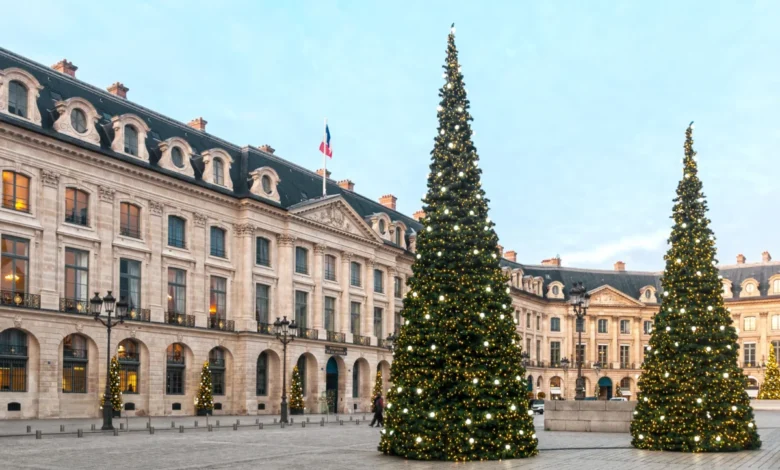
While Strasbourg holds the historical title of France’s holiday capital with the nation’s oldest Marché de Noël, Paris transforms into an unrivaled urban winter wonderland when the festive season arrives. As December descends upon the French capital, the city undergoes a breathtaking metamorphosis. Thousands of twinkling lights illuminate its iconic boulevards, historic squares, and architectural landmarks, most notably the Champs-Élysées, widely celebrated as one of the world’s most glamorous avenues. Holiday cheer effortlessly seeps into all 20 of the city’s distinct arrondissements, each adorned with larger-than-life evergreen garlands, towering fir trees heavy with glittering baubles, sculptural illumination displays, and traditional wooden chalets serving steaming cups of vin chaud (mulled wine) alongside regional delicacies like rich foie gras spread generously over subtly sweet pain d’épices (traditional French gingerbread).

Beyond the illuminated avenues, quintessential Parisian winter traditions come to life. Street-side oyster stands materialize across the metropolis, becoming as much a fixture of the holiday landscape as the festive markets themselves—which frequently serve as the optimal venue for sampling these fresh seasonal delicacies. Visitors looking to celebrate the season in true French fashion can embark on a movable feast, dining and drinking at legendary historic institutions. These range from storied Left Bank cafés where generations of famous writers, philosophers, and artists once gathered, to the opulent palace hotels huddled majestically around the Place de la Concorde and the Place Vendôme.
For travelers eager to partake in world-renowned retail therapy, a visit to Paris’s historic grands magasins (department stores) is mandatory. These retail cathedrals rank among the finest in the world for their intricate holiday window displays—rivaling and often surpassing those of New York City—executed with the same rigorous style, storytelling, and precision as a haute couture fashion house. While the City of Light rarely receives a blanket of winter snow, the festive atmosphere is palpable, carrying a warmth and vibrancy that rivals the winter slopes of the French Alps, complete with authentic cuisine and alpine chalets. For those planning a holiday escape to Paris, the metropolis offers a wealth of unforgettable experiences, anchored by several core traditions that define the season.

A Brief History and Evolution of Parisian Holiday Traditions
The celebration of Christmas in Paris is steeped in a rich history that bridges centuries of religious observance, culinary heritage, and modern commercial artistry. While modern festivities are characterized by dazzling LED light installations and designer window displays, the roots of Parisian winter traditions trace back to medieval times, when communal markets provided essential winter provisions and warm sustenance to urban residents.
Over the centuries, these rudimentary gatherings evolved into the structured festive markets seen today. The introduction of grand department store window displays in the late 19th and early 20th centuries marked a major turning point in how the city celebrated the season. Stores such as Galeries Lafayette and Printemps recognized the potential of combining art, mechanics, and commerce, turning window shopping into a major cultural event for families and tourists alike.

In recent decades, municipal authorities have heavily invested in sustainable holiday infrastructure. The transition to energy-efficient LED lighting across major thoroughfares, such as the Champs-Élysées and Avenue Montaigne, reflects a broader commitment to reducing the city’s carbon footprint while maintaining its status as a premier global winter destination. Furthermore, the integration of regional artisans into Parisian holiday markets has strengthened economic ties between rural French producers—particularly from regions like Alsace, Burgundy, and the Southwest—and the capital’s vast consumer base.
Chronology of the Parisian Holiday Season
The transformation of Paris into a holiday destination follows a meticulously planned calendar that spans from mid-November through early January. Understanding this timeline is crucial for travelers and local businesses aiming to maximize the seasonal economic and cultural benefits.

- Mid-November: The official holiday season unofficially begins as major department stores (grands magasins) unveil their highly anticipated Christmas window displays and indoor trees. Concurrently, municipal installation of street illuminations commences across key thoroughfares.
- Late November: Traditional Christmas markets—including those at the Tuileries Garden, La Défense, and Saint-Germain-des-Prés—open their wooden chalets to the public, offering artisanal crafts, regional foods, and mulled wine.
- Early December: The formal illumination ceremonies take place on major avenues such as the Champs-Élysées, often presided over by invited cultural figures, actors, or athletes. Ice skating rinks open in temporary public spaces, including monumental settings like the Grand Palais Éphémère or municipal squares.
- December 24–25: Christmas Eve (Réveillon de Noël) and Christmas Day are marked by elaborate multi-course family dinners featuring traditional dishes such as bûche de Noël (Yule log), oysters, capon, and champagne, alongside midnight mass services in historic churches like Saint-Eustache and La Madeleine.
- December 31: New Year’s Eve (Saint-Sylvestre) brings celebratory gatherings along the Champs-Élysées and around the Eiffel Tower, culminating in urban festivities to welcome the new year.
- Early January: The holiday season concludes officially following Epiphany (Three Kings’ Day) on January 6, when bakeries across the city begin selling the traditional galette des rois (king cake), signaling the end of the winter festivities.
Economic, Cultural, and Tourism Implications
The winter holiday season represents a critical economic engine for Paris, serving as a vital counterweight to the summer tourism peak. According to municipal tourism data and hospitality sector analyses, the period between mid-November and the end of December generates billions of euros in economic activity, significantly boosting the retail, hospitality, gastronomy, and transportation sectors.
Hotels situated near major shopping districts and landmarks experience high occupancy rates, driven by a mix of international travelers from the United Kingdom, the United States, and neighboring European nations, alongside domestic tourists seeking a festive weekend getaway. The distinct appeal of Parisian holiday culture—characterized by artisanal gastronomy, luxury retail, and historic ambiance—acts as a resilient attractor even amid broader economic fluctuations.

From a cultural perspective, the season reinforces Paris’s identity as a capital of arts and craftsmanship. The collaboration between high-end fashion houses and cultural institutions during the holidays underscores the porous boundary between commerce and art in French society. Retail displays are treated as temporary public art installations, democratizing access to high design for millions of pedestrians who stroll past the boulevards.
Official Responses and Municipal Strategies
City officials, tourism boards, and merchant associations coordinate extensively to manage the logistical challenges and maximize the benefits of the holiday surge. In statements released by the Paris Convention and Visitors Bureau, municipal leaders emphasize the dual priorities of enhancing visitor experience and adhering to strict environmental and safety standards.

"Paris during the winter holidays is a showcase of our city’s heritage, creativity, and savoir-faire," noted a representative from the tourism directorate. "Our goal is to ensure that the magic of the season is accessible to all, while actively managing energy consumption through advanced smart-lighting technologies and promoting sustainable, locally sourced products within our holiday markets."
Security and crowd-management protocols are also significantly heightened during this period. The Prefecture of Police collaborates closely with public transport operators (RATP) and local merchants to implement pedestrian-friendly zones, particularly along high-traffic corridors like the Champs-Élysées and the Marais district, ensuring a secure environment for families and shoppers.

Broader Impact on the Urban Landscape
Beyond the immediate economic metrics, the festive season profoundly shapes the urban fabric and social rhythm of Paris. Neighborhood associations organize local light displays and community events, fostering a sense of localized camaraderie within the sprawling metropolis. The presence of seasonal markets in public parks and squares transforms underutilized urban spaces into vibrant community hubs where residents and visitors mingle.
Furthermore, the emphasis on traditional French gastronomy during the holidays—highlighting products such as oysters, cheeses, artisanal chocolates, and regional wines—supports agricultural producers across France, creating a direct supply chain from rural countryside economies to urban consumers. This synergy between urban celebration and rural tradition reinforces the cultural centrality of food in French society, ensuring that the holiday season remains not merely a commercial enterprise, but a deeply rooted cultural ritual.
Related posts: