The Risky Intersection of Artificial Intelligence and Emergency Disaster Communication

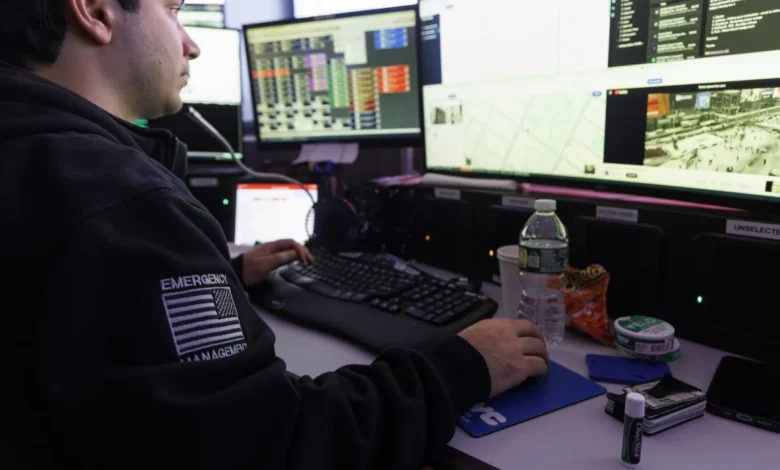
Earlier this month, as Hurricane Isaias churned toward the Gulf Coast as a Category 3 storm, the fragility of public safety communication was laid bare. Laura Myers, director of the University of Alabama’s Center for Advanced Public Safety, received an urgent call from an Alabama meteorologist. A local emergency manager had disseminated a graphic detailing the potential path of a “sting jet”—a concentrated, intense wind phenomenon—threatening the coast. The graphic, however, was not the product of meteorological modeling or National Weather Service data. It had been generated by an artificial intelligence chatbot, and it was entirely inaccurate. This incident, while seemingly isolated, highlights a growing, systemic trend: local disaster officials, overwhelmed by the pressures of rapid-onset climate events and limited staffing, are increasingly turning to generative AI to bridge their communication gaps, often at the risk of public trust and accuracy.
The challenge facing emergency managers is one of both capacity and clarity. They are tasked with the immense responsibility of being the primary line of defense for their communities, yet they are often hampered by limited budgets and small staffs. In the critical moments of a disaster, these officials must synthesize complex scientific data into actionable, life-saving instructions. Historically, this has proven difficult. Emergency managers are subject to human error, including the use of technical jargon that confuses the public, the omission of critical location-specific information, or the inclusion of distracting, irrelevant details. As climate change increases the frequency and intensity of extreme weather, the margin for error in these communications has effectively vanished.
The Evolution of Disaster Communication Failures
The consequences of flawed communication are not merely theoretical; they are measured in property damage and human lives. A retrospective look at recent disaster responses reveals a pattern of failure rooted in ambiguity and poor messaging. In 2016, California counties issued conflicting “voluntary” and “mandatory” evacuation orders for the same wildfire, creating confusion that hindered the orderly movement of residents. Similarly, in 2019, Australian authorities utilized the term “Watch and Act” during catastrophic wildfires. A subsequent government inquiry identified the phrase as a primary driver of public confusion, as the terminology lacked a standardized, universally understood meaning in the heat of an active crisis.
The most harrowing example occurred in Montecito, California, following the 2017 Thomas Fire. Weeks after the fire, a catastrophic mudslide followed heavy rains. Santa Barbara County officials, attempting to alert residents already suffering from “warning fatigue” after the blaze, issued an evacuation notice that was misconstrued by many as optional. The resulting confusion contributed to a tragedy that claimed 23 lives and injured more than 160 others. These events underscore the reality that in emergency management, as officials often state, “trust is our currency.” When communication fails, that trust is eroded, making it increasingly difficult to mobilize the public in subsequent emergencies.
The Allure of Generative AI
For many, the appeal of artificial intelligence in this sector is undeniable. Generative AI models are capable of processing vast amounts of data—including years of research on effective disaster messaging—and refining human-drafted alerts in seconds. FEMA provides extensive training for emergency managers, yet under the intense pressure of an unfolding disaster, even the most seasoned professional may struggle to recall these best practices.
Rob Dale, who oversees the emergency management department in Ingham County, Michigan, suggests that AI can serve as a powerful force multiplier. “If you’ve only sent one alert in your life, and that was 15 years ago, and you’re thinking, ‘Hey, there’s a chemical plume coming my way, the phone’s ringing, the radio’s blaring, I need help,’ the AI is probably going to do a better job than you are,” Dale remarked. He has experimented with AI-drafted alerts for training purposes, maintaining that while the technology can synthesize information, the human element—the final decision to hit “send”—must remain under local control.
Bridging the Gap: The EM1 Model and Beyond
The private sector has been quick to recognize this need, with numerous startups developing tools specifically for emergency management. One such firm, EM1, has utilized academic research, including the work of disaster researcher Jeannette Sutton, to train specialized models. These tools are designed to outperform human-generated alerts in clarity, brevity, and actionable guidance.
In a test case provided by Sutton, a raw, poorly worded alert from a New Mexico county—stating only “Breeched banks. The water is rising. EVACUATE NOW”—was subjected to the EM1 model. Within seconds, the AI generated a refined version: “San Juan County: Floodwater is rising near [location]. People in [evacuation area]: LEAVE NOW for higher ground. Do not walk or drive through floodwater. McGee Park is open for people and pets. Check [official update source] for updates.” The AI model successfully corrected spelling, added necessary location data, provided specific instructions on how to evacuate, and directed residents to a source for further information.
The Hidden Risks of Unofficial Adoption
Despite the potential for improved accuracy, official adoption of such technology remains in its infancy. Most agencies prohibit the use of unvetted AI, fearing data leaks or, more importantly, the “hallucinations” inherent in large language models. However, experts like Sarah Miller, a professor of emergency management at Pierce College, believe the reality is far different. “Official adoption is pretty low, but people are unofficially using it, absolutely,” Miller noted. “They’re using their own personal accounts, or they’re using free ones.”
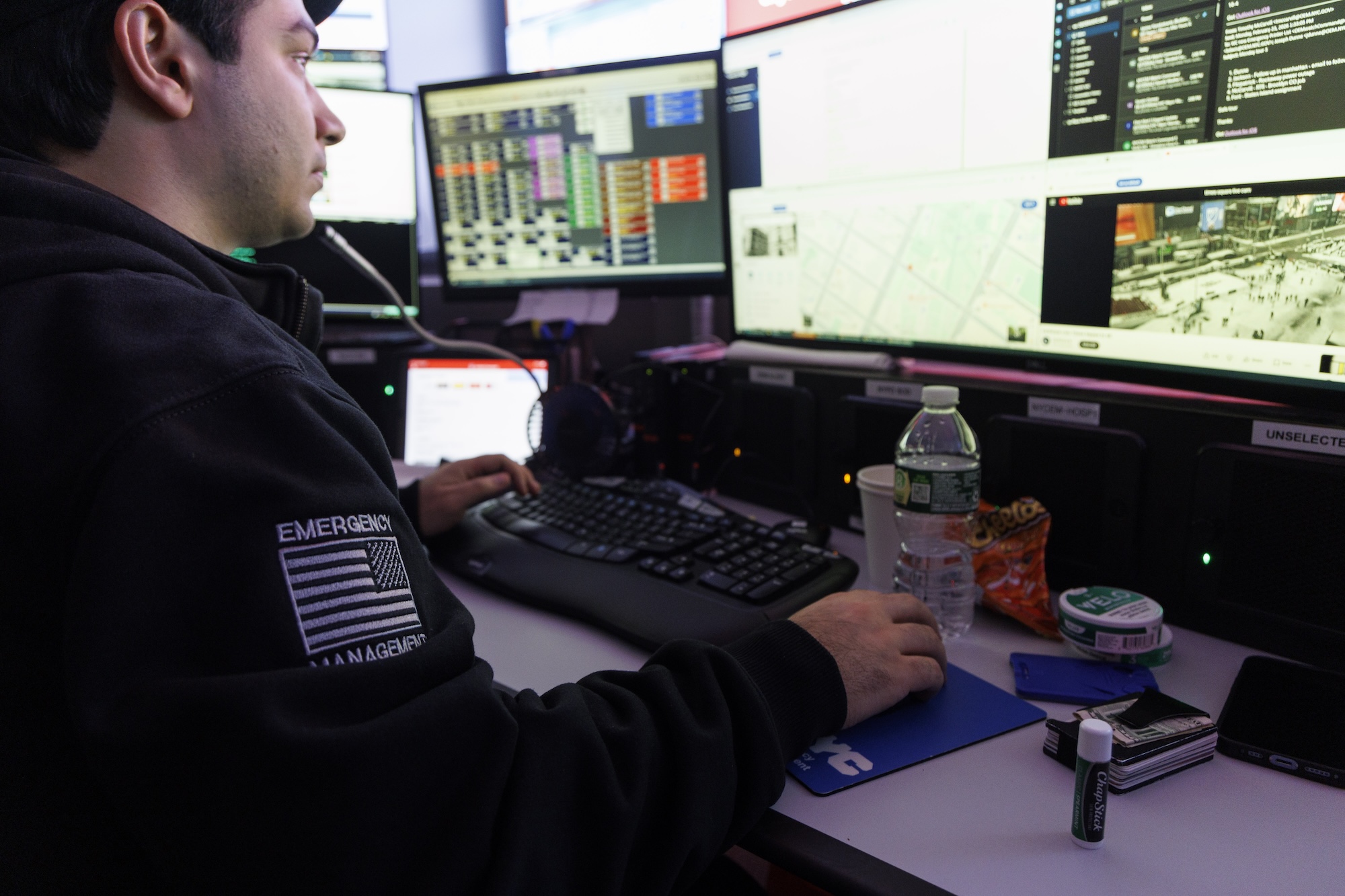
This “shadow use” of AI presents a significant governance challenge. Without institutional oversight, there is no way to verify the information being disseminated. Furthermore, the reliance on AI creates a secondary layer of risk: the potential for public backlash. If the public perceives that their safety information is being generated by a machine rather than a human authority, it may diminish the perceived authenticity of the warning. Ginny Katz, founder of the consultancy HazAdapt, emphasizes that trust is predicated on the perception of human care. “AI-generated content does not feel authentic,” she warned.
The Future of Crisis Communication
The integration of AI into disaster management is inevitable, but its trajectory remains uncertain. The technology is currently a tool for support, not a replacement for judgment. A seasoned emergency manager can use AI to accelerate their response, but an inexperienced official may not possess the critical eye required to catch a false or misleading output.
As climate events continue to grow in frequency, the pressure on emergency management departments to communicate effectively will only intensify. The central question for the industry is no longer whether to use AI, but how to integrate it within a framework of rigorous verification and human accountability. Until standard protocols are established, the use of chatbots for public safety warnings remains a double-edged sword—offering the promise of perfect, rapid communication while carrying the inherent risk of introducing errors that could have life-altering consequences.
The industry currently stands at a crossroads. As companies like Preppr and EM1 continue to push the boundaries of what is possible, the burden of responsibility remains with the public officials who must ensure that the “currency” of trust is not spent on the convenience of automation. Ultimately, the accuracy of a disaster alert—whether written by a human, an AI, or a combination of both—will be judged by the only metric that matters: the safety of the public it is intended to protect.
Related posts: