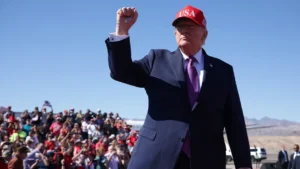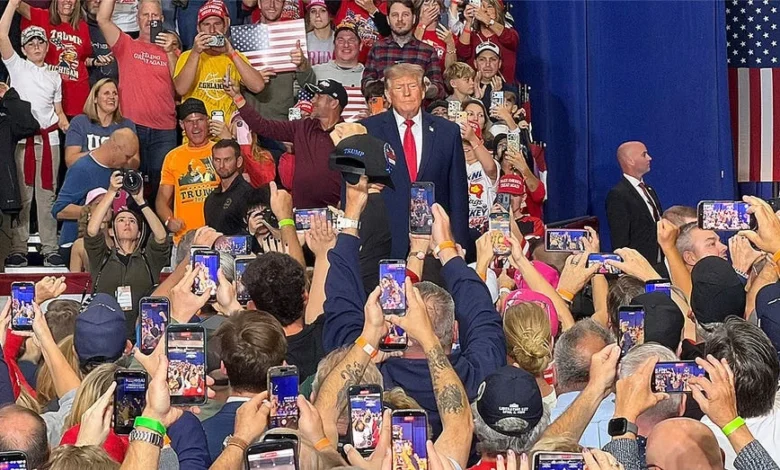
PORT HURON, Michigan — Against a backdrop of persistent economic strain, surging consumer prices at gas and diesel pumps, and escalating geopolitical tensions, the bedrock of the "Make America Great Again" (MAGA) movement remains steadfastly committed to President Donald Trump. In this pivotal electoral battleground state, where the political pulse often mirrors the anxieties of Middle America, voters lining up for hours outside a recent presidential rally on the shores of Lake Huron expressed an unyielding loyalty to the Republican platform. While mainstream political analysts point to historical midterm headwinds, a challenging national economic landscape, and sliding national approval ratings for the incumbent administration, the sentiment on the ground in Port Huron tells a markedly different story of unwavering support, ideological alignment, and disciplined party loyalty.
The Economic Reality and the Midterm Landscape
As the political establishment prepares for the high-stakes midterm elections, the Republican Party faces a historical burden. Traditionally, the party occupying the White House suffers legislative losses during midterm cycles. Compounding this structural challenge is an unforgiving economic climate characterized by stubborn inflation, which has strained household budgets across the American Midwest.
Recent national data underscores the complexity of the political battlefield. While public polling places President Trump’s national job approval rating at 36 percent—marking a low point in tracking surveys—the metric tells an entirely different story within the heart of his political base. Among self-described MAGA voters, approval metrics soar near a near-unanimous 95 percent. For these citizens, short-term economic discomfort is viewed not as a policy failure, but as a necessary and temporary sacrifice for long-term national rejuvenation.
"I know that Trump is always out for America’s interests first. And that’s what I really like about him," said James Blake, a resident of nearby Bay City, echoing a sentiment repeated across the rally queues.
Linda Taggart of Marysville characterized current financial pressures as "short-term pain for long-term gain."
"We see the long-term goal, and we support that," Taggart added.
Other attendees, such as Port Huron local Bob Kemp, argued that the current economic turbulence is a byproduct of national course-correction following the preceding four years of Democratic leadership under former President Joe Biden. "Whenever you’re fixing something, it always gets worse before it gets better," Kemp noted.
Foreign Policy and the Iran Conflict
A central pillar of the ongoing political debate centers on the administration’s foreign policy maneuvers, specifically the military engagement with Iran. President Trump has vigorously defended the conflict during campaign stops, asserting that decisive military action is vital to dismantling Tehran’s nuclear capabilities permanently.
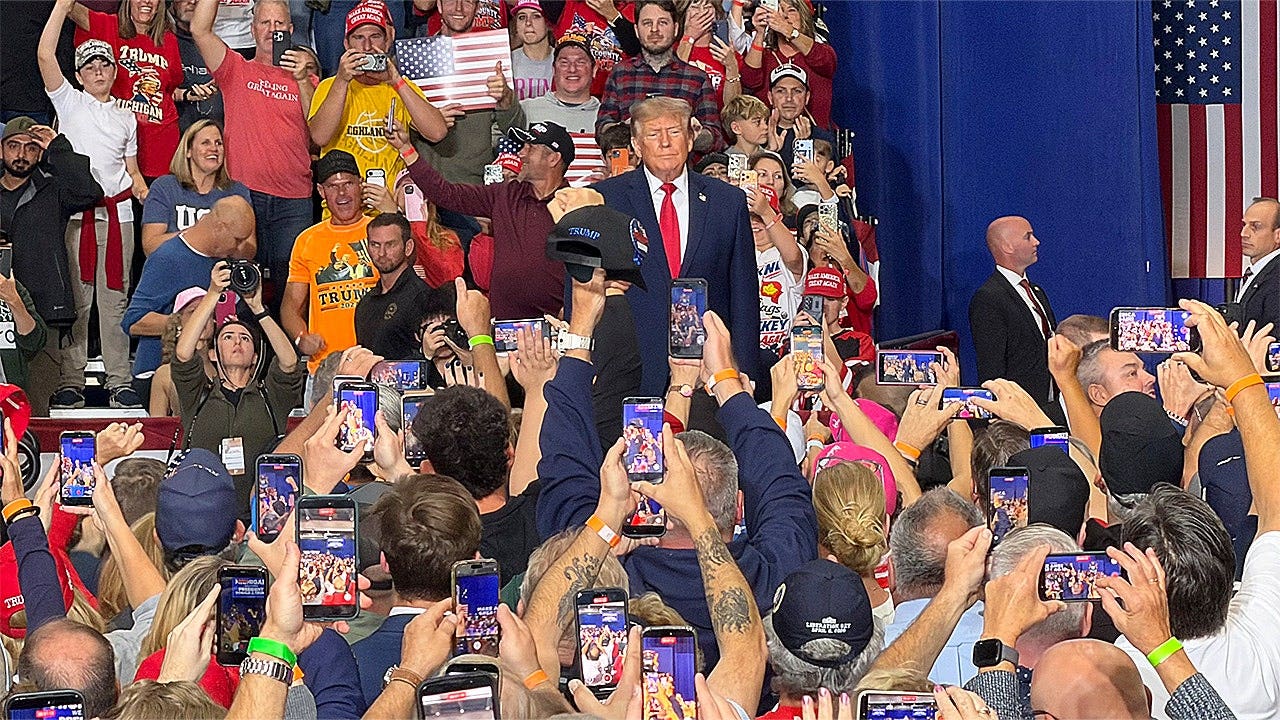
"We are ensuring that Iran will never have, ever have, ever, ever a nuclear weapon," Trump told the cheering crowds in Port Huron, framing the military campaign as an unavoidable national security imperative.
This aggressive posture has found strong resonance among the base, who prioritize national defense over short-term economic fallout. Carol Mocan of Warren, Michigan, dismissed criticisms linking the administration’s economic policies to the ongoing conflict.
"Iran needed to be taken care of," Mocan stated. "No one else has done it for a long time… and I really think it needs to be shut down."
Ken Gunnels of Clio, Michigan, echoed this sentiment, emphasizing the existential nature of the threat. "I believe Iran was a genuine threat to this country. If a nuclear bomb went off in one of our major cities, I don’t think any of us would have any idea the repercussions that this country would suffer from that. I think those people are monsters, and I think we had to have a president that would stand up to them."
Immigration, Social Policy, and Legislative Priorities
While foreign policy and economic conditions dominate nightly newscasts, voters in Port Huron emphasized that other core tenets of the Trump platform remain paramount to their electoral calculus. Chief among these is border security and immigration enforcement.
"My biggest thing is the immigration. If you’re here illegally, expect a knock on your door from ICE," said Steve Scouten of nearby Burtchville.
Michael Bacheller, Scouten’s longtime friend and fellow rally attendee, concurred. "If I could pick one thing that Trump should really go down for, it is the immigration policy," Bacheller remarked, expressing total alignment with the administration’s enforcement objectives.
Beyond border security, voters highlighted social and tax policy initiatives championed by the executive branch. James Blake pointed to the administration’s stances on cultural issues, including restrictions regarding biological males competing in women’s athletic categories, as a significant mobilizing factor. Additionally, Blake praised economic proposals such as eliminating federal taxes on tips, overtime pay, and Social Security benefits as tangible policies that directly benefit working-class families.
For others, the alignment is deeply philosophical. Rolande Debell of Port Huron summarized her support in broader ideological terms: "It’s all about being American. It’s all about our freedom. It’s all about our rights. It’s all about our Ten Commandments, and that’s Trump."

Political Polarization and the Rejection of the Opposition
A striking commonality among the voters interviewed was a complete absence of cross-over appeal for the Democratic Party. Not a single attendee indicated an openness to voting for Democratic candidates in the upcoming congressional contests, framing the opposition through a lens of deep ideological divergence.
"I don’t like a lot of the things that they believe in," Judith Troy said simply.
Carol Mocan offered a harsher critique of opposition lawmakers, asserting that Democrats "don’t live in the same world that the rest of us do. They just don’t think about the people. They think about their careers… whatever it takes to get elected."
James Blake framed the choice in stark economic and political terminology. "I’m not in the business of socialism. I don’t think that’s a good way to go, and I think that’s where the Democrats are heading at this time."
This sentiment was shared even by those who had previously identified with the political left. Steve Scouten revealed that he was formerly a registered Democrat before shifting his allegiance. "Never again," Scouten said. "They’re too far to the left."
Implications for the Midterm Elections
As the United States moves closer to the midterm elections, the divergence between national polling averages and local enthusiasm presents a complex puzzle for political strategists. While broader demographic groups express dissatisfaction with inflation and the tangible costs of foreign engagements, the foundational core of the Republican electorate in vital Midwestern states like Michigan remains galvanized.
The ability of the GOP to retain its legislative majorities in the House and Senate will largely depend on whether enthusiasm among the MAGA faithful can offset independent voter dissatisfaction with the economy. For the voters braving the lines in Port Huron, however, the choice is clear, immediate, and immune to conventional political headwinds. Their loyalty to the administration’s platform—grounded in strict border enforcement, muscular foreign policy, populist tax relief, and traditional cultural values—remains unshakeable as they prepare to head to the ballot box.
Related posts: