Tovah Feldshuh responds to Adam Brody’s comments on the Israel-Gaza conflict amid wider industry tensions

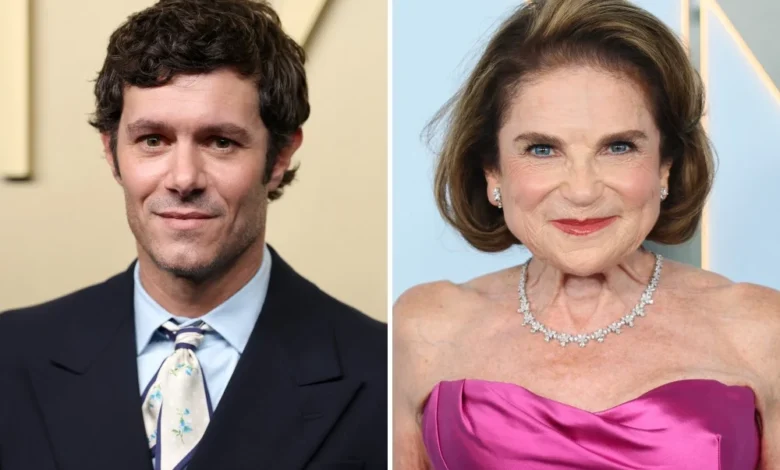
The cast and creative team of the hit Netflix series Nobody Wants This have found themselves at the center of a burgeoning public discourse regarding the ongoing conflict in the Middle East. The tension stems from recent political statements made by lead actor Adam Brody, who plays the central character Rabbi Noah Roklov, and the subsequent rebuttal from his on-screen mother, veteran actress Tovah Feldshuh. This internal discord within the production reflects a broader, highly polarized climate within the entertainment industry, where personal political advocacy is increasingly intersecting with professional collaboration.
The Catalyst: Adam Brody’s GQ Interview
The controversy originated in an interview published last month in GQ, in which Adam Brody candidly addressed the Israel-Gaza conflict. Brody, who has previously maintained a low profile regarding his personal political views, stated that while the topic had long been a subject of private discussion for him, he felt compelled to speak out publicly.
During the conversation, Brody expressed a firm stance, stating, "Put me down as thinking it’s a genocide. Put me down as wanting a free Palestine." He further elaborated on the gravity of the situation, noting, "It’s awful that it’s taken so much death and misery, but it does feel like it’s reaching a breaking point that it should have a while ago." These remarks, while praised by some activists, drew immediate criticism from others who viewed the terminology used—specifically the allegation of genocide—as inflammatory and historically insensitive given the Jewish context of the show and the wider regional history.
Tovah Feldshuh’s Rebuttal
On Sunday, Tovah Feldshuh, who portrays Bina Roklov in the series, addressed Brody’s comments in an interview with The New York Post. Feldshuh, a staunch supporter of Israel, took sharp issue with the framing of the conflict, particularly Brody’s use of the term "genocide."
"To accuse the Jewish people of genocide is wild," Feldshuh stated. "It’s right out of Hitler’s playbook. You take the victim, and you make the victim the perpetrator." She emphasized that such rhetoric carries specific weight when voiced by Jewish public figures, noting that it "makes a difference to the [Jewish] community."
Feldshuh’s response moved beyond a critique of the terminology to a defense of the geopolitical necessity of Israel. "I believe that the perseverance of the existence of the state of Israel is crucial to the well-being of the democratic world and of the free world," she asserted. "Of course, Israel needs the United States, [but] the United States needs Israel, believe me." She further characterized the current political climate as suffering from a "horseshoe effect," a theory suggesting that the far-left and far-right extremes often converge on issues of antisemitism. Despite these strong disagreements, Feldshuh underscored her professional commitment to the production, stating, "My job, as Bina but also as Tovah, is to love the people on set at my place of work, to be kind."
Industry Context and the "Nobody Wants This" Response
The discourse surrounding the cast members has prompted a response from the show’s creator, Erin Foster. Earlier this month, Foster appeared on the podcast "Not Skinny but Not Fat," where she was asked to address the friction caused by Brody’s comments.
Foster sought to normalize the existence of political disagreement within a professional creative environment. "You know, it’s complicated," Foster said. "I think our work environment, our set is very similar to dinner tables around the world where people are having debate and discussion and disagreeing. And, you know, while I love Adam, I also disagree with him, and that’s OK."
This approach—framing the set as a microcosm of global discourse—highlights a growing trend in Hollywood: the expectation that creative teams can remain cohesive despite significant ideological divides. However, as the industry continues to navigate the fallout from the October 7, 2023, attacks and the subsequent war in Gaza, maintaining this neutral professional stance has become increasingly difficult for many productions.
Timeline of the Conflict and Global Industry Impact
The current tensions are rooted in the escalation of the Israel-Hamas war, which began in October 2023. Since that time, the entertainment industry has seen a series of high-profile ruptures. From the dissolution of talent agency contracts to the public firing of high-level executives and actors for their social media activity, the cost of political speech in the industry has reached an all-time high.
- October 2023: The Hamas-led attack on southern Israel and the subsequent declaration of war by the Israeli government trigger immediate and intense global debate.
- Late 2023–Early 2024: Multiple guilds and unions within Hollywood face internal pressure to issue statements on the conflict, leading to fractured internal politics and public resignation letters from prominent members.
- September 2024: Nobody Wants This premieres on Netflix to critical success, bringing renewed focus to the cast and their personal lives.
- October 2024: Adam Brody’s GQ interview is published, setting off a wave of media coverage regarding his political stance.
- Late October 2024: Tovah Feldshuh’s response to Brody, followed by Erin Foster’s remarks on the podcast, solidify the divide as a matter of public record.
Fact-Based Analysis: The "Genocide" Debate
The debate over the application of the term "genocide" regarding the Israel-Gaza conflict is one of the most contentious aspects of international law and public discourse today.
Proponents of the term, including various human rights organizations and international scholars, often point to the high casualty rates among Palestinian civilians, the widespread destruction of infrastructure in Gaza, and the restrictions on humanitarian aid as evidence of a systemic attempt to destroy a group of people. Conversely, the Israeli government and its supporters vehemently reject this characterization, arguing that their military actions are directed at Hamas, a designated terrorist organization, and that they are exercising their right to self-defense under international law.
The International Court of Justice (ICJ) has been seized with this matter, having issued various rulings regarding the obligation of Israel to prevent acts of genocide; however, the court has not reached a final verdict on whether the state’s actions constitute a genocide. This legal ambiguity leaves room for the intense emotional and political debates currently manifesting in cultural spheres like Hollywood.
Implications for the Future of Production
The situation surrounding Nobody Wants This serves as a case study for how modern productions will likely handle political volatility in the coming years. Historically, actors and creators were often discouraged from discussing sensitive geopolitical topics to avoid alienating potential audience segments. In the digital age, however, the barrier between public perception and personal opinion has largely dissolved.
The strategy employed by the Nobody Wants This team—publicly acknowledging the disagreement while maintaining professional respect—represents a pragmatic attempt to insulate the project from total polarization. Yet, as the conflict persists, the efficacy of "agreeing to disagree" may face further tests. For an industry that relies heavily on global distribution and brand consistency, the challenge lies in balancing the individual rights of talent to express their conscience with the collective reputation and stability of the intellectual property.
As viewers continue to consume the show, the public nature of these arguments may inevitably influence how the series is received and interpreted. The interaction between Feldshuh and Brody, while remaining professional on set, illustrates that the "dinner table" of American discourse has effectively moved into the studio space, signaling a new era of transparency regarding the personal beliefs of those who populate our screens.