The Great Oceanic Shift: How a Record-Breaking El Niño Is Reshaping Global Weather Patterns


Off the Pacific coast of South America, a colossal band of warm water is currently undergoing a transformation into an atmospheric anomaly of historic proportions. With surface temperatures surging to more than 3 degrees Celsius above the long-term average, this El Niño event has officially become the most intense on record since the advent of satellite-based sea-surface monitoring half a century ago. Climate scientists now anticipate that the event will not reach its zenith for several months, with projections suggesting the anomaly could climb toward 4 degrees Celsius by late 2026. This is not merely a localized fluctuation; it is a profound geophysical event that is currently rewiring the climate of the entire planet.
The Mechanics of the Anomaly
To understand the scale of this phenomenon, one must look to the ocean’s capacity for heat storage. According to Art Miller, a climate scientist at the Scripps Institution of Oceanography, the ocean possesses a thermal inertia roughly 1,000 times greater than that of the atmosphere. Even a seemingly marginal increase in sea surface temperatures translates into a massive transfer of energy into the air, acting as a primary driver for global weather patterns.
This specific El Niño is characterized by a "super" classification, a term scientists use to describe events where the oceanic heat content creates widespread, systemic disturbances. Zeke Hausfather of Berkeley Earth notes that current data is already in "uncharted territory." Every meteorological model utilized by global research institutions indicates that the event is still in a phase of rapid intensification, meaning the atmospheric consequences will likely amplify as the year draws to a close.
A Tale of Two Oceans: The Hurricane Paradox
While the Pacific is experiencing this hyper-active heat event, the Atlantic basin has exhibited an anomalous silence. Historically, the Atlantic hurricane season, which commences in June, is characterized by a steady progression of tropical storms and hurricanes. By late September, a typical season would have seen at least four hurricanes, including two major systems. Instead, 2026 has defied historical precedent, marking the latest date for a first hurricane in the recorded era, shattering the previous record set on September 11.
This discrepancy is not coincidental; it is a direct result of the Pacific El Niño’s influence on global wind patterns. Hurricanes act as complex heat engines that require specific conditions to thrive: high humidity, warm sea-surface temperatures, and, crucially, consistent wind flow. While the Atlantic currently provides the necessary thermal fuel, the El Niño event has introduced intense wind shear—a condition where winds at different altitudes blow in opposing directions or at varying speeds. This "gusty mess" effectively tears apart developing storm systems. Furthermore, El Niño promotes sinking, dry air in the tropical Atlantic, a condition inherently hostile to the moisture-dependent formation of cyclones.
Rapid Intensification and Pacific Threats
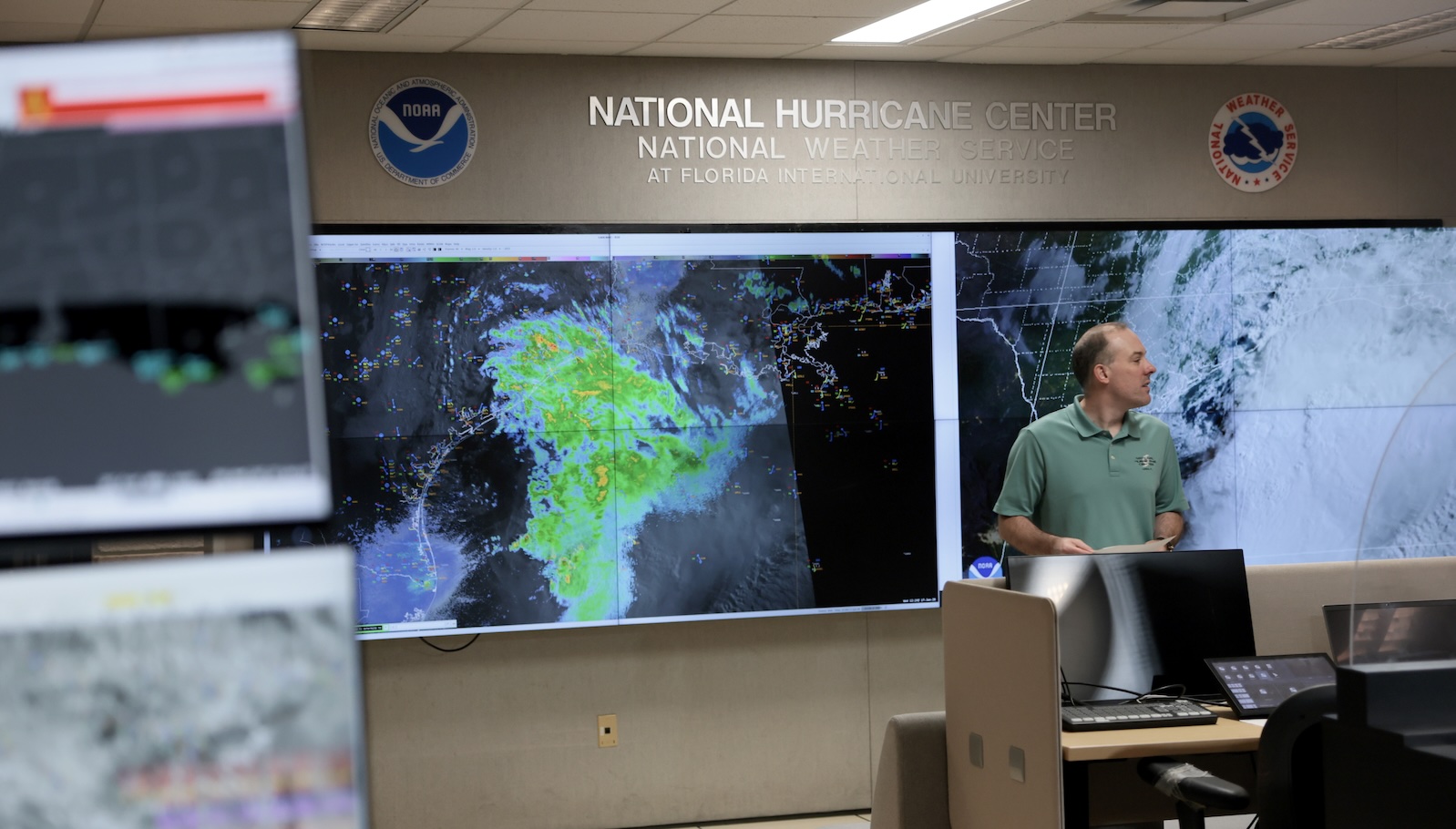
The reprieve offered by the Atlantic is not mirrored on the Pacific side of the Americas. The same thermodynamic energy fueling the El Niño event has provided a high-octane environment for Pacific storms. Earlier this week, Hurricane Polo underwent a process known as rapid intensification—defined by the National Hurricane Center as an increase in sustained wind speeds of at least 35 mph within a 24-hour period. Polo surged from a tropical storm to a Category 5 hurricane in less than 24 hours.
This behavior reflects an alarming trend in modern meteorology: the increase in "explosive" storm growth linked to warmer ocean baselines. As Polo tracks toward landfall in Baja California, and with tropical storm Nolo threatening to dump several feet of rainfall on the Hawaiian Islands, the destructive potential of these systems has been amplified by the background heat of the Pacific anomaly.
Global Implications: Drought and Food Security
The most severe long-term impacts of this El Niño are expected to manifest in global agricultural output. El Niño is notorious for its disruptive influence on rainfall distribution. While parts of California and the Southwestern United States may receive above-average precipitation, other critical breadbaskets are facing the threat of extreme, prolonged drought.
Regions including Southeast Asia, the Amazon basin, and large swaths of sub-Saharan Africa are currently bracing for severe water scarcity. Historically, El Niño events have been correlated with significant crop failures in these areas. The economic and humanitarian consequences of these failures are profound. As Hausfather points out, the risk to subsistence farmers is acute; when these populations are unable to produce a surplus, they lose their primary income source and their food security.
Research indicates that the heat-related mortality associated with this event could reach 451,000 people globally over the first nine months. These figures reflect the compounded stress of high temperatures on top of an already warming baseline climate.
Preparing for a New Climate Baseline
The current El Niño serves as a grim preview of the global climate of the 2040s and 2050s. By that time, scientists expect that "normal" planetary temperatures will be elevated to the point where they mirror the conditions currently created by this El Niño event. For policymakers and governments, the focus is shifting from long-term mitigation to immediate crisis management.
- Agricultural Resilience: Experts are urging governments to formalize financial transfer systems. Providing direct cash support to farmers whose harvests fail allows them to purchase food from unaffected regions, preventing localized famines.
- Strategic Stockpiling: The necessity of national food and medical stockpiles is becoming a priority for countries vulnerable to trade disruptions caused by regional climate shocks.
- Fire Management: As landscapes dry out, the risk of wildfire increases exponentially. This requires a transition toward more robust fire-mitigation strategies, including aggressive controlled burns to reduce biomass fuel loads, as well as the training of additional personnel and the procurement of advanced firefighting hardware.
The Scientific Consensus on the Future
What makes this event particularly concerning to the scientific community is that it is occurring on a thermal baseline significantly higher than that of the 20th century. When a powerful El Niño is layered over a planet that is already experiencing the warming effects of greenhouse gas emissions, the resulting weather extremes are more severe, more frequent, and more unpredictable.
The data provided by organizations such as Berkeley Earth and the Scripps Institution of Oceanography reinforces the conclusion that the climate is not merely changing, but entering a phase of increased volatility. While temperatures will eventually decline once the current El Niño dissipates, the underlying trajectory of global surface temperatures remains on a clear upward trend. The current crisis is, therefore, not an outlier to be managed and forgotten, but an early warning signal of the environmental conditions that will define the coming decades.
As governments assess the wreckage of the 2026 season—from the record-breaking dry spells in the tropics to the catastrophic landfalls in the Pacific—the consensus is that the traditional approach to climate disaster management is no longer sufficient. The integration of long-range meteorological modeling with proactive social safety nets and infrastructure hardening is the only viable path forward in an era where the ocean’s heat content continues to exert such a powerful, and at times violent, influence on the global atmosphere.