The Great Climate Data Migration: How International Science is Building a Digital Ark Against Political Interference

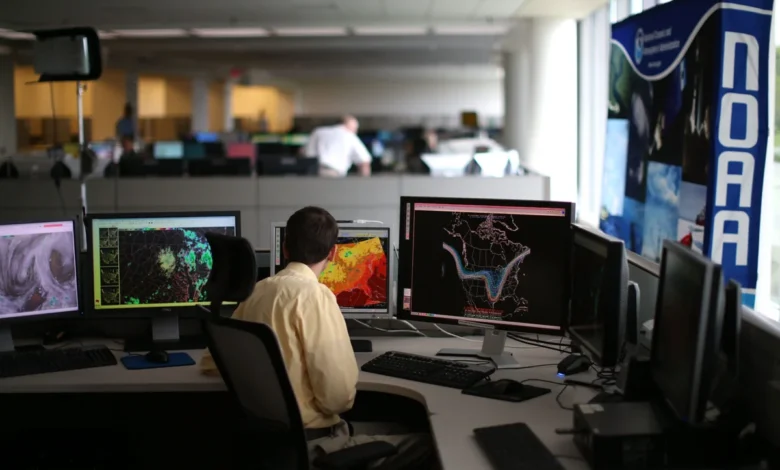
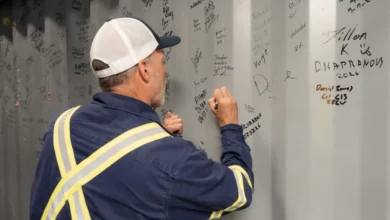
In the heart of Hamburg, Germany, a high-security facility known as the German Climate Computing Center (DKRZ) is quietly executing one of the most significant preservation missions in the history of modern science. Technicians are currently installing rows of gray metal server racks to house a rapidly expanding repository of climate simulation data. This is not routine maintenance; it is an act of digital fortification. These servers are being prepared to hold 5 petabytes of redundant data—a "lifeboat" for U.S. climate research that is currently perceived to be at risk of deletion, suppression, or manipulation by the Trump administration.
This endeavor, dubbed CMIP7-ark, represents a desperate pivot in global scientific strategy. As the U.S. government systematically slashes funding for environmental studies and scrubs climate-related terminology from federal websites, the international community has moved from a model of open-access collaboration to one of defensive, distributed storage. The stakes are immense: the data stored within these racks provides the empirical bedrock for the next United Nations Intergovernmental Panel on Climate Change (IPCC) assessment, scheduled for publication in 2029.
A Chronology of Scientific Erosion
The current climate of suspicion did not materialize overnight. The erosion of trust between the American scientific establishment and the federal government has been a cascading process since the start of the current administration’s term.
In January 2025, the U.S. government formally withdrew from both the U.N. Framework Convention on Climate Change and the IPCC, severing formal ties to the international bodies responsible for coordinating global climate policy. By April 2025, the impact became tangible for the research community when the Department of Government Efficiency, led by Elon Musk, ordered the deletion of hundreds of datasets maintained by NASA’s Socioeconomic Data and Applications Center (SEDAC). This move forced researchers to scramble, using automated "scraping" tools to salvage terabytes of public-domain information before it vanished into the digital ether.

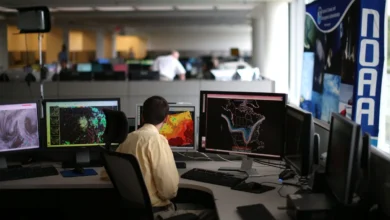
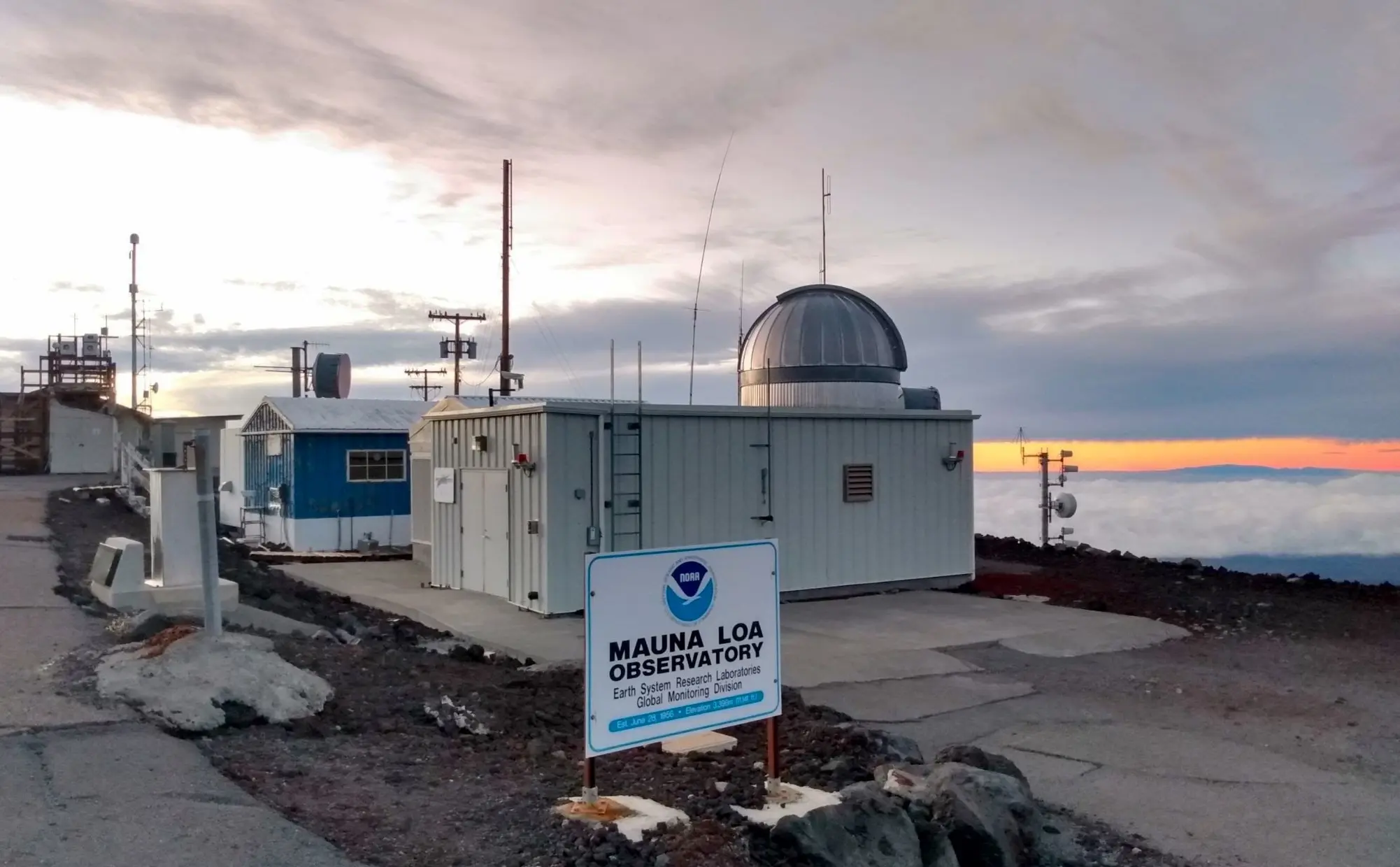
Throughout the summer of 2025, the administration intensified its campaign, proposing the closure of the Mauna Loa Observatory in Hawaii—the primary site for the "Keeling Curve," the world’s most iconic record of atmospheric carbon dioxide concentrations. While congressional intervention temporarily spared the facility, the message to the scientific community was clear: no database, regardless of its historical significance, was immune to political budget-slashing.
The Anatomy of the Data Crisis
The logistical challenge of this "data migration" is staggering. Scientific datasets, particularly those involving high-resolution climate modeling, are gargantuan. A single petabyte of data is equivalent to the capacity required to store 200 million high-resolution photographs. Transferring such volumes via the internet is often infeasible due to bandwidth constraints and the exorbitant cost of high-speed fiber-optic infrastructure.
Consequently, scientists have turned to the "sneakernet"—a colloquial term for the physical transport of hard drives and magnetic tapes via air, rail, or sea. This labor-intensive process is a stark reminder of the pre-digital era, necessitated by a modern political climate that renders digital pathways unreliable.
The vulnerability stems from the concentration of scientific capital. Historically, data was stored at the university or agency where it was generated. It was a model based on academic transparency and trust. Today, that model is viewed as a systemic failure. As Christopher Kadow, head of the data analysis division at DKRZ, noted, the international community can no longer afford to accept that vital scientific contributions might be lost due to technical neglect or partisan political maneuvers.
Global Reactions and Defensive Measures
The German Research Foundation (DFG), the nation’s premier science funding body, has emerged as a primary architect of this defensive posture. In late 2025, the DFG allocated a $35 million budget specifically for the "Data Resilience" program. This initiative does not merely store data; it funds the creation of seven distinct, redundant repositories, including projects like SHIELD (Secure Hosting of Important Environmental Long-term Data) and SEND (Secure Endangered Earth Data).
The scientific community’s response has been marked by a transition toward "triage science." The American Geophysical Union (AGU), which represents over 60,000 Earth and space scientists, has shifted its resources to counter the isolationism of the U.S. government. After the administration refused to send U.S. delegates to IPCC meetings, the AGU formed the U.S. Academic Alliance for the IPCC, nominating nearly 300 U.S. researchers to serve as authors in an independent, non-governmental capacity.
"We have engaged in triage efforts to ensure data remains usable and accessible," said Ben Zaitchik, president-elect of the AGU. "But we clearly now have arrived at a moment where we must fundamentally reimagine data organization and maintenance for long-term viability and growth."
Broader Implications: Beyond the U.S.
The crisis has revealed that the "data vulnerability" problem is not unique to the United States. Recent years have seen research institutions in Croatia and Germany fall victim to sophisticated cyber-extortion, where hackers encrypted research files and demanded payment for their release. Furthermore, the ongoing war in Ukraine has demonstrated how physical infrastructure, including servers and university research centers, can be deliberately targeted by military forces to degrade a nation’s intellectual capacity.
Ukrainian researcher Anastasiia Lutsenko, now based at the Max Planck Institute in Munich, highlights that the preservation of historical meteorological records—some dating back to 1808—was only possible because international collaborators digitized and moved the data to servers in Germany. This "digital exfiltration" prevented these records from being lost in the shelling of Ukrainian research facilities.
The lesson being drawn from these events is that climate data, biodiversity records, and sociological studies are public goods that require a distributed, international safety net. Frank Oliver Glöckner, a professor at the University of Bremen, suggests that the current administration’s hostility has, ironically, accelerated the professionalization of global data sharing. "It would be ideal if, in the future, all climate data worldwide were connected via digital pipelines," he argues. "That way, in the event of a threat, we could simply flip a switch to secure it elsewhere."
The Future of Scientific Sovereignty
The implications of this movement are profound for the future of international cooperation. Science has long operated under the assumption of institutional stability; it is now adjusting to an era of "geopolitical volatility."
Even in Germany, where the political climate is currently more stable than in the U.S., there is a growing recognition that scientific autonomy is not guaranteed. The recent electoral successes of the far-right Alternative for Germany (AfD) party, which has historically denied the scientific consensus on climate change, have prompted German scientists to consider their own vulnerabilities. As Kadow noted, "We don’t know what political shifts may occur in Germany. We aren’t completely protected from risks or developments like those in the U.S. either."
As the world approaches the 2029 IPCC deadline, the focus of the global scientific community is shifting from merely conducting new research to securing the past. By building these digital arks, scientists are attempting to insulate the most critical empirical evidence of the 21st century against the winds of political change, ensuring that even if the gates of government archives are locked, the collective knowledge of humanity remains open, accessible, and preserved for the generations that will inherit the warming planet.