Illinois Stalls on Landmark Climate Displacement Law as Global Migration Crisis Intensifies

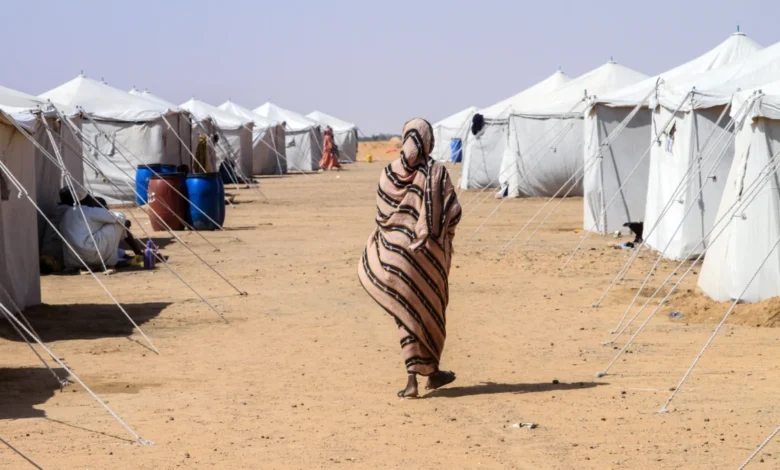
Every year, the escalating frequency of climate-driven disasters—ranging from catastrophic flooding and uncontrollable wildfires to prolonged, punishing droughts—forces millions of individuals to abandon their homes in search of safety and stability. These individuals, often categorized as climate migrants, exist in a precarious legal limbo. Unlike political refugees, who are defined by specific criteria under the 1951 Refugee Convention, climate migrants lack formal protections under international law. As the planet warms, the scale of this displacement is projected to reach unprecedented levels. According to data from the World Bank, at least 44 million people are expected to be displaced internally across the globe by 2050 due to environmental factors. This massive human movement, equivalent to relocating the entire population of Argentina, poses an immense logistical and humanitarian challenge for which few governments have adequately prepared.
Last fall, Illinois emerged as a potential leader in this arena when Governor JB Pritzker signed the Climate Displacement Act. The legislation was widely hailed as a pioneering effort, making Illinois the only state in the nation to formally codify a mandate to anticipate how climate-driven migration would reshape its demographic, economic, and infrastructural landscape. The law mandated the creation of a 17-seat task force tasked with investigating the long-term impacts of migration on the state’s resources and residents. The team was charged with producing two comprehensive reports: the first, due in December of this year, to establish a baseline of data regarding projected migration patterns; and a second, due in 2027, to provide a strategic roadmap for state agencies to evolve in response to these shifts. However, despite the ambitious nature of the law, the initiative has effectively stalled, with state officials failing to appoint the necessary board members or establish a concrete timeline for the mandated research.

A Chronology of Legislative Ambition and Administrative Delay
The journey of the Climate Displacement Act began in February 2025, introduced by state Senator Graciela Guzman. The legislation was born from a period of intense reflection following a series of devastating wildfires in Southern California that destroyed tens of thousands of homes. For many, including families like Guzman’s, the fires raised existential questions about where people could safely relocate as climate change rendered traditional living spaces uninhabitable.
The legislative process moved with urgency, culminating in the governor’s signature in late 2025. According to the statute, the governor, legislative leaders, and the heads of various state agencies were required to appoint the 17 members of the task force within 90 days of the law’s enactment. That window closed nearly a year ago. To date, only one appointment has been officially confirmed. The lack of movement has led to pushed-back deadlines and a pervasive sense of uncertainty regarding the state’s commitment to the policy. While Senator Guzman was finally appointed to the task force last week, she remains one of the few voices highlighting the ongoing stagnation. When questioned about the lack of progress, the governor’s office provided a standard assurance of commitment but failed to offer a specific timeline for when the remaining 16 seats would be filled.
The Mirage of the Climate Haven
The debate surrounding Illinois’ role in climate migration is inextricably linked to its reputation as a potential "climate haven." With access to 20 percent of the world’s unfrozen freshwater, a massive agricultural sector, and a relative lack of exposure to coastal sea-level rise, the state is often viewed by climate risk analysts as a geographic refuge. A recent analysis by the climate-risk modeling firm AlphaGeo ranked Chicago as the most climate-resilient major city in the world, citing its robust urban infrastructure and inland location as primary advantages.
However, environmental scientists and urban policy experts have consistently pushed back against the "haven" narrative. They argue that the term creates a false sense of security, ignoring the fact that climate change is a global phenomenon with localized, cascading effects. The past year has served as a sobering reality check for the Midwest. Chicago, which is frequently marketed as a sanctuary from the worst of climate-induced catastrophes, faced severe challenges throughout 2026. The city’s deep-tunnel reservoir system nearly reached capacity during historic flooding events, while record-breaking tornado activity and a prolonged, oppressive heatwave underscored the region’s vulnerability. Furthermore, the city experienced a week of poor air quality caused by wildfire smoke, a direct impact of fires burning hundreds of miles away. These events have "laid bare" the necessity of the planning required by the Climate Displacement Act, according to experts who note that even the most resilient cities are not immune to the disruptions of a changing climate.
The Global and Domestic Policy Gap
The difficulty of implementing the Climate Displacement Act is compounded by the lack of a standardized framework for defining or managing climate migration. As noted by Byron Jones, a geographer at Baruch College, the term "climate migrant" is relatively new and lacks a universally agreed-upon definition. Because the 1951 Refugee Convention limits protected status to those persecuted for race, religion, nationality, or political opinion, people displaced by environmental collapse are often left outside the reach of international law.
This policy vacuum makes state-level planning particularly daunting. Without federal guidance, states like Illinois are forced to act as laboratories for policy innovation. Other states have begun to move in similar directions, albeit with different focal points. Maine has integrated migration projections into its statewide resilience planning, while California, Hawaii, and New Jersey have introduced legislation aimed at protecting coastal communities from rising tides. In Alaska, the state government has taken the extreme step of pledging financial support for the relocation of entire coastal villages devastated by typhoons.
Strategic Implications and Future Outlook
The challenge for Illinois, as identified by researchers, is to bridge the gap between abstract climate modeling and concrete urban planning. Modeling migration is inherently difficult because it is driven by a complex interplay of factors, including economic opportunity, social networks, and individual family ties. Adding the variable of climate change adds a layer of uncertainty that can paralyze policymakers.
Yet, proponents of the task force argue that inaction is a far greater risk than the difficulty of the research. If Illinois fails to plan, the potential for a disorganized influx of new residents could strain public infrastructure, housing markets, and social services. Conversely, a proactive approach could allow the state to integrate new populations into its labor force and economy, turning a potential crisis into a growth opportunity.
The city of Cincinnati, Ohio, offers a potential model for what this planning looks like in practice. Its recent climate migration readiness plan does not attempt to label the city "climate-proof." Instead, it focuses on the fundamental requirements of a growing city: increasing the availability of affordable housing, investing in public transportation, and improving overall quality of life. This approach shifts the focus from "crisis management" to "capacity building."

As Illinois enters the final months of the year without a functional task force, the mandate of the Climate Displacement Act remains largely unfulfilled. The state stands at a critical juncture: it can either allow the law to fade into administrative obscurity, or it can mobilize the necessary resources to lead the nation in planning for the most significant demographic shift of the 21st century. The expertise exists, the data is becoming increasingly clear, and the environmental signals are intensifying. For now, the "roadmap" for the future of Illinois remains a blank page, awaiting the political will required to turn legislative intent into tangible action. Without a clear path forward, the state risks being caught unprepared when the next wave of displacement arrives, proving that even a perceived haven cannot escape the gravity of a changing global climate.