Indigenous Sovereignty as a Global Climate Imperative: Why Local Governance is the Key to Planetary Resilience



From the high-altitude peaks of the Himalayas to the dense rainforests of the Amazon and the sweeping grasslands of the African savanna, Indigenous communities are standing on the front lines of an escalating planetary emergency. Across the globe, these populations are facing an onslaught of catastrophic climate events—ranging from unprecedented wildfires and lethal floods to prolonged, devastating droughts. While the international community often characterizes these events as isolated disasters, for Indigenous peoples, these phenomena represent a recurring, overlapping cycle of crises that threaten both their physical survival and their cultural continuity.
A groundbreaking report released by the nonprofit organization Land Is Life during New York Climate Week sheds light on a critical, yet frequently overlooked, dimension of the climate crisis: the efficacy of Indigenous governance. While the global scientific community has begun to acknowledge the value of traditional ecological knowledge, the report argues that policymakers consistently fail to respect or empower the governance systems that allow that knowledge to be applied effectively. By failing to recognize the legal authority, land rights, and autonomy of Indigenous nations, global powers are systematically undermining the most effective climate adaptation strategies currently in existence.
The Anatomy of a Global Crisis
The scale of the challenge is vast. The Land Is Life report, which draws from 200 detailed surveys across 46 countries, reveals that the climate crisis is not merely a matter of shifting weather patterns, but an intersectional threat to stability. Over 80 percent of survey respondents reported experiencing two or more climate-related disasters simultaneously, while more than 90 percent noted a marked increase in the frequency of these events over the last decade.
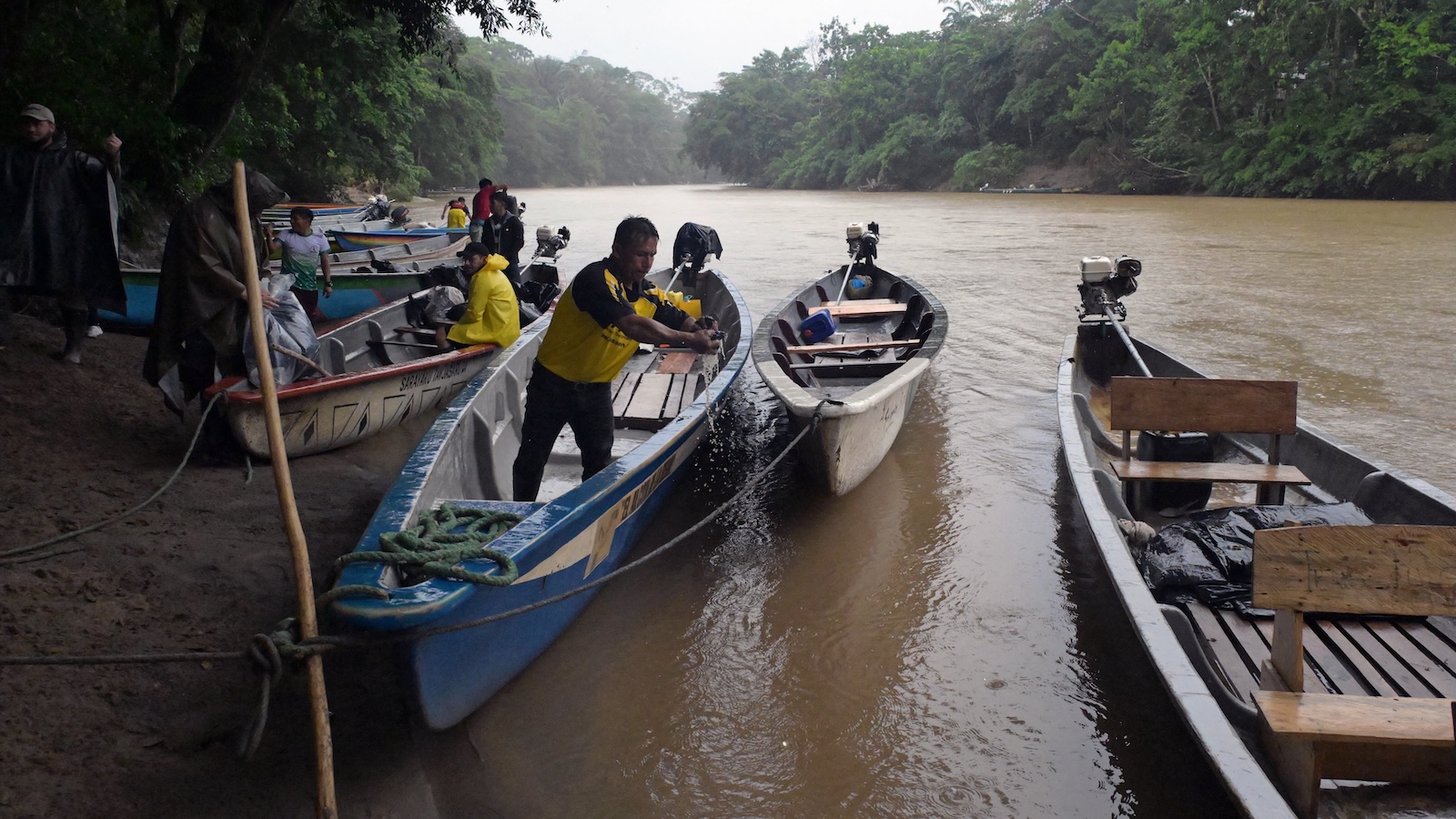
The implications of this data are clear: climate change is collapsing the buffer zones that once protected rural and remote communities. In the Ecuadorian Amazon, for example, the Kichwa people of Sarayaku have faced recurring, severe flooding along the Bobonaza River. In 2019, these floods obliterated homes and crops, threatening the food security of a community of 1,600 people. Yet, the community did not collapse. Their survival was not a stroke of luck, but the result of institutional resilience. The Sarayaku possess well-established internal governance structures that facilitate rapid decision-making, resource allocation, and, crucially, the mobilization of collective labor—a practice known as minga, which emphasizes communal responsibility and mutual aid.
Chronology of Resilience: Knowledge as Strategy
The effectiveness of Indigenous responses is rooted in a long-term, intimate connection to specific ecosystems. Unlike reactive Western emergency management models that often rely on top-down communication and external infrastructure, Indigenous adaptation is built upon proactive, observation-based systems.
A brief chronology of recent climate adaptation successes illustrates this:
- 2019 (Ecuador): The Sarayaku community successfully mitigates the impact of massive floods on the Bobonaza River by utilizing traditional warning systems based on observed changes in rainfall and lightning patterns at the river’s headwaters, followed by organized community relocation and recovery efforts.
- 2020–2022 (Kenya): Indigenous Endorois and Tugen women, anticipating erratic rainfall, implement the cultivation of drought-resistant sorghum and millet. While industrial farms in the region suffer total failure, these traditional varieties provide a stable food source, proving the efficacy of agricultural biodiversity.
- 2023 (Brazil): The Coordination of Indigenous Organizations of the Brazilian Amazon (COIAB) formalizes its role in regional fire management. By training local response teams and mapping fire risks, the network effectively slows the encroachment of deforestation-driven fires into protected territories.
- 2024 (Peru): Quechua communities in the Ausangate Regional Conservation Area partner with external scientific bodies to create a hybrid monitoring system. By integrating Western geospatial research with traditional environmental indicators, the communities create a robust early-warning network for glacial retreat and water scarcity.
The Funding Gap and the Failure of External Models
Despite the documented success of these initiatives, there remains a profound disconnect between global climate finance and the realities of Indigenous communities. Although billions of dollars have been pledged by developed nations for climate mitigation and adaptation, very little of that capital reaches the local, frontline actors who are most capable of utilizing it.
Luisa Castañeda Quintana, executive director of Land Is Life, emphasizes that the primary barrier is not a lack of viable solutions, but a lack of political and financial will to trust existing systems. "We show that it’s not that they are only the most impacted, but they are already implementing effective solutions," Quintana noted. "When it comes to adaptation, we don’t really need to create new structures or systems. We just need to see what is working."
The "funding bottleneck" is twofold. First, legal recognition of Indigenous lands is often nonexistent or actively suppressed by state governments that seek to exploit natural resources. Without clear title to their land, communities lack the legal standing to access international development grants. Second, even when funding is earmarked for Indigenous issues, the bureaucratic structures of international NGOs and government agencies often result in the money being funneled through non-Indigenous intermediaries.
Anisha Buda, a program officer at the National Indigenous Women Forum in Nepal, highlights the frustration of this cycle: "There are so many projects that are supposed to be for Indigenous peoples, but they are implemented by non-Indigenous organizations and non-Indigenous peoples." This practice, often called "green-grabbing" or "extractive aid," essentially commodifies Indigenous knowledge while excluding the knowledge-bearers from the decision-making process.
Analytical Perspective: Why Governance Matters
The academic and policy consensus is shifting toward the understanding that land stewardship is the most cost-effective method of carbon sequestration and disaster mitigation. However, the report’s findings suggest that policymakers often treat Indigenous knowledge as a "data point" rather than a "governance mandate."
When Indigenous self-determination is rejected, climate projects often fail because they are culturally illiterate and geographically misaligned. External authorities, when imposing solutions on local communities, frequently overlook the subtle, localized environmental cues that are central to long-term resilience. By contrast, when communities are empowered to act as the primary managers of their territory, they create institutional frameworks that are flexible enough to respond to the unpredictable nature of the current climate era.
The implications for international policy are significant. If global powers are serious about meeting the goals of the Paris Agreement, the shift must move from "consultation" to "sovereignty." This includes:
- Direct Financing: Removing the barriers that prevent Indigenous nations from accessing climate funds directly, bypassing secondary layers of administration.
- Legal Recognition: Pressuring state governments to legally codify Indigenous land rights, which serve as the foundation for all environmental protection.
- Knowledge Integration: Recognizing that Indigenous languages and cultural practices are not just "heritage," but active, sophisticated technologies for disaster risk reduction.
The Path Forward: A Call for Strategic Realignment
As the United States and European nations re-evaluate their climate commitments amidst global economic pressures and geopolitical instability, the risk of marginalizing Indigenous communities grows. The report concludes that if we are to spend the limited resources available, they should be invested in the systems that have already demonstrated the highest return on investment: local, Indigenous-led, community-based governance.
Gisela Hurtado, the author of the Land Is Life report, suggests that the future of global climate resilience will likely mirror the current experiences of Indigenous territories. "What they are seeing in the territories, we’re going to see it also in the future," she stated. "They are the ones that are much more connected with the Earth to know what is going to happen in the future."
The lesson from the Sarayaku, the Endorois, and the Quechua is not merely that they are resilient, but that their resilience is a structural choice. As the planet warms, the insulation provided by industrialized, disconnected urban centers will likely continue to erode. In this context, the decentralization of climate authority to those who have the longest track record of stewardship is not just a moral obligation—it is a strategic necessity for the preservation of global stability.
The transition to a climate-resilient future requires more than just new technology; it requires a fundamental restructuring of power. By honoring the governance systems of Indigenous peoples, the global community may find the only viable roadmap for navigating the volatile climate reality that lies ahead.
Related posts: