The Evolution of the New York City Steakhouse: From Century-Old Institutions to Modern Cultural Interpretations

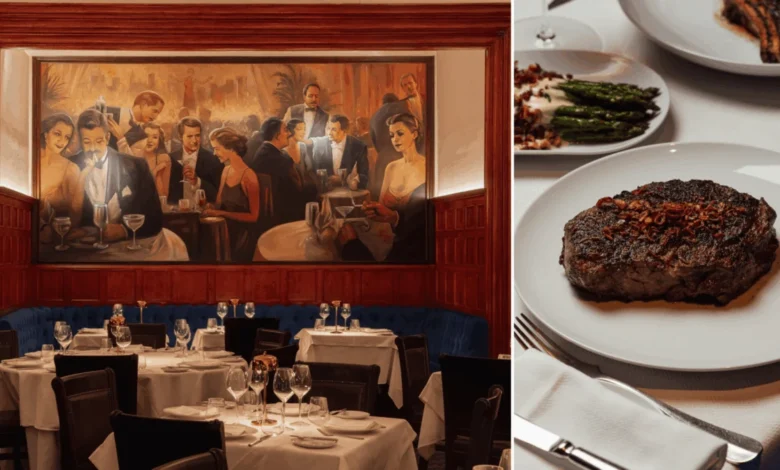
New York City’s culinary landscape has long been defined by its unwavering devotion to the classic steakhouse. Yet, culinary experts agree that no single establishment can definitively claim the title of the absolute best in the five boroughs. Instead, the city’s premier dining rooms occupy a complex ecosystem where historic legacy institutions, century-old taverns, and avant-garde modern concepts coexist, each catering to distinct tastes and cultural traditions. While venerable landmarks continue to draw crowds with unchanging menus and wood-paneled nostalgia, a new generation of restaurateurs is redefining the genre by infusing global flavors, innovative preparation techniques, and contemporary design into the traditional red-meat-and-potatoes blueprint.
The Main Facts: A Tale of Two Eras
At its core, the New York City steakhouse experience remains anchored by a sense of occasion. Whether housed in a subterranean Midtown cavern or a sprawling converted warehouse in Brooklyn, the city’s finest steakhouses share a common thread: the ability to make the diner feel privileged, valued, and entirely insulated from the frenetic pace of the metropolis outside.
The traditional segment of the market is anchored by heavyweights such as Keens Steakhouse and Gallaghers in Midtown Manhattan, Delmonico’s in the Financial District, and Peter Luger Steak House across the East River in Williamsburg, Brooklyn. These establishments have weathered world wars, economic depressions, changing neighborhood demographics, and shifting dietary trends for over a century. Their enduring appeal lies in a strict adherence to formula: dimly lit dining rooms, walls clad in dark wood, white tablecloths, attentive career waiters, and menus that resist fleeting culinary fads in favor of time-tested dry-aged beef, creamed spinach, and robust cabernets.
Conversely, the new and evolving guard of New York steakhouses takes the fundamental framework—prime cuts of beef served alongside classic side dishes in a formal, high-end environment—and stretches its boundaries. Today’s diners are just as likely to encounter a ribeye seasoned with Korean gochujang, Japanese wagyu presented in an omakase style, or a Latin-inspired churrasco-style presentation as they are to see a standard porterhouse for two. This cultural diversification reflects New York City’s broader demographic shifts and culinary maturation, transforming the steakhouse from a rigid, old-boys-club relic into an adaptable canvas for global gastronomy.
Chronology: The Historical Roots of the NYC Steakhouse
To understand the contemporary steakhouse scene, one must examine its origins in the 19th century, a time when New York was rapidly emerging as a global commercial powerhouse.
The city’s steakhouse lineage traces back to 1837 with the opening of Delmonico’s in lower Manhattan. Widely recognized as the country’s first fine-dining restaurant, Delmonico’s introduced the concept of individual menus, an extensive wine list, and high-end service to the American public. Its signature creation, the Delmonico steak cut from the chuck eye, established a benchmark for beef preparation that would influence generations of chefs.
As the city expanded northward during the late 19th and early 20th centuries, dining culture evolved to cater to the bustling theater district, financial sector, and maritime trade. Keens Steakhouse opened its doors in Herald Square in 1885, originally serving as a theater district haven where actors, politicians, and writers gathered. Notably, Keens preserved a unique piece of cultural history through its famous pipe club, which once counted literary giants like Mark Twain and corporate titans like J.P. Morgan among its members, boasting tens of thousands of clay tavern pipes stored in its rafters.
A few decades later, in 1927, Peter Luger opened in what was then a quiet German-American enclave in Williamsburg, Brooklyn. Originally operating as Carl Luger’s Cafe, Billiards and Bowling Alley, the establishment transitioned strictly to a steakhouse under the ownership of the Leser family in the mid-20th century, eventually becoming a pilgrimage site for beef purists worldwide. Meanwhile, Gallaghers opened its doors on West 52nd Street in 1927, breaking convention by allowing women into what had traditionally been male-only dining preserves and establishing a reputation as a favorite haunt for athletes, gangsters, and Broadway stars.
For decades, these institutions set the rigid parameters of the genre. However, the late 20th and early 21st centuries saw the emergence of high-end corporate chains and celebrity-chef-driven concepts—such as Wolfgang’s, Sparks, and Smith & Wollensky—which scaled up the traditional steakhouse model while maintaining its core aesthetic.
Supporting Data: The Economics and Demographics of Modern Dining
The enduring popularity of the New York City steakhouse is not merely cultural; it is backed by significant economic weight. According to data from the New York City Hospitality Alliance, high-end dining establishments are major economic drivers, contributing billions of dollars annually to the local economy and employing tens of thousands of front- and back-of-house workers.
Dry-aged beef, the cornerstone of the traditional NYC steakhouse menu, represents a high-margin, labor-intensive culinary art. Professional dry-aging rooms control temperature, humidity, and airflow over periods ranging from 28 to over 100 days, resulting in moisture loss of up to 20% to 30%. This concentrated flavor profile commands premium pricing, with top-tier porterhouses for multiple guests frequently ranging from $150 to well over $300 per order.
Market research indicates that despite rising inflation, supply chain fluctuations, and shifting consumer preferences toward plant-based diets, demand for premium animal protein in fine-dining settings remains remarkably resilient. Business dining, tourism, and celebratory occasions form the bedrock of the clientele. Industry surveys reveal that over 65% of high-end steakhouse patrons cite business networking and corporate entertainment as their primary reason for visiting, cementing the dining room as an essential extension of the corporate boardroom.
Official Responses and Industry Perspectives
Restaurateurs, executive chefs, and hospitality analysts offer varied perspectives on the ongoing evolution of the city’s steakhouse culture.
Veterans of historic institutions emphasize the importance of consistency and heritage. Management teams at establishments like Keens and Gallaghers often point out that diners are not seeking culinary reinvention when they cross their thresholds; rather, they are purchasing a sense of continuity in a rapidly changing world. "When a customer comes to us, they want the exact same experience their grandfather had fifty years ago," noted a general manager at a landmark Midtown steakhouse. "The wood paneling, the heavy silver, the sizzling platter of beef—that is our product. We do not sell trends; we sell tradition."
Conversely, proponents of the modern school argue that culinary stagnation is a risk in an increasingly sophisticated global food market. Chefs spearheading contemporary steakhouses emphasize that incorporating international flavors and dietary inclusivity does not dilute the core experience; rather, it expands its relevance. "The modern New York diner is globally traveled and infinitely more knowledgeable about beef grades, sourcing, and preparation methods than previous generations," explains a prominent Brooklyn-based restaurateur specializing in fusion-inflected grills. "You cannot simply coast on a historic name anymore. You have to respect the beef, but you also have to respect the palate of the modern guest."
Broader Impact and Implications for NYC’s Culinary Identity
The juxtaposition between century-old traditional steakhouses and contemporary challengers holds profound implications for New York City’s broader culinary identity. As the city continues to recover from historic economic shifts, its dining establishments serve as vital barometers of cultural health and urban vitality.
The traditional steakhouse acts as a living museum, preserving architectural and culinary history within active, revenue-generating spaces. Preserving these historic interiors—with their leather booths, brass fixtures, and storied memorabilia—protects a tangible link to New York’s past amid a relentless wave of modernization and glass-fronted real estate development.
At the same time, the influx of innovative steakhouse concepts demonstrates the dynamic, adaptable nature of the city’s food scene. By reinterpreting the heavy, Eurocentric steakhouse template through the lenses of Asian, Latin American, and Middle Eastern culinary traditions, modern operators reflect the multicultural fabric of New York City itself.
Ultimately, whether a diner chooses the hushed, wood-smoke-scented halls of a Financial District pioneer or the vibrant, spice-infused dining room of a contemporary Midtown grill, the fundamental objective remains unchanged. The New York City steakhouse endures because it offers more than a meal; it provides an immersive theatrical experience where the diner is temporarily elevated, enveloped in history, and treated to the finest hospitality the global capital has to offer.