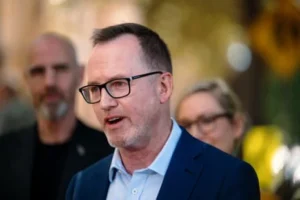
Shoebridge and Hodgins-May Confirm Greens Leadership Tilt, Pledging to Replace Labor in Bold New Electoral Strategy

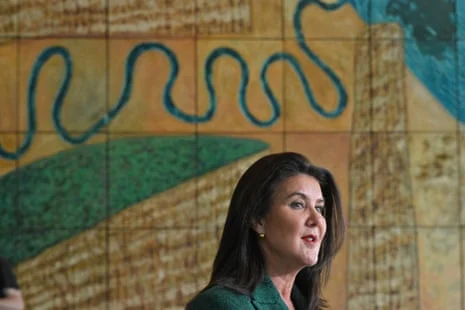
Australian politics is bracing for a profound shift on the progressive left as federal senators David Shoebridge and Steph Hodgins-May formally announced their joint ticket for the upcoming Australian Greens leadership ballot. The high-profile announcement, made public through a coordinated campaign launch, signals an aggressive evolution in the minor party’s strategic posture. Rather than positioning the Greens as a traditional reformist ally to the incumbent Labor government, the newly minted leadership hopefuls declared an explicit ambition to supplant the Australian Labor Party entirely.
The development comes amid a wider leadership restructure within the Greens party room, triggered by outgoing figures stepping down and opening the floodgates for a multi-way contest. Shoebridge and Hodgins-May enter the fray alongside other prominent parliamentary contenders, including Mehreen Faruqi and Nick McKim running on a separate ticket, and Sarah Hanson-Young, who has also lodged her individual candidacy. However, the entry of Shoebridge and Hodgins-May on a joint platform introduces a distinct rhetorical sharpness, emphasizing grassroots empowerment, economic security, and an unyielding hardline stance against fossil fuel expansion and transnational corporate influence.

A New Strategic Direction: Replacing, Not Reforming, Labor
The core of the Shoebridge-Hodgins-May ticket relies on a redefinition of the Greens’ relationship with the federal government. For years, the party has navigated a complex dynamic of negotiating legislative compromises with Labor while attempting to outflank them from the left on environmental and social welfare issues. The new leadership pitch explicitly discards this incrementalist model.
“We do not seek to reform Labor, but to replace them,” the duo stated in their official manifesto shared via social media channels. Political analysts note that this declaration marks a calculated pivot. By drawing a hard line against the governing party, the prospective leaders are attempting to consolidate disillusioned progressive voters who feel that the current administration has compromised too heavily on climate action, housing affordability, and cost-of-living measures.

In their policy blueprint, the candidates framed their platform as a direct antidote to the growing political polarization and the rise of right-wing populism, such as One Nation. They argued that combating extremism requires substantive economic and environmental security rather than rhetorical pushback. Their pitch incorporates specific populist-left measures, including universal school meal programs for children, a strict legislative ban on new coal and gas projects, and targeted measures to curb the influence of major international technology conglomerates, which they characterized as pushing a wave of resource-intensive artificial intelligence data centers.
Background and Parliamentary Profiles
The pairing brings together two distinct political backgrounds within the federal parliamentary landscape. David Shoebridge, a seasoned senator representing New South Wales, has built a reputation for sharp legal scrutiny, aggressive parliamentary oversight, and persistent campaigns against corporate tax avoidance, civil liberties infringements, and environmental degradation. Before entering federal politics, Shoebridge served as a Greens member of the New South Wales Legislative Council, where he specialized in planning, justice, and police accountability.
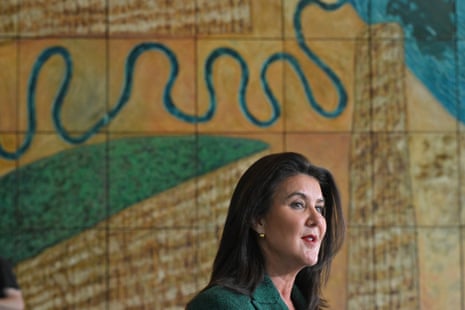
Steph Hodgins-May, serving her first term as a senator representing Victoria, was appointed in May 2024 following the retirement of veteran senator Janet Rice. Prior to her parliamentary tenure, Hodgins-May held significant leadership roles within the environmental sector, notably serving as the head of the Pacific region for Greenpeace Australia from 2020 to 2023. Holding a degree in law, she has maintained a rigorous focus on corporate accountability, particularly regarding the fossil fuel industry’s involvement in educational and community institutions. Earlier in the year, Hodgins-May gained national attention for her fierce opposition to corporate sponsorships in schools, demanding that fossil fuel entities remove their influence from early-learning centers and cultural spaces.
Democratizing the Greens: The Push for Grassroots Leadership
Beyond policy and parliamentary strategy, the Shoebridge-Hodgins-May ticket has endorsed internal structural reforms proposed by outgoing figures such as former MP Max Chandler-Mather. The candidates voiced strong support for expanding the leadership election process to include ordinary party members rather than restricting the vote solely to the parliamentary wing.

While operational details of how a broader membership ballot would function remain to be finalized, the candidates committed to working collaboratively with the broader party organization to institute the reform. This populist democratization effort is designed to transform the Greens into what the pair describes as a “bigger mass movement,” bridging the gap between grassroots activists and Canberra legislators.
Broader Political Context: National Developments and Security Reviews
The leadership contest coincides with a turbulent period in Australian federal politics, characterized by ongoing economic pressures, cost-of-living debates, and heightened national security concerns. The broader news cycle surrounding the leadership ballot has also been dominated by major domestic events, including the Reserve Bank of Australia’s recent monetary policy decisions, ongoing fallout from cyber-security breaches involving artificial intelligence infrastructure, and significant infrastructure announcements such as the progression of the Melbourne Airport Rail link.

In the economic sphere, opposition figures like deputy Liberal leader Jane Hume have seized upon recent interest rate adjustments to criticize the federal government’s fiscal management, arguing that domestic inflationary pressures necessitate stricter control over public spending. Simultaneously, the federal government has been forced to mandate rapid cybersecurity reviews across all public sector legacy systems following high-profile data breaches involving artificial intelligence tools, highlighting the mounting intersection of technology, national security, and governance.
Implications for the Progressive Landscape
As the Greens prepare to cast their internal ballots, the outcome of the leadership contest will have profound ramifications for the trajectory of Australian progressive politics. A victory for the Shoebridge-Hodgins-May ticket would likely see a more confrontational opposition style in the Senate, marked by uncompromising legislative demands on climate policy and an intensified campaign to capture traditional Labor heartlands.
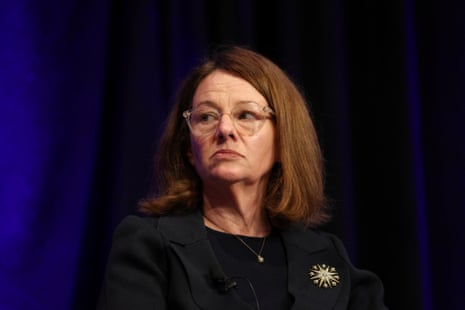
The party room decision will determine not only the immediate face of the Greens in federal parliament but also whether Australia’s third force will successfully execute its strategy of transforming from a legislative balance-of-power broker into a direct electoral challenger to the established major parties.
Related posts: