Steve Scalise Declines to Commit to Full Term Following Minority Leader Defeat to Jim Jordan


House Majority Leader Steve Scalise, R-La., the second-ranking Republican in the House of Representatives and the longest-serving member of the chamber’s current party leadership, has declined to commit to serving a full term in the upcoming 120th Congress. The uncertainty surrounding his political future follows a decisive internal party vote that unseated him as the prospective leader of the House Republican minority, paving the way for Rep. Jim Jordan, R-Ohio, to take the helm as Democrats prepare to assume control of the chamber in January.
Speaking to reporters on Wednesday, Scalise addressed his political trajectory in the wake of the closed-door Republican conference elections. While acknowledging that his immediate focus remains fixed on navigating the legislative hurdles of the ongoing lame-duck session, the veteran Louisiana lawmaker admitted that his long-term plans remain undecided.
The political landscape in Washington is undergoing a profound structural shift. With the 120th Congress scheduled to convene on January 3, 2027, following a consequential midterm election cycle, House Republicans are grappling with the reality of returning to the minority. For Scalise, a stalwart conservative who has spent nearly two decades in the halls of Congress and more than a decade in high-level leadership, the loss of the minority leader post marks a critical juncture in a storied political career defined by resilience, legislative maneuvering, and high-stakes intra-party dynamics.
The Leadership Shakeup and the Path to the Minority
The pivotal moment arrived during closed-door Republican leadership elections, where Scalise faced off against Jordan for the post of House Minority Leader. In a 106-73 vote, the GOP caucus opted for Jordan, signaling a desire for a different tactical approach as the party transitions from the majority to the minority.
The defeat leaves Scalise with a stark set of choices: he can either finish his upcoming two-year term as a rank-and-file member sitting on the backbenches of the minority, or he can choose to resign early, triggering a special election in his heavily Republican Louisiana district. When pressed on whether he intends to serve out the full term in the 120th Congress, Scalise offered no definitive assurance.
"There’s no decision on what’s next," Scalise told reporters. "I’ve got to get through these next few weeks, and then we have a lot of decisions to make about what’s life going to look like in the minority. But I sure still have a great passion for this country."

Despite the disappointment of the leadership loss, Scalise maintained that he harbors no bitterness and expressed satisfaction with how he conducted his campaign. When asked if he would have altered any aspect of his recent bid, he asserted that he had no regrets. He also noted a silver lining to stepping down from the demanding burdens of leadership: the prospect of reclaiming personal time lost to decades of relentless travel, fundraising, and administrative responsibilities.
"There’s clearly a lot of weight lifted now. I mean, these leadership jobs take a lot of time, a lot of focus," Scalise said. "I love doing the work—[but] it takes you away from your family, from other things that you enjoy doing back home. I’ll have a little more free time there."
A Focused Lame-Duck Agenda
Even as questions swirl around his personal political future, Scalise emphasized that his immediate priority is steering the House Republican legislative agenda through the remaining weeks of the current congressional session. Lawmakers return to Washington with a compressed timeline and a mountain of unresolved fiscal, budgetary, and national security matters to address before the current congressional mandate expires.
With a little under seven weeks remaining before the transition of power, Scalise urged his colleagues to maximize their remaining leverage in the majority.
"There’s a lot more for us to do. We have a few weeks left in the lame duck and, frankly, a few big, big issues ahead. I want to see us do as much as we possibly can while we still have this majority," Scalise said, projecting confidence in his physical and political stamina. "I’ve got a lot more gas in the tank. Obviously, all of us know there’s some real change coming in January. We still have work to do right now."
The Lame-Duck session typically serves as a legislative bottleneck, characterized by high-stakes negotiations over annual defense authorization bills, government funding measures, and potential emergency appropriations. Scalise’s institutional knowledge and procedural expertise remain vital assets for the GOP leadership team as they attempt to lock in key conservative policy riders before the Democratic majority assumes control of committee gavels and floor schedules.
Chronology of Leadership: Two Decades in the GOP Vanguard
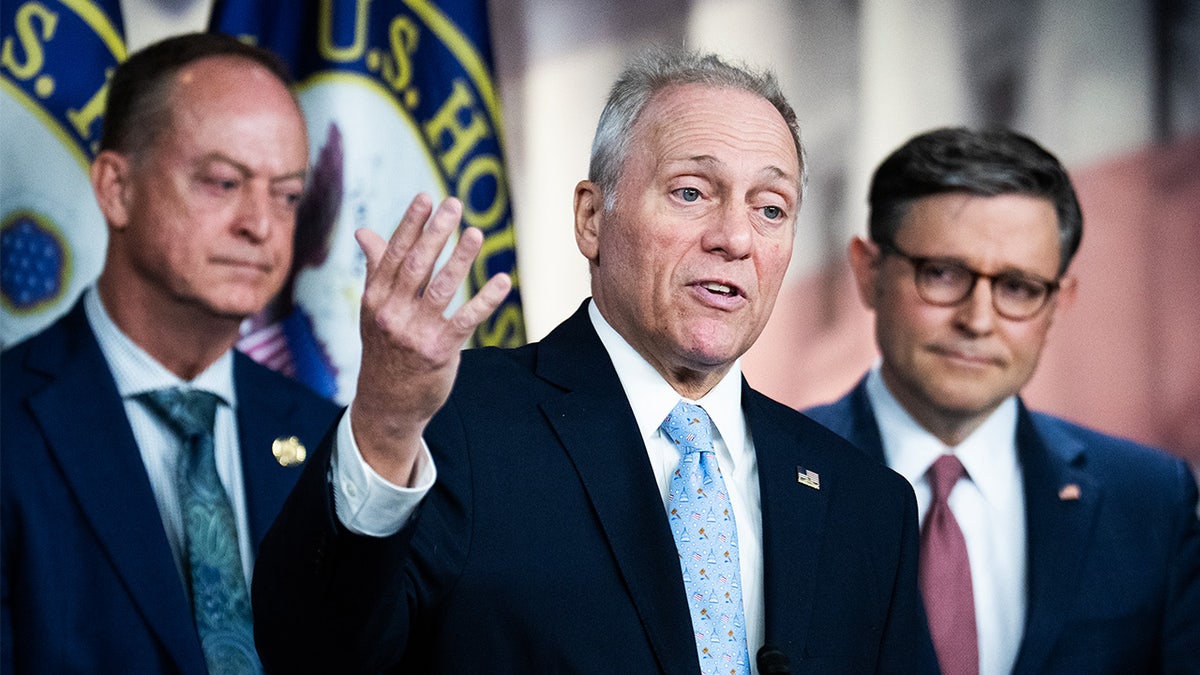
Scalise’s tenure in Washington mirrors the broader ideological and structural evolution of the modern Republican Party. First elected to the House in a 2008 special election representing Louisiana’s 1st Congressional District, Scalise quickly established himself as a disciplined conservative communicator and a skilled coalition builder within the Republican Study Committee.
His ascent into the upper echelons of House leadership began in 2014, when he was elected House Majority Whip under then-Speaker John Boehner, R-Ohio. In that role, Scalise served as a crucial bridge between the chamber’s pragmatic leadership wing and its increasingly vocal conservative insurgency.
When mounting tensions over spending and strategy forced Boehner to resign in 2015, Scalise maintained his position as whip under Boehner’s successor, Speaker Paul Ryan, R-Wis. Throughout the mid-2010s, as the GOP base enthusiastically rallied behind the political emergence of Donald Trump, Scalise successfully navigated the shifting ideological currents, cementing his standing as a trusted party operator.
The 2017 Congressional Baseball Shooting and National Prominence
Scalise’s career was forever altered on the morning of June 14, 2017, when a gunman opened fire on Republican lawmakers practicing for the annual charity congressional baseball game in Alexandria, Virginia. Scalise sustained severe, life-threatening internal injuries and spent weeks recovering in the hospital through multiple surgeries.
The tragic event galvanized bipartisan sympathy and thrust Scalise into the national spotlight. Prominent political figures across the ideological spectrum, including then-President Donald Trump, praised his resilience.
"Just left hospital. Rep. Steve Scalise, one of the truly great people, is in very tough shape — but he is a real fighter. Pray for Steve!" Trump posted on social media during Scalise’s hospitalization.
Scalise’s eventual return to the House floor later that year was met with a prolonged, emotional standing ovation from lawmakers on both sides of the aisle, underscoring his personal popularity and respect within the institution.

Climbing to the No. 2 Post and Navigating Turbulence
When Republicans reclaimed the House majority in the 2022 midterm elections under the leadership of Kevin McCarthy, R-Calif., Scalise was elevated to the position of House Majority Leader, becoming the undisputed second-in-command of the chamber.
However, the 118th Congress proved to be one of the most turbulent legislative periods in modern American history. Intra-party fractures over fiscal policy, national debt ceilings, and federal spending levels culminated in the historic ousting of McCarthy from the speakership in October 2023. In the chaotic aftermath, Scalise launched a bid to succeed McCarthy as speaker, securing the initial nomination of the GOP conference before withdrawing his candidacy amid deep-seated ideological divisions.
Ultimately, the conference coalesced around Speaker Mike Johnson, R-La., another Louisiana conservative with whom Scalise maintained a close working relationship. Scalise continued to serve as majority leader under Johnson, helping steer a historically narrow and fractious Republican majority through a series of grueling legislative stalemates, government shutdown threats, and narrow floor votes.
Implications of the Leadership Shift for the 120th Congress
The elevation of Jim Jordan to the position of minority leader signals a strategic pivot for House Republicans as they prepare to transition to an adversarial role against an incoming Democratic majority. Known as a founding member of the hardline House Freedom Caucus and a fierce legislative battler, Jordan is expected to run a more confrontational opposition operation.
Political analysts note that Scalise’s departure from the leadership suite removes a vital institutional steady hand who excelled at counting votes, managing complex floor schedules, and serving as a pragmatic negotiator during legislative crises. Whether Scalise decides to remain in Congress to offer counsel from the backbenches or chooses to retire and pursue opportunities outside of elected office, his exit from leadership closes an influential chapter in modern congressional history.
For now, however, Capitol Hill remains focused on the closing weeks of the legislative calendar. As the sun sets on the current Congress, Steve Scalise continues to execute his duties as majority leader, leaving the ultimate question of his future in the hands of time, family considerations, and the rapidly approaching political realignment of January 2027.
Related posts: