My Chemical Romance Agrees to Cease Use of Dallas Cowboys Cheerleader Costumes Following Trademark Infringement Lawsuit

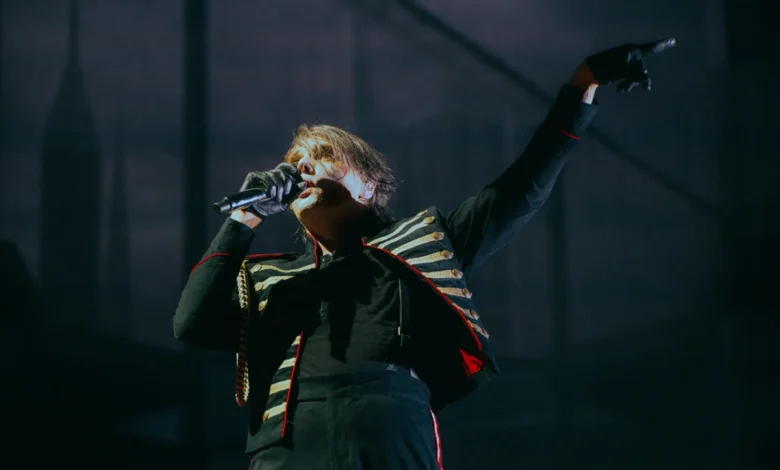
The high-stakes legal confrontation between iconic rock band My Chemical Romance and the Dallas Cowboys Cheerleaders (DCC) has reached an interim resolution, as the band has agreed to stop utilizing costumes that mirror the world-famous cheer squad’s signature royal blue and white uniforms. The agreement, confirmed by legal records, effectively pauses a volatile trademark dispute that emerged during the band’s highly anticipated residency at the Hollywood Bowl, where they are celebrating the 20th anniversary of their seminal 2006 album, The Black Parade.
The dispute centered on a theatrical stage production featuring backup dancers dressed in attire strikingly similar to the trademarked DCC aesthetic. During the performance, these dancers engaged in a simulated gun battle, a narrative choice that prompted immediate and severe pushback from the organization that manages the cheer squad’s image.
Chronology of the Legal Conflict
The conflict escalated rapidly following the band’s performance at the Hollywood Bowl last Wednesday. The Dallas Cowboys Cheerleaders, through their parent company Pro Silver Star, filed a lawsuit in Texas late last Friday. The legal filing specifically alleged that the band’s use of the iconic uniform—defined by its star-spangled vest, blue-and-white color scheme, and distinct aesthetic—constituted trademark infringement.
On Monday, October 28, a hearing was scheduled in Collin County, Texas, to address the cheerleaders’ request for an emergency restraining order. However, the hearing did not proceed as originally envisioned. Court records indicate that the parties reached a preliminary agreement, rendering the emergency motion moot. While legal counsel for the cheer squad appeared in court, My Chemical Romance’s representatives did not attend, signaling that the matter had been resolved out of court for the time being.
A minute order issued by the court confirmed that the judge directed both parties to confer regarding the specific relief requested, noting that the plaintiffs had narrowed the scope of their demands. In a move that further signaled a cooling of the immediate legal pressure, lawyers for the cheer squad filed a notice on Wednesday dropping concert promoter Live Nation as a defendant in the case.
The Core of the Trademark Allegation
At the heart of the litigation was not the band’s artistic expression or the narrative of their performance, but rather the unauthorized commercial association of the DCC brand with a violent stage skit. The lawsuit emphasized that the cheer squad’s brand is built upon decades of public service, including extensive tours to entertain American troops, which the organization felt was compromised by being featured in a mock gun battle.
“The brand DCC built on dedication, character, and community, and on decades of entertaining American troops, was thus put on a stage in a gunfight, its uniform worn by performers shown shooting and being shot,” the lawsuit stated.
Pro Silver Star maintained a firm stance regarding the boundaries of the band’s creative license. In court documents, the organization clarified: “Silver Star does not ask defendants to change their setlist, narrative, politics, choreography, or even their decision to put gun-toting performers on stage. Silver Star asks only that those performers not wear the DCC Uniform while doing it. The universe of alternative costume designs is effectively unlimited.”
Context and Performance Background
My Chemical Romance’s Hollywood Bowl residency is a milestone event for the band and its massive global fanbase. The performances are dedicated to commemorating the 20th anniversary of The Black Parade, a record that solidified the group’s status as a generational powerhouse in the alternative rock genre. The elaborate stage production was designed to be immersive, featuring theatrical sets and a large cast of performers.
Videos circulating on social media following the initial performance showed dancers in the contested outfits storming the stage with rifles aimed at figures representing a fictional dictatorship. The visual dissonance between the highly recognizable, wholesome image of the Dallas Cowboys Cheerleaders and the dark, militaristic themes of the performance served as the catalyst for the legal action. While the band has agreed to cease using the specific costumes, the remaining shows at the Hollywood Bowl—scheduled for October 30 and Halloween—are expected to proceed, albeit with modifications to the visual presentation.
Implications for Intellectual Property in Live Performance
The legal challenge brings to the forefront a growing area of concern for the live entertainment industry: the intersection of transformative stage performance and intellectual property law. In the era of social media, where performance clips are disseminated globally within seconds of a concert, the stakes for trademark protection have never been higher.
Legal analysts suggest that this case serves as a cautionary tale for production designers and creative directors. The "likelihood of confusion"—a standard test in trademark law—is often exacerbated in high-profile cases where a brand as distinct as the Dallas Cowboys Cheerleaders is involved. Because the DCC uniform is a protected, highly recognizable brand asset, the threshold for using it without a license is exceptionally high.
For My Chemical Romance, the decision to settle the immediate dispute likely reflects a desire to avoid the distraction and costs of prolonged litigation as they prepare for the next leg of their international tour. Following the conclusion of their Los Angeles dates, the band is scheduled to embark on an Asian tour beginning November 7 in South Korea, with subsequent stops in Singapore, the Philippines, Thailand, Malaysia, and Indonesia.
Industry and Public Response
While neither the band nor the legal team for the cheerleaders has provided a formal public statement, the incident has sparked widespread debate among fans and industry observers. Supporters of the band have pointed to the satirical nature of the performance, arguing that it falls under the umbrella of artistic parody. Conversely, legal experts have noted that trademark law generally provides less protection for parody than copyright law does, and commercial entities like Pro Silver Star are typically rigorous in defending their brand identity from being associated with activities they deem inconsistent with their corporate values.
The removal of Live Nation as a defendant in the lawsuit suggests that the cheer squad’s primary objective was the immediate cessation of the use of their uniforms, rather than seeking extensive damages from the tour’s financial backers. This strategic shift indicates a focused legal campaign designed to protect the integrity of the trademark without necessarily aiming to shut down the performances entirely.
Future Outlook
The agreement to stop using the costumes while the case remains pending provides a cooling-off period, but it does not necessarily signal the end of the legal proceedings. The underlying lawsuit remains active, and the court will likely require further proceedings to reach a final resolution on the trademark infringement claims.
As My Chemical Romance continues its anniversary tour, the episode serves as a reminder of the complex legal landscape that governs modern live performance. For major acts that rely on high-concept stagecraft, the need for legal vetting of props and costumes has become as critical as the technical aspects of the show itself. For the Dallas Cowboys Cheerleaders, the successful intervention highlights their continued commitment to protecting a brand that has become a fixture in American cultural history.
The band’s move to comply with the interim request underscores the reality that even in the provocative world of rock and roll, the established rules of intellectual property remain an unavoidable constraint. As the tour moves into international markets, all eyes will be on whether the band adjusts its production elements to avoid further friction with trademark holders, or if they will continue to push the boundaries of their stage narrative while staying within the confines of the law.
Related posts: