Nebraska’s Power Struggle: The Growing Collision Between Economic Ambition and Grid Capacity


The Omaha Public Power District (OPPD), a critical engine of economic development for Nebraska’s largest metropolitan area, finds itself at a precarious crossroads. Tasked with powering 419,000 customers, the utility is currently projecting a severe tightening of available energy capacity. For developers, manufacturers, and data center operators eyeing the Omaha region, the era of guaranteed, abundant, and immediate power access is rapidly drawing to a close. As the utility struggles to balance an unprecedented surge in demand with the limitations of an aging grid and local resistance to new energy projects, the state’s economic future hangs in the balance.
The current crisis did not emerge in a vacuum; it is the culmination of a multi-year shift in industrial demand, post-pandemic supply chain realities, and the lingering scars of extreme weather events. To understand the gravity of the current situation, one must look back to February 2021, when Winter Storm Uri paralyzed energy grids across the central United States. As temperatures plummeted, the Southwest Power Pool (SPP)—the regional entity responsible for managing the electric grid across 14 states—was forced to initiate emergency protocols. In Nebraska, OPPD implemented rolling blackouts to prevent a catastrophic, multi-day collapse of the electrical system.
That event served as a wake-up call for utility providers. In its aftermath, the SPP mandated that member utilities hold significantly higher reserve margins to ensure reliability during peak load periods. While these measures were designed to prevent another Uri-scale failure, they effectively locked up a portion of existing capacity, leaving less headroom for the massive influx of new commercial and industrial load that began to accelerate in the years that followed.
The Anatomy of a Capacity Crunch
The surge in demand is driven by several converging factors. The "data center boom" has turned previously sleepy industrial zones into high-voltage hubs. Data centers, which operate 24/7 and require massive amounts of electricity for cooling and server power, can demand upward of 1,000 megawatts of capacity—a figure that dwarfs the needs of traditional manufacturing or residential developments. Alongside this, the broader push toward electrification—including the transition to electric vehicles and the conversion of industrial heating processes to electricity—has compounded the strain.
Currently, OPPD estimates it has less than 100 megawatts of available power capacity for large-scale new or expanding customers over the next few years. In the world of industrial energy planning, 100 megawatts is a razor-thin margin. For context, a single large-scale manufacturing facility can consume a significant portion of that capacity alone. Javier Fernandez, the outgoing president and CEO of OPPD, has signaled that any project requiring more than 2 megawatts of capacity may now face significant delays or outright denial of service.
This creates a "chicken-and-egg" scenario for economic development. Local chambers of commerce are aggressively recruiting industries that promise high-paying jobs and tax revenue, yet the very infrastructure required to host these industries is reaching its limit. The Greater Omaha Chamber of Commerce has been vocal about its concerns, noting that energy access has become one of the top two reasons the region loses competitive bids to other states.
A Chronology of Growing Demand
The trajectory of this demand can be traced through the utility’s planning documents and public filings. In 2023, OPPD’s peak demand profile was split roughly between industrial (32%), residential (41%), and commercial (27%) sectors. However, by 2035, projections indicate that industrial demand will surge to account for 52% of the utility’s total load.
The queue for connection is staggering. According to recent internal data, companies representing nearly 2,000 megawatts of potential load are currently in the planning pipeline through 2031. Beyond that, an additional 5,000 megawatts of projects are hovering in the early evaluation stages. Even if only a fraction of these projects move forward, the strain on the existing infrastructure will be immense. The utility is now forced to perform a delicate, high-stakes balancing act: build too little, and the regional economy stagnates due to lack of capacity; build too much, and the ratepayers could be burdened with the stranded costs of unused generation assets.
The Conflict Over New Generation
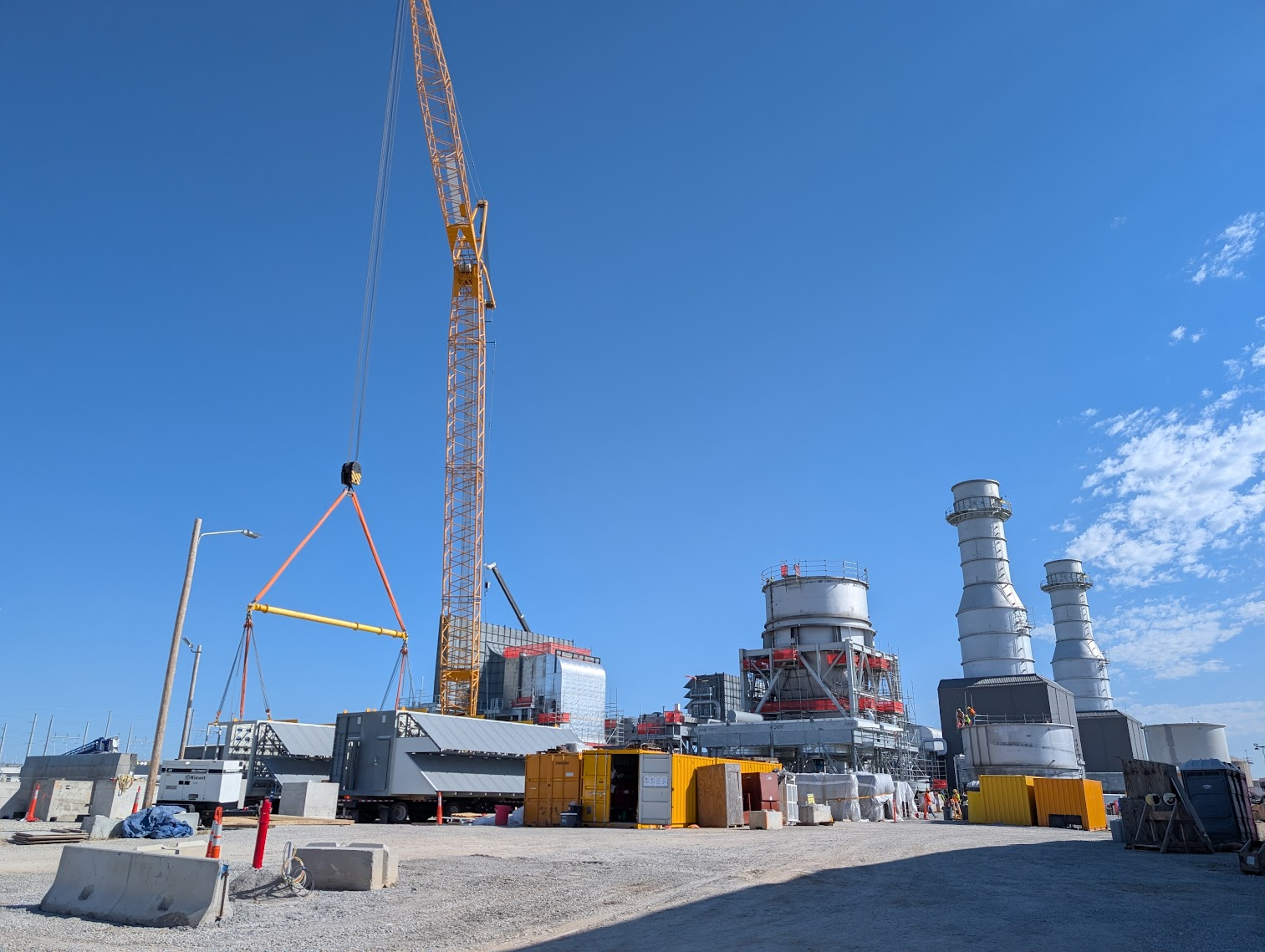
The path forward—building new generation—is fraught with political and logistical hurdles. OPPD is exploring a mix of natural gas, which provides reliable base-load power, and renewable energy, which is cost-effective but intermittent. Both pathways are currently obstructed.
The natural gas sector is currently suffering from a global supply chain bottleneck, where the lead times for turbines and electrical switchgear have extended by years. Meanwhile, renewable energy projects, particularly wind and solar farms, are facing a groundswell of local opposition across rural Nebraska. Despite the state’s massive potential for wind energy, community members have increasingly pushed back against new developments. Concerns range from the visual impact on the landscape and the loss of agricultural acreage to localized fears regarding fire safety and infrastructure strain.
This resistance has created a profound irony in the state’s policy landscape. According to Fernandez, it is not uncommon for local officials to actively block renewable energy projects in their districts while simultaneously lobbying for more power capacity to attract business to their communities. "Everyone is saying no, and then we end up in a really bad place," Fernandez noted, highlighting the disconnect between local land-use policies and regional economic goals.
Economic Implications for the State
The urgency of this issue is amplified by the state’s current fiscal environment. Nebraska is bracing for a projected $208 million budget deficit in the coming cycle, with state income tax revenues having fallen by $703 million over the past year. In this context, the inability to attract major corporate investments—the very projects that could broaden the tax base and reverse "brain drain"—carries long-term consequences for the state’s solvency.
Larry Gigerich, chair of the Site Selectors Guild, an international association of experts who advise companies on where to locate their operations, notes that the competition for power is now the primary bottleneck for industrial growth across the U.S. "It’s a true competition," Gigerich said, "and we can’t generate enough new power fast enough to meet everybody’s needs." This has forced manufacturers to stop acting as passive utility customers and start becoming vocal, active participants in the energy planning process. They are now, by necessity, advocating for, and sometimes helping to fund, the expansion of grid infrastructure.
The Road Ahead: Strategic Planning and Coordination
As OPPD looks toward its 10-year planning horizon, the board faces a decision of historic proportions. Initial internal results suggest that the utility may need to more than double its current 4,583-megawatt portfolio. Whether this growth is achieved through a massive expansion of wind and solar or through the construction of new, firm-capacity natural gas plants remains a subject of intense debate.
The consensus among industry experts and utility leadership is that the current siloed approach to planning—where cities, counties, and utilities operate in relative isolation—is no longer sustainable. "The biggest question my board is likely going to have to answer is going to be how big of a plan we approve," Fernandez said. "And that is going to be informed by state, counties, cities, chambers: How much do you want us to grow?"
For Nebraska, the path to sustained prosperity requires a synchronized strategy that treats the electrical grid not merely as a utility, but as the foundational infrastructure of the state’s economy. Without a unified, state-wide commitment to clearing the hurdles for energy production—be it through streamlining the permitting of renewables or addressing the supply chain constraints for gas—the region risks being sidelined in the next wave of industrial expansion. The question is no longer just about where to build the next factory or data center, but whether the grid can sustain the collective ambition of a state seeking to grow.