The artificial intelligence sector is currently fixated on a frontier known as "world models"—systems designed to automate spatial intelligence, predict physical outcomes, and bridge the gap between digital algorithms and the physical environment. Yet, beneath the immense financial backing and academic prestige surrounding trailblazing enterprises like Yann LeCun’s AMI Labs and Fei-Fei Li’s World Labs lies a pervasive shroud of secrecy. While venture capitalists continue to pour billions of dollars into spatial intelligence research, industry leaders are adopting a deliberate strategy of ambiguity, deliberately obscuring their commercial roadmaps to fend off premature market competition.
The Genesis and Promise of Spatial Intelligence
At their technical core, world models represent a fundamental evolution in how artificial intelligence perceives and interacts with reality. Traditional large language models process text and tokens, operating primarily within the abstract realms of syntax and probability. In contrast, world models strive to develop a robust internal simulation of physical reality. This capability allows an AI to understand gravity, momentum, spatial dimensions, and object permanence.
The potential commercial applications for this technology are vast and lucrative, spanning multiple industries. In autonomous driving, world models offer the predictive depth required for vehicles to navigate complex, dynamic traffic conditions safely. In robotics, they serve as the cognitive foundation enabling humanoid machines to manipulate objects, navigate unfamiliar indoor spaces, and assist in manufacturing or logistics. Furthermore, the technology holds transformative potential for interactive entertainment, allowing creators to generate explorable 3D environments, hyper-realistic CGI, and immersive video game assets from rudimentary prompts.
Despite this expansive horizon, translating theoretical capabilities into profitable enterprise products has proven remarkably difficult. Major market participants currently rank low on traditional monetization scales, favoring long-term foundational research over immediate commercial deployment.
The Culture of Secrecy: Inside AMI Labs and World Labs
This tension between grand ambitions and commercial silence was a central theme at the recent All In conference, where industry experts gathered to debate the trajectory of generative AI and spatial computing. Panel discussions highlighted a striking reluctance among leading researchers to disclose specific product timelines or deployment strategies.
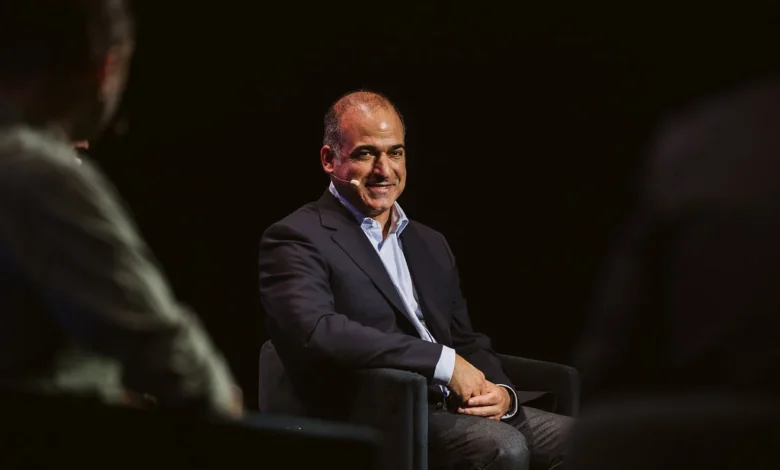
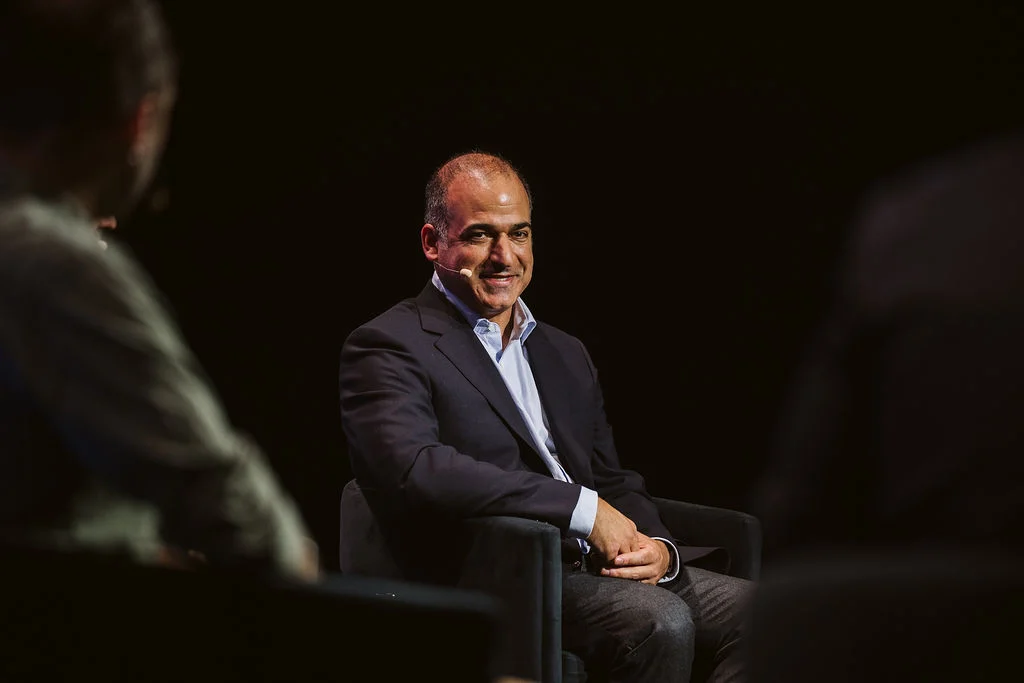
Michael Rabbat, co-founder and Vice President of World Models at AMI Labs, addressed the panel regarding the company’s ongoing initiatives. When pressed on concrete deliverables, Rabbat maintained a guarded stance, stating that the organization remains firmly entrenched in a research and building phase. Subsequent communications reiterated that public timelines and product roadmaps are not yet ready for release. Given that AMI Labs is relatively young—having operated for less than a year—such caution is standard academic and startup protocol.
However, this reticence is not isolated to AMI Labs. World Labs has faced similar observations regarding its flagship platform, Marble. While Marble’s public demonstrations showcase impressive capabilities—such as generating explorable environments for gaming, cinematic visual effects, and rudimentary robotics simulations—critics and industry observers note that the platform currently functions more as a capability showcase than a fully realized commercial product.
The Supply Chain Blind Spot
The veil of secrecy surrounding world model developers extends far beyond executive boardrooms, directly impacting their downstream partners and suppliers. Data acquisition and curation are critical bottlenecks for training advanced spatial AI systems, requiring specialized physical and synthetic data inputs.
Alex de Vigan, CEO of Physicl, a specialized data supplier servicing the burgeoning world model ecosystem, highlighted the operational challenges posed by this corporate opacity. Speaking on the sidelines of the All In conference, de Vigan acknowledged that while his company’s datasets have been integrated into various model-training pipelines, suppliers are frequently kept in the dark regarding the specific end-goals of their clients.
According to de Vigan, a greater degree of transparency from major AI labs would significantly enhance supply chain efficiency, enabling data providers to tailor their collection methodologies more effectively to the precise architectural needs of advanced world models. The current dynamic, however, forces suppliers to operate in a reactive state, delivering generalized datasets without understanding the specific physical simulations or industrial applications they are ultimately training.
The Strategic Logic of the Dark Forest Hypothesis
The prevailing culture of silence among world model developers is not merely a byproduct of early-stage development; it is a calculated strategic defense mechanism. The versatility of world models creates a unique paradox for foundational AI labs. The same architectural framework capable of guiding an autonomous vehicle through urban traffic can theoretically be adapted to power humanoid robotics, biomedical imaging software, or automated manufacturing systems.
AMI Labs, for instance, has already explored diverse exploratory partnerships—including Nabia, an initiative targeting AI software for medical professionals—across manufacturing, healthcare, and robotics. However, pursuing all these avenues simultaneously is neither practical nor sustainable.
In a market defined by abundant venture capital and aggressive competition, prematurely revealing a specific commercial application invites immediate retaliation. If a prominent lab announces a breakthrough in humanoid robotics or cinematic rendering, well-capitalized competitors, emerging neolabs, and tech giants like OpenAI and Anthropic can rapidly pivot resources to contest that specific vertical.
This dynamic mirrors the "dark forest" hypothesis popularized in contemporary science fiction: in an environment populated by equally powerful and potentially hostile actors, survival dictates remaining hidden until aggression or exposure is entirely unavoidable. By keeping their precise commercial targets under wraps, startups can enjoy the benefits of venture funding while delaying the onset of cutthroat market competition.
Broader Implications and Future Outlook
As the world model ecosystem matures, the tension between stealth development and market transparency will inevitably reach a tipping point. Investors are patient for now, buoyed by the profound long-term potential of spatial intelligence. Yet, the pressure to demonstrate tangible return on investment will mount as hardware costs accumulate and research transitions into commercial deployment.
For the broader technology sector, the emergence of advanced world models promises to redefine human-computer interaction, automation, and digital content creation. Whether these foundational labs can successfully navigate the transition from secretive research incubators to dominant commercial enterprises remains one of the defining questions of the current artificial intelligence landscape. Until those answers emerge, the architects of spatial intelligence will continue to build their worlds behind closed doors.
Related posts: