The State of Physical Media in the Digital Age
The global gaming industry has spent the last decade aggressively pivoting toward digital distribution. Services such as PlayStation Plus, Xbox Game Pass, and the Nintendo eShop have fundamentally altered how consumers acquire and store software. However, Nintendo has historically remained an outlier, relying on proprietary ROM cartridges that cater to a dedicated collector base and a market segment that values ownership, resale ability, and the absence of massive day-one mandatory downloads.
Despite this dedication, the underlying infrastructure supporting these cartridges is fragile. The reliance on legacy semiconductor suppliers like Rohm and Lapis Semiconductor underscores the niche nature of modern ROM production. As demand for these specific chips wanes in the broader tech sector—which has largely migrated toward flash storage and high-bandwidth memory—the cost of maintaining specialized production lines for Nintendo’s proprietary hardware continues to climb. This creates a "long tail" effect where the unit cost of production for a Switch cartridge does not benefit from the economies of scale that drive down the price of other consumer electronics components.
A Chronology of Declining Physical Accessibility
The pressure on the physical market did not emerge overnight; it is the culmination of years of logistical and economic headwinds.
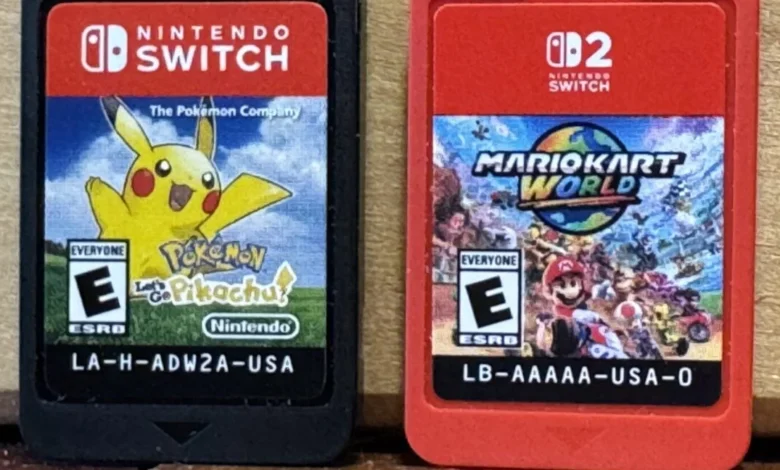
In late 2025, the industry saw a significant shift when Japanese publisher Inin Games provided a candid look at the economics of physical releases. When discussing the release of R-Type Dimensions III, the publisher noted that a full physical release was only commercially viable due to the introduction of two new, smaller-capacity cartridge sizes developed for the Switch 2. By reducing the storage capacity—and therefore the silicon real estate required—Nintendo was able to lower the entry barrier for third-party publishers who were otherwise deterred by the high cost of high-capacity cartridges.
By early 2026, the strategy shifted from "making physical affordable" to "pricing physical as a premium tier." Nintendo implemented a controversial pricing structure for the Switch 2, where physical copies of select titles began carrying a higher retail price than their digital counterparts. This move was widely interpreted by industry analysts as a pass-through of the rising logistics and manufacturing costs associated with physical media.
The Digital Transition: Market Data and Trends
The shift toward digital is not merely a preference; it is a statistical reality. According to industry analyst David Gibson, digital software sales accounted for 61.5 percent of Nintendo’s total business revenue during the second calendar quarter of 2026. This represents a measurable, year-over-year increase in digital penetration.
The implications of this shift are twofold. First, it validates the strategy of competitors who have exited the physical space entirely. When more than 60 percent of a company’s revenue originates from digital transactions that involve zero manufacturing, zero shipping, and zero retail shelf-space overhead, the incentive to maintain a physical supply chain diminishes significantly.
Second, the rising digital percentage suggests that physical media is transitioning from a "standard" to a "luxury" format. If the trend continues, Nintendo may eventually reach a tipping point where the fixed costs of maintaining cartridge production cannot be offset by the diminishing volume of sales. In such a scenario, the "balancing out" effect—where lower demand for physical cartridges leads to a reduction in production overhead—is unlikely to happen. Instead, the fixed costs of maintaining the semiconductor partnerships will likely be spread across a smaller number of units, forcing the price of physical games even higher.
Official Stance and Corporate Strategy
Nintendo has been remarkably consistent in its public messaging regarding physical media. As recently as last month, executives reaffirmed that there are no plans to abandon physical cartridges in the near future. The company recognizes that a substantial portion of its core demographic—particularly in the Japanese and European markets—views physical media as an essential component of the Nintendo experience.
However, "no plans to abandon" is a carefully chosen phrase that stops short of "unlimited support." Nintendo is clearly hedging its bets. By optimizing cartridge capacities and adjusting price points, the company is attempting to preserve the physical ecosystem without subsidizing it at the expense of its digital profit margins. This strategy allows Nintendo to maintain its image as a supporter of game preservation while simultaneously steering the market toward the more lucrative digital storefront.
The Supply Chain Bottleneck
The logistical challenges are perhaps the most significant, yet least discussed, aspect of this trend. Nintendo’s dependency on firms like Rohm and Lapis Semiconductor places them at the mercy of the broader automotive and industrial electronics sectors, which also compete for capacity at these specific semiconductor fabrication plants.
If these suppliers decide to repurpose their lines for more profitable or higher-volume silicon components, Nintendo faces a supply chain crisis. While Nintendo has the leverage to negotiate long-term contracts, they cannot dictate the manufacturing priorities of the global semiconductor market. If the cost of raw materials—specifically the specialized silicon used for ROM chips—continues to rise, the physical cartridge could become an unsustainable product for all but the most successful, high-volume AAA titles.
Broader Industry Implications
The ripple effects of this situation extend to the retail sector. Major retailers are increasingly skeptical of dedicating floor space to physical media. As the gap between physical and digital pricing widens, and as more games require day-one patches that negate the "offline" benefit of a cartridge, the consumer value proposition of the physical game continues to erode.
For independent developers, the situation is even more precarious. Small studios often rely on limited physical runs to gain visibility and prestige, but the current cost of production makes these runs a risky financial gamble. If the price of manufacturing continues to climb, we may see a future where only first-party Nintendo titles and the largest third-party blockbusters receive physical releases, effectively killing the "physical indie" market that has flourished over the last few years.
Conclusion: A Slow-Motion Departure?
The evidence suggests that while Nintendo is not currently following Sony’s aggressive "digital-only" trajectory, they are certainly preparing for a future where physical media is a secondary concern. The current strategy of high-price premiums and capacity-optimized cartridges is a bridge, not a permanent solution.
As digital sales continue to climb toward the 70 percent threshold, the operational friction of the physical format will likely become impossible to ignore. For now, the "limping along" of physical media continues, sustained by a company that understands the sentimental value of the cartridge, even as the economic logic of the industry pulls in the opposite direction. Whether this remains a viable business model through the end of the decade depends entirely on how much of the cost burden Nintendo is willing to pass on to the consumer, and how much longer the consumer is willing to pay it. The reality of 2026 indicates that the era of the mass-market physical game is coming to a close, replaced by a selective, premium-priced alternative that serves as a tribute to, rather than the standard of, the gaming industry.