Hidden Ecosystems Under Threat: New Research Highlights Urgent Need to Protect Earth’s Fungal Networks

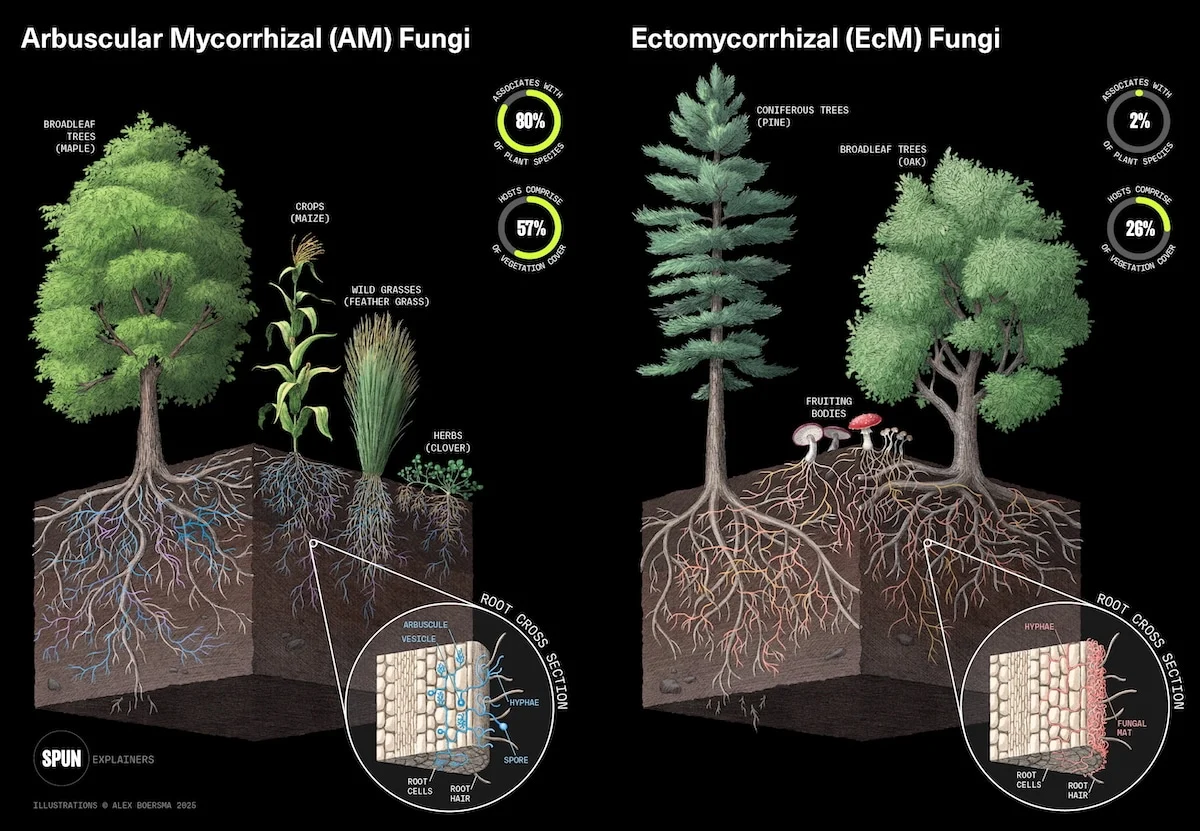
For centuries, humanity’s approach to conservation has been stubbornly focused on the world above our feet—the majestic forests, sprawling savannas, and diverse animal species that define our terrestrial landscape. However, groundbreaking new research published in the journal Nature has shifted this perspective downward, revealing that the planet’s most critical "circulatory system" is in a state of precarious neglect. A team of researchers from the Society for the Protection of Underground Networks (SPUN) has mapped the world’s mycorrhizal fungi, finding that 90 percent of these vital biodiversity hotspots currently exist outside of protected areas. These subterranean networks, which have facilitated life on land for over 450 million years, are now at risk, threatening the global carbon cycle, agricultural productivity, and the resilience of ecosystems against a rapidly changing climate.
The Foundation of Terrestrial Life
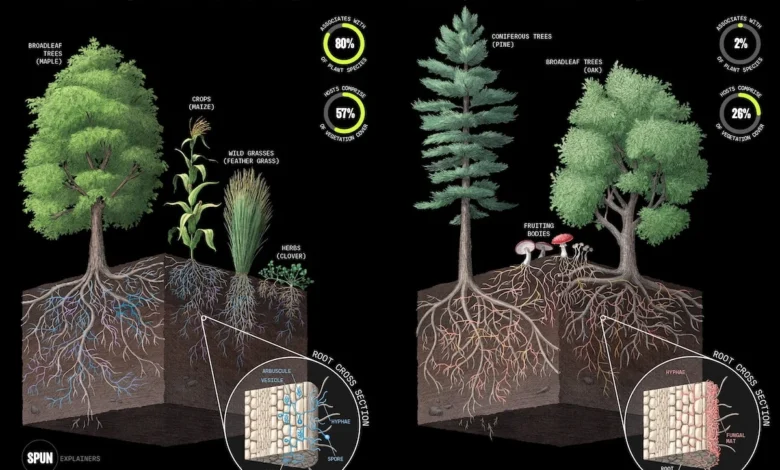
Mycorrhizal fungi are not merely soil inhabitants; they are essential ecosystem engineers. These symbiotic organisms form intricate networks that connect the roots of the vast majority of terrestrial plants. Through this relationship, fungi provide plants with essential water and nutrients—such as phosphorus and nitrogen—in exchange for carbon-rich sugars produced through photosynthesis.
The scope of their influence is staggering. These fungi are responsible for drawing approximately 13 billion tons of carbon annually into the soil, an amount equivalent to roughly one-third of global fossil fuel emissions. Without these networks, the foundational structure of the world’s forests would collapse, agricultural yields would plummet, and the planet’s ability to sequester carbon would be severely diminished. Dr. Toby Kiers, Executive Director of SPUN, notes that the colonization of land by plants millions of years ago was only made possible through these ancient fungal partnerships. Today, they remain the silent guardians of global food security and climate stability.
A Chronology of Discovery and Mapping
The path to this realization has been a long, data-intensive journey. For decades, the sheer complexity and hidden nature of the soil microbiome made it difficult to quantify. The recent breakthrough by SPUN represents the culmination of years of scientific effort, beginning with the organization’s founding and its 2021 launch of an ambitious world-mapping initiative.

- 2021: SPUN is formally established, aiming to bridge the gap between mycological research and environmental policy.
- 2022–2024: An international team of over 400 scientists and 96 "Underground Explorers" conduct extensive soil sampling in remote regions ranging from the mountains of Bhutan to the savannas of Brazil and the rainforests of Tasmania.
- July 2025: The researchers synthesize 2.8 billion fungal sequences collected from 130 countries. The resulting data is used to generate the first high-resolution, predictive maps of global mycorrhizal biodiversity.
- Late July 2025: The findings are published in Nature, confirming that current conservation strategies have largely ignored the underground, leaving 90.5 percent of fungal biodiversity hotspots entirely unprotected.
Data-Driven Insights into Biodiversity
The methodology behind these maps is a triumph of modern data science. By leveraging 2.8 billion fungal sequences, the researchers created a "Global Atlas" that visualizes where the most unique and endemic fungal communities reside. The maps reveal that biodiversity is not distributed evenly; instead, there are clear "hotspots" where the richness of fungal life is exceptionally high.
The data indicates that these hotspots often overlap with critical carbon-sequestering regions. However, the disconnect between these biological realities and current land-use policy is stark. While global leaders frequently designate national parks and protected areas based on visible vegetation or charismatic megafauna, the microscopic life that sustains those very environments is rarely considered in the designation process. The study explicitly notes that only 9.5 percent of these fungal hotspots currently fall under any form of formal protection.
Official Responses and Scientific Consensus
The scientific community has reacted with a sense of urgency, emphasizing that "fungus blindness"—a term used by Dr. Merlin Sheldrake, Impact Director at SPUN—is a systemic failure in current environmental governance. The research has garnered support from prominent figures in the conservation world, including Jane Goodall, as well as authors Paul Hawken and Michael Pollan.
Dr. Michael Van Nuland, lead data scientist at SPUN, stated that these maps are intended to be more than just academic exercises. "These maps are scientific tools that can help guide the future of conservation," Van Nuland explained. "Food security, water cycles, and climate resilience all depend on safeguarding these underground ecosystems."
From a policy perspective, the implications are clear: current restoration and protection efforts are "dangerously incomplete." Dr. Alex Wegmann of The Nature Conservancy highlighted that restoration managers have long lacked the data required to understand what healthy soil communities should look like. With these new maps, they now have quantitative targets to guide the reintroduction of fungal diversity in degraded lands.

Broader Implications for Global Climate Strategy
The exclusion of fungi from climate agendas is a significant strategic oversight. As the world grapples with the escalating climate crisis, the focus has remained heavily on atmospheric carbon and above-ground biomass. However, the soil serves as the planet’s largest terrestrial carbon sink. When we disturb these networks—whether through intensive industrial agriculture, deforestation, or urbanization—we risk releasing massive stores of carbon back into the atmosphere while simultaneously destroying the biological infrastructure that helps plants survive heat waves, droughts, and pathogen outbreaks.
The SPUN initiative aims to provide decision-makers with the tools to identify "underground conservation corridors." By integrating these maps into legal frameworks and climate initiatives, nations can prioritize the protection of soil health alongside traditional conservation goals. The vision is to make underground biodiversity as fundamental to environmental policy as satellite imagery of forest cover.
Future Directions and Ongoing Research
The work is far from complete. Despite the 40,000 specimens and 95,000 taxa already identified, the researchers estimate that they have sampled only 0.001 percent of the Earth’s surface. The "Underground Explorers" program continues to expand, with missions planned for even more remote, hard-to-access ecosystems in countries such as Mongolia and Ukraine.
The ultimate goal for SPUN and its collaborators is the democratization of this data. By providing an open-access platform for conservationists, policymakers, and local communities, they hope to foster a global shift in how we perceive the "hidden" world beneath our feet. As the findings published in Nature make clear, the future of the planet’s ecosystems is inextricably linked to the unseen, interconnected networks that have quietly supported life for eons. Protecting these networks is no longer an optional conservation strategy; it is a necessity for the survival of the global biosphere.