Helen Mirren Reveals Why Playing Patricia Highsmith in A Talent for Murder Was Her Hardest Role Yet

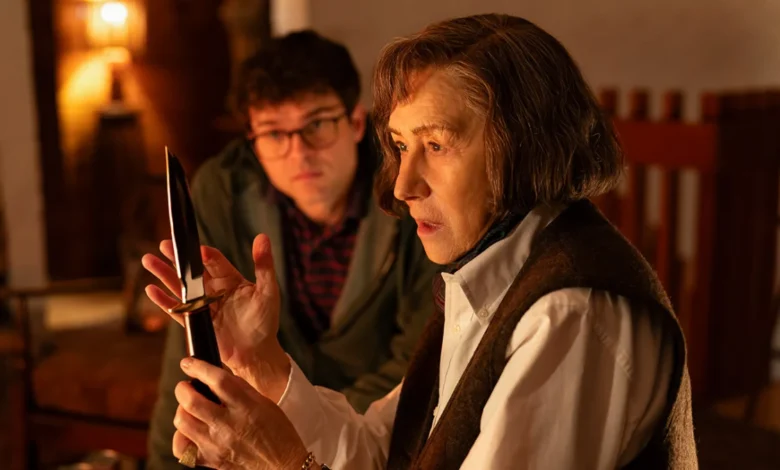
Over a storied career spanning more than five decades, Academy Award-winning actress Helen Mirren has stepped into the shoes of numerous historical figures, literary icons, and monarchs. Yet, bringing the complex, reclusive author Patricia Highsmith to life in the upcoming psychological thriller A Talent for Murder stands out as perhaps her most demanding challenge to date. Speaking candidly during the Toronto International Film Festival (TIFF), Mirren elaborated on why capturing the essence of the brilliant yet troubled mastermind behind The Talented Mr. Ripley pushed her acting boundaries far beyond her previous biographical portrayals.
The admission offers a fascinating glimpse into the meticulous process of one of cinema’s most revered actors. While Mirren is celebrated for her uncanny ability to humanize monumental figures—ranging from British royalty to Israeli heads of state—her encounter with Highsmith presented a unique psychological and emotional hurdle. The film, directed by acclaimed Dutch filmmaker and photographer Anton Corbijn, promises to delve deep into the darker corners of the legendary writer’s psyche during her twilight years in Switzerland.
The Challenge of Portraying a Literary Icon
During an appearance at The Hollywood Reporter’s Studio at 1 Hotel, presented by sponsor Canada Goose during TIFF, Mirren reflected on the sheer difficulty of inhabiting Highsmith’s persona. When asked to rank her most arduous biographical performances, the actress did not hesitate to place the American novelist near the very top of the list.
"I would say Patricia might be one of them, honestly, because she is so different from how I am," Mirren remarked. "I could sort of identify with Her Majesty, the Queen, to a certain extent. [Prime Minister of Israel] Golda Meir—on the realm of sort of difficulty, I would say Queen, Golda, [and] Patricia Highsmith probably [is] the most difficult because of the way she’s portrayed in the film. I suspect the way she, maybe, was at the end of her life. She was very, very abrasive, very reclusive, [and] you know, basically, very fucked up."
This stark contrast between Mirren’s famously gracious public demeanor and Highsmith’s notoriously prickly, misanthropic disposition required the actress to traverse unfamiliar and deeply uncomfortable psychological territory. Highsmith, who spent the latter decades of her life living in relative isolation in Ticino, Switzerland, was fiercely protective of her privacy and famously distrustful of the media, literary establishments, and society at large.
A Legacy of Historical Portrayals
To understand the weight of Mirren’s assessment, one must look at her extensive filmography of real-life characterizations. The British actress has carved out a distinct niche in cinema history by humanizing women of immense power, historical significance, and intellectual heft. Her credits include:
- Queen Elizabeth II in Stephen Frears’ The Queen (2006), a role that earned her the Academy Award for Best Actress.
- Maria Altmann in Simon Curtis’s Woman in Gold (2015), portraying the octogenarian refugee fighting the Austrian government to recover Nazi-looted Gustav Klimt paintings.
- Cleopatra in Shakespeare’s Antony and Cleopatra.
- Golda Meir in Guy Nattiv’s Golda (2023), chronicling the turbulent decisions made by the Israeli Prime Minister during the Yom Kippur War.
- Ayn Rand in the Showtime television film The Passion of Ayn Rand (1999).
- Queen Elizabeth I in the HBO miniseries Elizabeth I (2005), for which she won both an Emmy and a Golden Globe.
- Defense attorney Linda Kenney Baden in David Mamet’s HBO film Phel Spector (2013).
- Catherine the Great in the HBO historical miniseries Catherine the Great (2019).
- Alma Reville, the brilliant wife and creative collaborator of Alfred Hitchcock, in Hitchcock (2012).
Despite the diverse challenges posed by these roles, Mirren has previously articulated a consistent philosophy regarding biographical acting. In a 2015 interview with The Hollywood Reporter, she emphasized that while external mimicry is essential, the internal mechanism of performance remains fundamentally identical to playing fictional creations.
"Of course it’s different [playing a real person]," Mirren noted at the time. "Because you have a responsibility to look like them and sound like them and maybe walk like them and use your hands like them, but the essential journey is exactly the same, really, as with a fictional character, which is a journey of imagination and the journey of telling the story."
However, Highsmith’s abrasive nature and complex internal world似乎 forced Mirren to stretch that imaginative journey into darker, less sympathetic realms than she encountered when portraying benevolent monarchs or courageous historical figures.
Behind the Scenes of A Talent for Murder
A Talent for Murder is poised to be one of the most anticipated psychological dramas of the autumn release calendar. Directed by Anton Corbijn—whose distinct visual style in films like Control, The American, and A Most Wanted Man is uniquely suited to atmospheric, character-driven narratives—the film explores a fictionalized encounter late in Highsmith’s life.
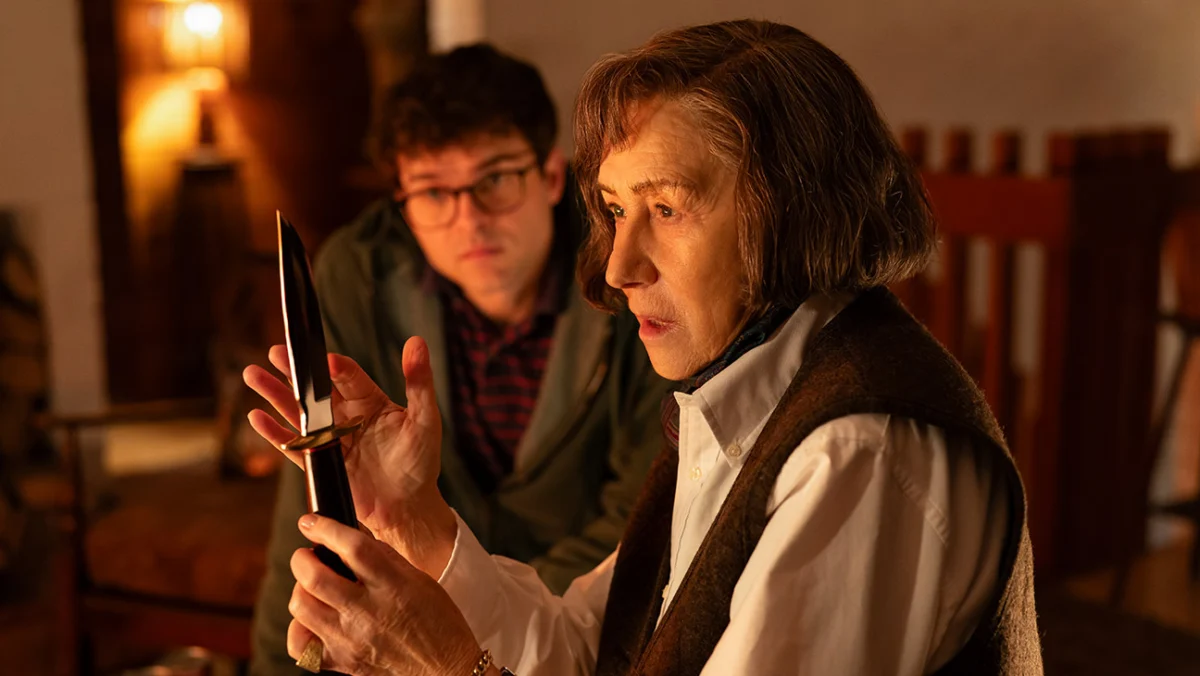
The screenplay was adapted by playwright Joanna Murray-Smith from her acclaimed 2014 psychological thriller play, Switzerland. The narrative centers on a young man, portrayed by Alden Ehrenreich (Solo: A Star Wars Story, Oppenheimer), who is dispatched to Switzerland by Highsmith’s New York publishing house. His mission is as simple as it is perilous: to convince the fiercely independent, aging author to pen one final installment in her immensely popular Ripley series, which introduced literary history to the charming, sociopathic con artist Tom Ripley.
As the cat-and-mouse dynamic between the weary, cynical author and her ambitious young visitor unfolds, the boundaries between reality, fiction, and psychological manipulation begin to blur. The film also features standout supporting performances from Olivia Cooke and Juliet Stevenson, rounding out an elite ensemble cast.
The Cultural Shadow of Patricia Highsmith
Patricia Highsmith remains one of the twentieth century’s most fascinating and paradoxical literary figures. Born in Texas in 1921 and later relocating to Europe, she wrote over twenty novels and numerous short stories that fundamentally reshaped the thriller genre. Her debut novel, Strangers on a Train (1950), was famously adapted into a cinematic masterwork by Alfred Hitchcock, cementing her reputation as a master of suspense who prioritized moral ambiguity over comforting resolutions.
Beyond the Ripley pentalogy—which began with The Talented Mr. Ripley in 1955—Highsmith also wrote The Price of Salt (1952) under the pseudonym Claire Morgan. Published later under her own name and adapted into the critically acclaimed 2015 film Carol, the novel broke groundbreaking ground by featuring a lesbian romance with a rare, happy ending for its time.
Despite her immense literary legacy, Highsmith’s personal life was famously reclusive and fraught with controversy. Biographies and accounts from her final years paint a picture of an individual who preferred the company of her pet snails to that of fellow humans, maintaining an acerbic worldview until her death in Locarno, Switzerland, in 1995. It is precisely this unvarnished, difficult humanity that Mirren sought to capture, steering clear of hagiography to present a raw, uncompromising portrait of a genius in winter.
Industry Implications and Release Strategy
The strategic placement of A Talent for Murder at the Toronto International Film Festival allowed the production to generate substantial early critical momentum. Industry analysts note that biographical thrillers focusing on literary giants often occupy a lucrative space in the specialty film market, appealing to both sophisticated adult audiences and literary enthusiasts.
Furthermore, the collaboration between Mirren and Corbijn represents a meeting of two distinct artistic heavyweights. Corbijn’s background as a legendary music video and portrait photographer heavily influences his cinematic aesthetic, which favors stark lighting, muted palettes, and intense close-ups. When paired with Mirren’s ability to convey profound internal conflict with a mere twitch of an eyebrow or a calculated silence, the visual and dramatic potential of the film multiplies exponentially.
As audiences prepare for the theatrical rollout, the conversation surrounding the film has largely centered on Mirren’s fearless transformation. In an era where biopics frequently sanitize their subjects to make them more palatable to mainstream audiences, Mirren’s willingness to embrace Highsmith’s "fucked up" and abrasive qualities signals a commitment to artistic integrity over comfort.
A Talent for Murder is scheduled to open in theaters nationwide on October 23, distributed by major specialty houses anticipating strong awards-season consideration for its lead performance and atmospheric direction. As film critics and fans alike dissect Mirren’s recent revelations from TIFF, expectations are running high for a cinematic masterclass in character study, proving once again why Helen Mirren remains at the absolute pinnacle of her craft.