From Plastic Waste to High-Performance Lubricants: The Virginia Tech Breakthrough in Circular Chemistry

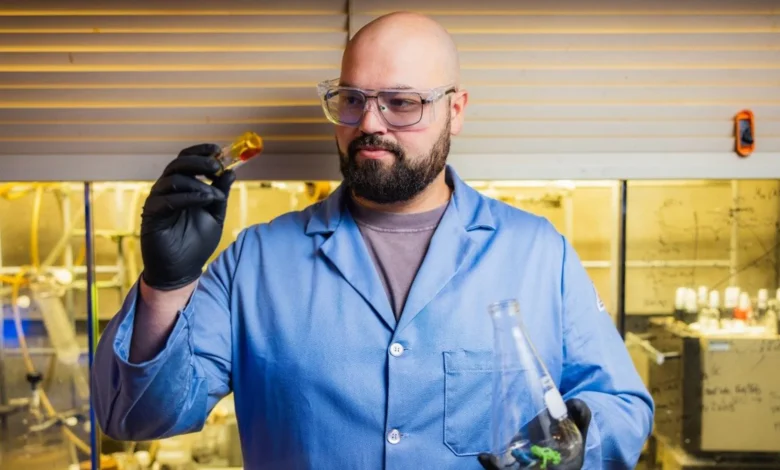
In a significant advancement for both materials science and environmental conservation, a team of researchers at Virginia Tech has unveiled a pioneering chemical process capable of transforming polyvinyl chloride (PVC)—a notoriously difficult-to-recycle plastic—into high-performance polyalphaolefin (PAO) lubricants. This development, recently published in the journal Nature, marks a potential paradigm shift in how the industrial sector approaches plastic waste, moving beyond traditional disposal methods toward a circular economy model where discarded infrastructure becomes the feedstock for essential mechanical lubricants.
Led by Guoliang "Greg" Liu, a chemist and chemical engineer at Virginia Tech, the research team has addressed one of the most stubborn obstacles in the global recycling landscape. PVC, which is found in everything from durable household plumbing and window frames to expired credit cards, has long been considered a "recycling pariah." Unlike polyethylene terephthalate (PET) or high-density polyethylene (HDPE), PVC contains chlorine and a diverse array of chemical additives designed to alter its physical properties—such as flexibility, rigidity, and thermal resistance. These additives create significant chemical complications during mechanical recycling, often leading to contaminated outputs that lack structural integrity. Consequently, the vast majority of global PVC waste is relegated to landfills, where it persists for centuries.
The Mechanism of Transformation
The breakthrough process developed by the Virginia Tech team relies on a precise chemical intervention. Researchers subject PVC waste to a controlled environment involving a specialized solvent, aluminum trichloride, and alpha-olefins—hydrocarbons that serve as the fundamental building blocks for synthetic lubricants. By heating this mixture to approximately 158 degrees Fahrenheit for a duration of three hours, the team effectively breaks down the long, complex polymer chains of the PVC.
This process yields a high-quality polyalphaolefin (PAO). PAOs are highly valued in the lubricant industry for their exceptional stability, oxidation resistance, and consistent performance across extreme temperature gradients. These characteristics make them the gold standard for high-performance synthetic engine oils used in everything from passenger vehicles to heavy-duty jet engines. By successfully repurposing PVC into PAO, the team has not only diverted waste from landfills but has also created a sustainable, high-value product that mitigates the need for virgin petroleum-based lubricants.
Chronology of Discovery: From Soap to Lubricants
The genesis of this research lies in a broader effort to solve the plastic crisis through "upcycling"—the practice of converting waste into products of higher value. The project began as a continuation of Liu’s previous laboratory successes, which were detailed in Science and Nature Sustainability. In those earlier studies, the researchers successfully demonstrated how various types of plastic waste could be converted into surfactants, the chemical compounds that allow detergents and soaps to effectively break down grease and oil.
Encouraged by these results, Liu assembled a research team, humorously dubbed the "three musketeers," to tackle the more chemically complex challenge of PVC. The team included doctoral candidate Eric Munyaneza Nuwayo, who led the project; chemistry graduate student Connor S. Thompson; and first-year graduate student Abby Civiello.
The initial phase of their research was defined by trial and error. The team’s original hypothesis suggested that they could modify the molecular structure of PVC by substituting chlorine atoms with other chemical groups, thereby creating a useful polymer derivative. However, these early experiments were met with disappointment, frequently resulting in unusable, sticky, and gooey substances. It was this failure that led to a conceptual pivot. Liu proposed that instead of modifying the existing long chains, the team should focus on breaking the polymers down into smaller, more manageable segments. This shift in strategy proved successful, leading to the synthesis of the high-performance lubricant oil that characterizes their recent breakthrough.
Industrial Context and Environmental Stakes
The global demand for lubricants is rising in lockstep with the expansion of industrial manufacturing and the global vehicle fleet. Lubricants are the "silent heroes" of the mechanical world; they are the thin films of protection that reduce friction and heat, preventing catastrophic wear and tear on moving components. Without high-quality lubricants, the global transportation and energy sectors would experience massive drops in efficiency and significantly higher maintenance costs.
However, the traditional production of these lubricants is resource-intensive and relies heavily on fossil fuel extraction. By providing a secondary source of base oils derived from plastic waste, the Virginia Tech process offers a dual benefit: it addresses the mounting volume of plastic waste and reduces the reliance on virgin oil for the production of essential industrial materials.
Collaborative Validation and Future Scaling
To ensure the technical viability and commercial potential of the new lubricant, Liu collaborated with a network of experts across multiple institutions. Ali Erdemir at Texas A&M University performed rigorous performance evaluations of the recycled lubricant samples to ensure they met the mechanical standards required for industrial application. Simultaneously, William Goddard at the California Institute of Technology (Caltech) utilized advanced computational chemistry models to map the reaction kinetics and verify the molecular integrity of the product.
Back at Virginia Tech, Xi Chen contributed to the economic and logistical analysis, modeling how the technology could be scaled from a laboratory bench to an industrial manufacturing plant. These models are crucial for determining the long-term feasibility of the technology. The primary challenge currently facing the team is not chemical, but logistical: developing the infrastructure necessary to collect, sort, and process PVC waste on a scale large enough to make a significant impact on global supply chains.
Implications for the Future of Plastics
The implications of the Virginia Tech study are profound. By demonstrating that PVC—a material long considered a dead end in the recycling hierarchy—can be transformed into a high-value commodity, the researchers have set a new precedent for polymer science.
"We have proved that it is feasible to use plastic waste to make high-performance lubricants," Liu stated in a post-publication interview. "These lubricants are green, and they can meet the emerging needs for sustainability by the market."
The broader impact of this research is tied to the concept of the circular economy. Currently, the global recycling rate for plastics remains stubbornly low, often hovering below 10% in many developed nations. Technologies like the one developed by Liu’s team offer a pathway to bridge the gap between waste management and product design. If industrial lubricants can be sourced from plastic waste, it creates a market-driven incentive to recover PVC, potentially shifting it from a waste stream that costs money to bury into a resource stream that generates value.
As the team looks toward the future, the focus will shift to optimizing the efficiency of the chemical reaction and exploring partnerships with private industry to pilot the process at a commercial level. While the transition from lab-scale synthesis to mass production is fraught with engineering challenges—including the need for efficient solvent recovery and the management of byproducts—the successful conversion of PVC into high-performance lubricants represents a vital step toward a more sustainable industrial future.
The work serves as a reminder that the solution to environmental crises often lies in rethinking the fundamental properties of the materials we discard. By viewing PVC not as "waste," but as a reservoir of chemical energy waiting to be unlocked, the researchers at Virginia Tech have opened a new chapter in the ongoing effort to decouple industrial progress from environmental degradation. As the technology continues to evolve, the "silent heroes" of the machinery world may soon be the very things that help the planet breathe a little easier.