Canada Justin Trudeau Donald Trump Prime Minister
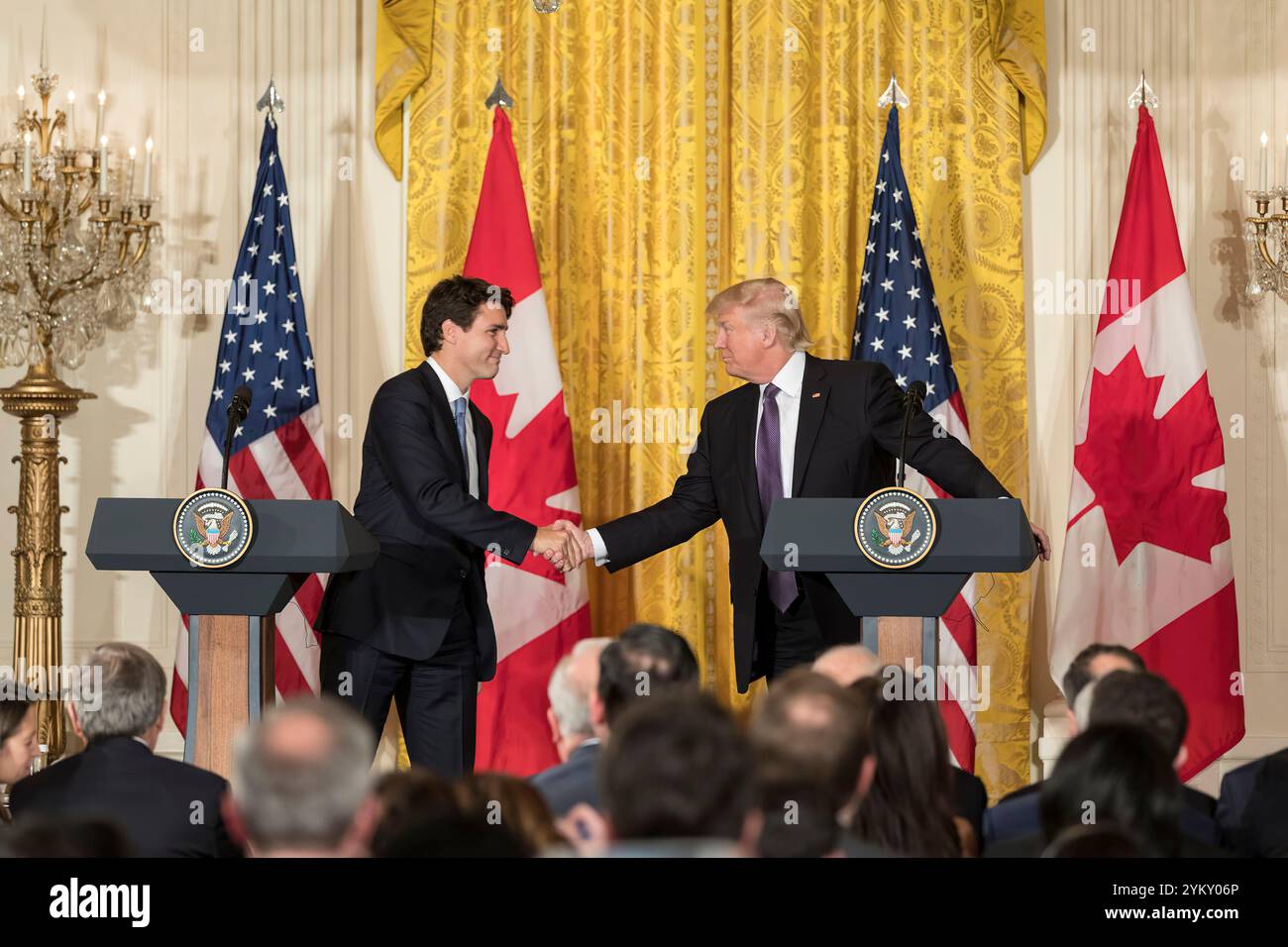
Canada Justin Trudeau Donald Trump Prime Minister: A Comparative Analysis of Leadership Styles, Policy Agendas, and Bilateral Relations
The tenures of Prime Minister Justin Trudeau of Canada and President Donald Trump of the United States, though overlapping for a significant period, represented starkly contrasting approaches to governance, international diplomacy, and economic policy. Understanding their presidencies requires an examination of their distinct leadership philosophies, their divergent policy priorities, and the profound impact these differences had on the crucial bilateral relationship between Canada and the United States. Trudeau, a Liberal, ascended to power in 2015 on a wave of optimism, promising a progressive, inclusive, and internationally engaged Canada. Trump, a Republican, won the presidency in 2016 on an "America First" platform, characterized by a populist appeal, protectionist trade policies, and a skepticism of established international norms and alliances. This juxtaposition of leadership styles and ideological underpinnings inevitably shaped their interactions and the broader geopolitical landscape.
Justin Trudeau’s leadership style can be broadly categorized as progressive, multilateralist, and consensus-oriented. He cultivated an image of Canada as a beacon of diversity, inclusion, and environmental responsibility on the global stage. His policy agenda emphasized social justice issues, gender equality, climate action, and a renewed commitment to international institutions and agreements. This approach resonated with a significant portion of the Canadian electorate and projected a vision of a modern, forward-looking nation. Trudeau’s communication style was often characterized by optimism, empathy, and a focus on shared values. He frequently engaged in public diplomacy, emphasizing Canada’s role in global peacekeeping, development aid, and humanitarian efforts. His government actively participated in international forums, advocating for free trade agreements (albeit with caveats and modernization efforts) and championing multilateral solutions to global challenges. This multilateralist bent directly contrasted with Trump’s transactional and often confrontational approach to foreign policy.
Donald Trump’s leadership style was decidedly populist, nationalist, and transactional. His "America First" doctrine prioritized perceived national interests above all else, often leading to a dismantling of existing trade agreements, a withdrawal from international accords, and a questioning of long-standing alliances. Trump’s communication style was characterized by directness, often to the point of being confrontational, and a heavy reliance on social media, particularly Twitter, to bypass traditional media gatekeepers and speak directly to his base. His policy agenda was heavily focused on economic nationalism, exemplified by his efforts to renegotiate trade deals like NAFTA (which ultimately led to the USMCA), impose tariffs on goods from allies and adversaries alike, and prioritize domestic job creation through protectionist measures. This economic nationalism and transactional worldview created significant friction with Trudeau’s multilateral and progressive approach.
The policy agendas of Trudeau and Trump diverged significantly across a range of critical areas, impacting their bilateral relationship. On trade, Trump’s aggressive renegotiation of NAFTA and his imposition of tariffs on Canadian steel and aluminum created considerable tension. Trudeau’s government, while committed to maintaining a strong economic relationship with the U.S., responded with reciprocal tariffs and sought to diversify Canada’s trading partners. The renegotiated USMCA, while preserving many aspects of the original agreement, reflected the more protectionist inclinations of the Trump administration. Environmental policy was another major point of contention. Trudeau’s government prioritized climate action, investing in renewable energy and implementing carbon pricing mechanisms. Trump, on the other hand, expressed skepticism about climate change, withdrew the U.S. from the Paris Agreement, and prioritized fossil fuel production. This fundamental difference in environmental philosophy created a chasm in their respective approaches to global climate governance.
In terms of immigration and diversity, Trudeau’s Canada actively promoted multiculturalism and welcomed refugees, while Trump’s administration pursued more restrictive immigration policies and employed rhetoric that was often seen as divisive and xenophobic. This divergence in values and policies created a stark contrast in their national identities and their roles in the international community. Trudeau’s emphasis on inclusivity and diversity was a core tenet of his premiership, while Trump’s focus on national sovereignty and border security shaped his immigration policies. These differing approaches not only reflected domestic political considerations but also influenced how each leader was perceived by the international community and, importantly, by each other.
The bilateral relationship between Canada and the United States, under the leadership of Trudeau and Trump, experienced a period of unprecedented strain. While leaders on both sides often reiterated the importance of the enduring alliance and the deep economic and cultural ties, the differing leadership styles and policy priorities created significant challenges. Trump’s transactional approach frequently led to public disagreements and diplomatic friction. His often-critical remarks about Canada, its economic policies, and its leaders, particularly in the context of trade negotiations, were a departure from the historically cordial and respectful tone between the two nations. Trudeau, while striving to maintain a civil dialogue and protect Canadian interests, was often forced to publicly defend his country’s positions and principles.
Trump’s skepticism of multilateral institutions also put Canada, a staunch supporter of these bodies, in an awkward position. Canada found itself increasingly working to uphold and strengthen international frameworks that the U.S. was actively undermining. This created a dynamic where Canada often played a role in mitigating the negative consequences of U.S. withdrawal from certain international agreements or initiatives. The economic relationship, despite the trade disputes, remained robust due to its deep integration. However, the uncertainty generated by Trump’s trade policies and his unpredictable pronouncements undoubtedly created a degree of apprehension for Canadian businesses and investors.
The differing approaches to national security and defense also presented nuances. While both countries are key allies within NATO, Trump’s persistent questioning of the burden-sharing within the alliance and his demands for increased defense spending by allies, including Canada, created pressure. Trudeau’s government generally supported increased defense spending but emphasized a broader definition of security that included diplomatic and developmental tools, a perspective that did not always align with Trump’s more conventional military-focused approach.
The media coverage and public perception of both leaders also played a significant role in shaping the bilateral dynamic. Trump’s often-confrontational style and his use of social media generated constant headlines, frequently portraying him as a disruptive force. Trudeau, while also a prominent figure, was often portrayed in contrast to Trump, sometimes as a more measured and diplomatic leader. However, Trudeau also faced criticism within Canada for his handling of certain issues and his perceived inability to effectively counter Trump’s aggressive rhetoric at times. The perception of each leader within their own countries also influenced their ability to navigate the bilateral relationship. Trump’s base often cheered his confrontational stance, while Trudeau’s progressive appeal resonated with his supporters.
In conclusion, the tenures of Justin Trudeau and Donald Trump as Prime Minister of Canada and President of the United States respectively, offered a compelling study in contrasts. Their divergent leadership styles – Trudeau’s multilateral, progressive, and consensus-building approach versus Trump’s populist, nationalist, and transactional method – fundamentally shaped their policy agendas and the bilateral relationship. Key policy areas such as trade, environmental protection, and immigration became arenas for significant ideological divergence, leading to periods of considerable strain on the usually amicable Canada-U.S. relationship. While the underlying economic and security ties between the two nations remained strong, the differing worldviews and diplomatic strategies of Trudeau and Trump created an environment of uncertainty and challenge, underscoring the profound impact of individual leadership on international diplomacy and inter-state relations. The legacy of their interactions continues to inform discussions about Canada’s place in North America and its role on the global stage.