The Silent Migration: How Citizen Science and Infrastructure are Shielding New England’s Amphibians from Climate Change

On a Tuesday night in April, beneath a sky mottled with heavy clouds, a slick stretch of road in Cumberland, Maine, erupted in a primitive, rhythmic sound. It began with a few high-pitched chirps, reminiscent of the coos of newborn chicks. Within minutes, dozens, then hundreds more joined a chorus punctuated by low, rhythmic clucks. By the time the sun dipped below the horizon and a cold spring rain began to splatter the pavement, the sound had risen to a deafening din. Cars slowed and stopped on the shoulder as people spilled onto the road wearing neon safety vests and waving bright LED flashlights. They fanned out across the asphalt, raising their voices to be heard over the cacophony, much like guests at a bustling cocktail party.
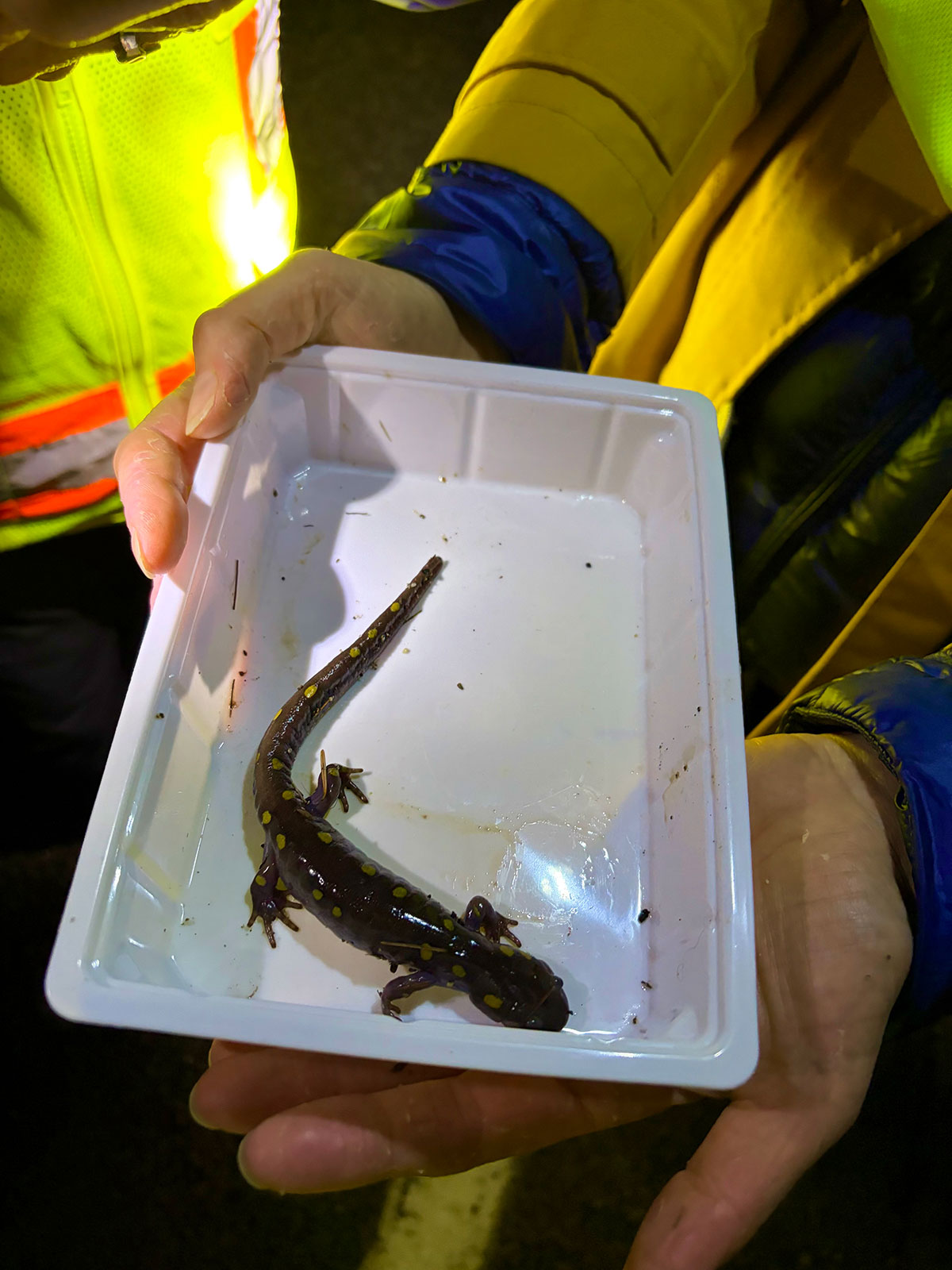
“I got a big one!” called a youngster in a bright yellow raincoat. She held out her hand for other volunteers, who crowded around her with a mixture of reverence and urgency. A yellow-spotted salamander, roughly nine inches long, stretched across her gloved palm, its slick, obsidian tail draped between her fingers. This creature, which spends most of its life hidden beneath the forest floor, was now an active participant in one of nature’s most perilous annual traditions.
Each year across New England, on the first warm, wet night of spring—when the ground has thawed and the ambient temperature hovers consistently above 40 degrees Fahrenheit—armies of frogs and maelstroms of salamanders emerge from the woods. They hop and undulate through the darkness, following the exact migratory routes their ancestors traveled for millennia to reach the vernal pools of their birth. In these temporary woodland ponds, they lay their eggs, chirping and clucking in a frantic race to ensure the next generation survives.
“They’re calling to the ones that are still in the woods, telling them to come,” said Penny Asherman, who leads the Chebeague and Cumberland Land Trust. Her observation highlights the communicative nature of this migration, a biological imperative that is increasingly under threat from human development and a rapidly changing climate.
The Evolution of Big Night: From Local Tradition to Scientific Data
For the past decade, the event known as “Big Night” has drawn dozens of local residents who drop everything at a moment’s notice to help these amphibians migrate safely. However, what was once a localized effort to act as “crossing guards” has evolved into a sophisticated citizen science operation. The journey has become less predictable and significantly deadlier as the seasonal wetlands they depend on are transformed.
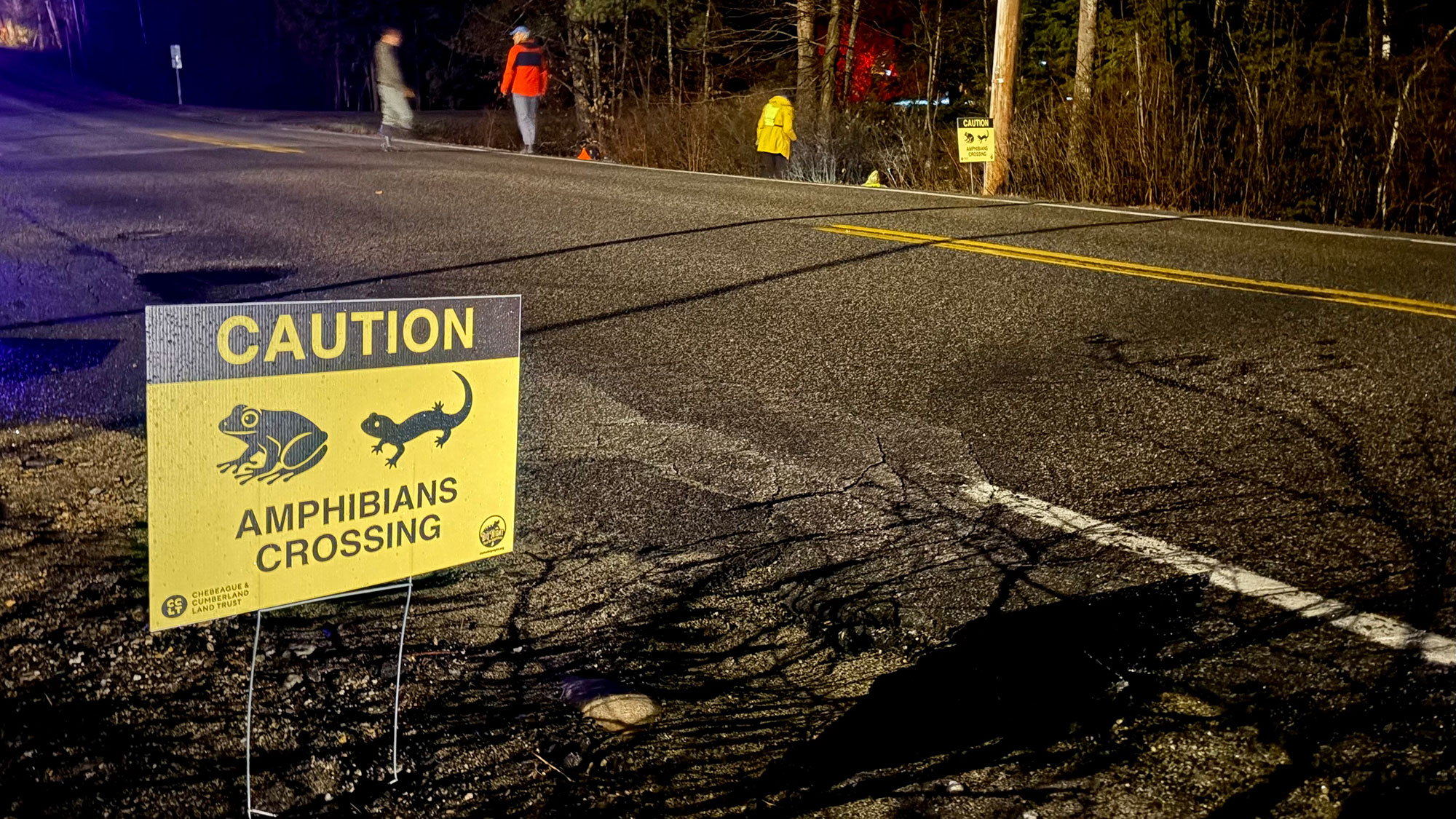
This shift prompted the formation of Maine Big Night (MBN) in 2018. The nonprofit organization has standardized the collection of data, transforming volunteers into field researchers. In 2024, the effort—which peaked on April 14—saw more than 1,200 observers at 650 migration sites statewide submitting meticulous observations. This data is now reshaping how Maine communities approach municipal planning, culvert design, and road maintenance.
Tim Kaijala, a regular volunteer for seven years, participated this year with his children, Theo, 10, and Kai, 8. “The data side is pretty cool,” Kaijala noted. “When we first came, it was just bringing frogs and salamanders over, but the last couple years it’s been more about counting and keeping track.”
As he spoke, Theo and Kai peered into a roadside pool, watching a wood frog they had assisted across the road kick through the clear, cold water. The emotional weight of the work was evident in the children’s focus. “One time there was a car coming down, and I ran out and saved the peeper,” Theo recalled solemnly. “I do not want any peepers to die. If I stepped on one, I would never forgive myself.”
Infrastructure and Innovation: The Orono Case Study
The transition to data-driven conservation has already yielded tangible results. Last year, data collected by volunteers revealed a grim statistic in Orono, Maine, at one of the state’s most ecologically diverse migration sites: eight out of 10 amphibians attempting to cross the road were struck by motorists.
Faced with these numbers, Maine Big Night collaborated with city officials to secure a grant for specialized infrastructure. The project involved installing cameras and fencing designed to guide the animals toward an existing culvert beneath the road. This “critter crossing” allows the animals to bypass traffic entirely.
Greg LeClair, the founder of Maine Big Night and a municipal planning biologist for the Maine Department of Inland Fisheries and Wildlife, emphasized that data is the only currency that moves policy. “I knew that in order to make change, you needed data, especially when we’re talking about critters folks aren’t as keen on,” LeClair said. “Conserving land and installing culverts aren’t cheap. Nobody will give you the money unless you have data. That money for infrastructure and conservation is not just floating around.”
The Orono project is also testing the efficacy of existing structures. For years, engineers believed that only expensive, specialized amphibian culverts could facilitate migration. However, cameras in Orono have captured frogs and salamanders utilizing standard, pre-existing drainage pipes when guided by inexpensive fencing. If this trend continues, it could provide a blueprint for other towns to protect wildlife for a fraction of the cost of new construction.
The Climate Crisis and Biological Scrambling
While roads present an immediate physical danger, climate change poses a systemic threat to the very timing of the migration. Amphibians are ectotherms, meaning they cannot regulate their own body temperature. They rely entirely on external conditions to trigger their emergence from winter brumation.
The “ancient trek” is being scrambled by several climate-related factors:
- Dwindling Snowpack: In winter, amphibians burrow into the soil. A thick layer of snow provides essential insulation against sub-zero temperatures. Without it, the frost line penetrates deeper into the earth, potentially freezing the animals to death in their burrows.
- False Springs: Unusually warm winter days can trick amphibians into emerging too early. If a sudden freeze follows—a phenomenon becoming more common with Arctic oscillation disruptions—the animals are caught in the open and perish.
- Vernal Pool Desiccation: A dry spring or a sudden early-season heatwave can cause vernal pools to evaporate before the larvae have fully metamorphosed. This leads to a total loss of the year’s reproductive effort.
- Pathogen Proliferation: Warmer, more humid conditions are conducive to the spread of the chytrid fungus (Batrachochytrium dendrobatidis). This deadly pathogen grows on the skin of amphibians, impairing their ability to breathe and regulate electrolytes, and has been observed with increasing frequency in Maine’s populations.
Furthermore, the Maine Big Night data highlighted a rising number of amphibians suffering from edema—a swelling caused by fluid retention—linked to road salt runoff. This has led to advocacy for alternative deicing methods. In some jurisdictions, officials are exploring the use of pickle juice or beet juice blends, which lower the freezing point of water with significantly less toxicity to aquatic life than traditional sodium chloride.
Ecological Foundations: Why Amphibians Matter
The loss of these small creatures would have a cascading effect on the New England ecosystem. Sally Stockwell, a biologist with Maine Audubon, describes amphibians as the “foundational base” of the regional food web.
“If you remove one piece of the puzzle or two, you don’t know which piece could kick the whole system out of whack,” Stockwell explained. “There are huge trickle-down impacts when you lose the base of the food chain.”
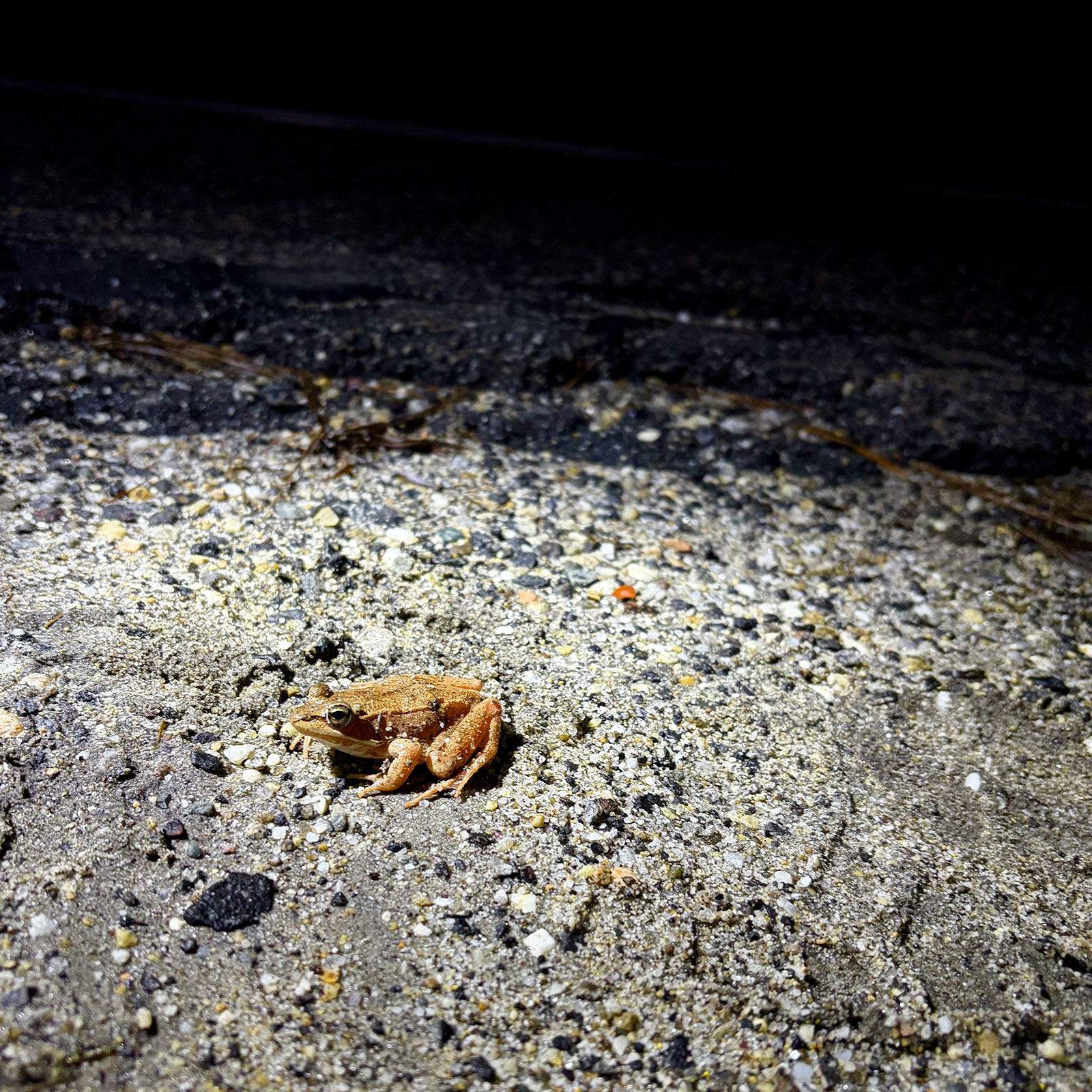
Amphibians serve a dual role in the ecosystem. As larvae (tadpoles and salamander nymphs), they consume vast quantities of algae and mosquito larvae, helping to regulate water quality and pest populations. As adults, they become a primary protein source for a diverse array of predators, including barred owls, herons, foxes, and even moose. Because they move in such massive numbers during Big Night, they represent a significant seasonal transfer of energy from aquatic environments to the terrestrial forest.
Species Spotlight: The Travelers of the Night
The diversity of species documented during the Cumberland event illustrates the richness of Maine’s biodiversity.
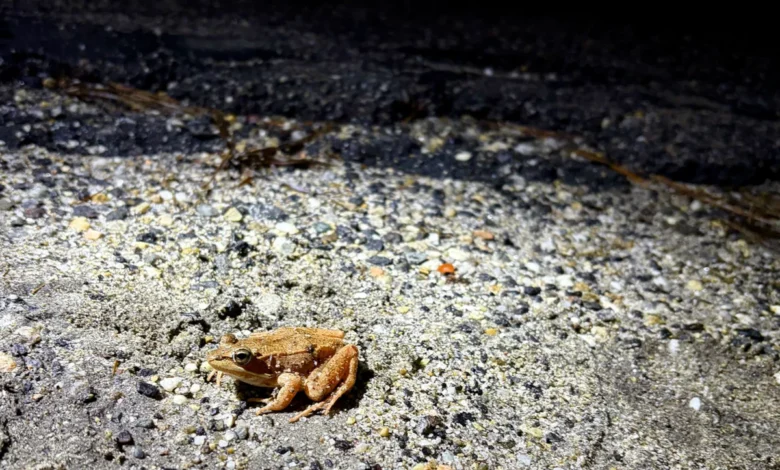
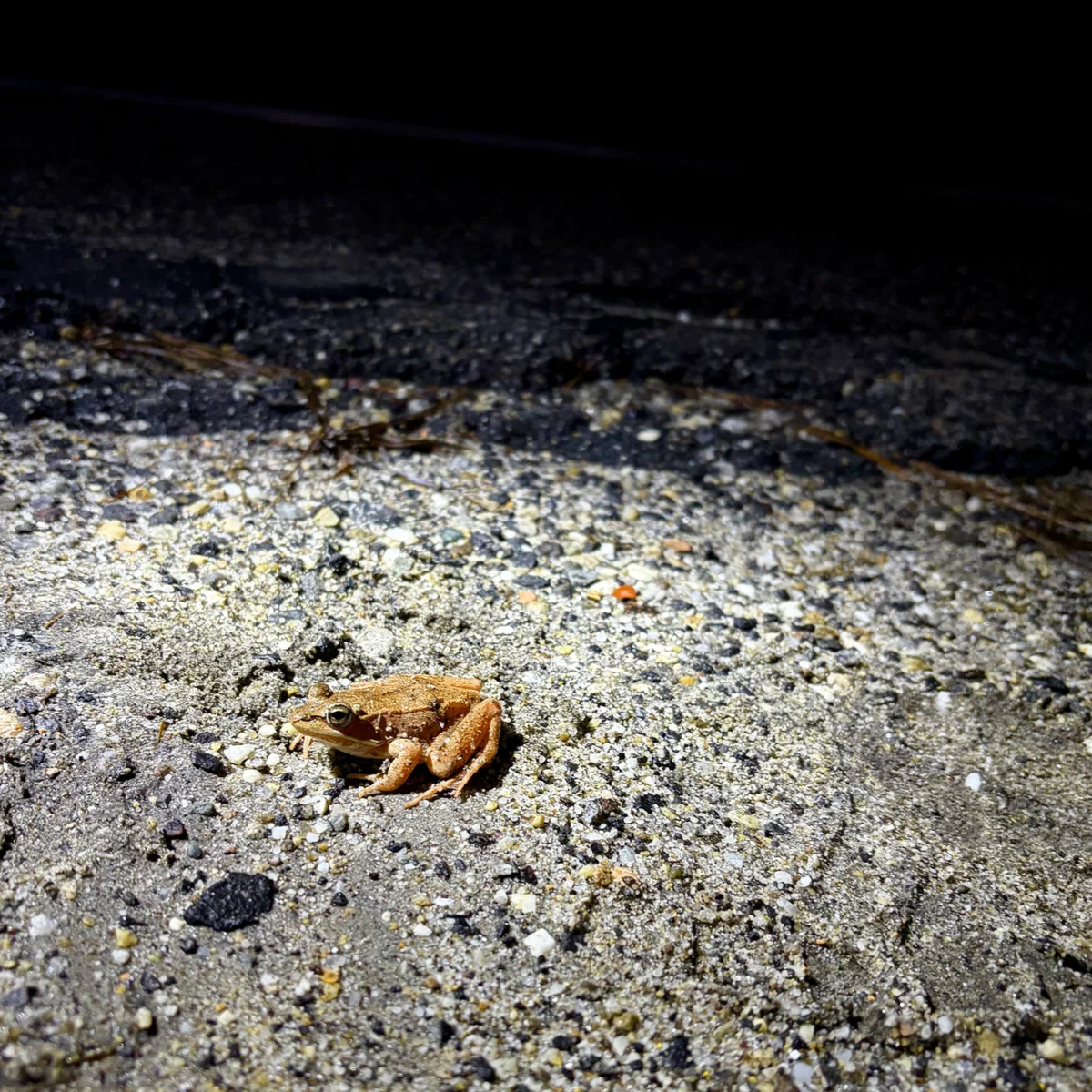
- Wood Frogs: These palm-sized, dappled brown creatures are famous for their ability to survive being partially frozen during the winter. They are often the first to arrive at the pools, their duck-like clucking signaling the start of the breeding season.
- Spring Peepers: Small enough to sit on a person’s thumbnail, these frogs are nearly invisible against leaf litter. Their high-pitched whistle is the quintessential sound of a New England spring.
- Yellow-Spotted Salamanders: Recognizable by the two rows of bright yellow spots running down their dark backs, these amphibians can live for up to 20 or 30 years if they can avoid the hazards of the road.
In Cumberland this year, volunteers documented 10 different species. The final tally included more than 100 spring peepers, 34 wood frogs, and 18 spotted salamanders. Remarkably, through the efforts of the volunteers, only nine amphibians were found dead at the survey site.
A Model for the Future
The success of Maine Big Night suggests a growing trend in conservation: the democratization of science. By engaging the public, organizations can collect data at a scale that would be impossible for professional scientists alone. This “ground-up” approach not only provides the raw numbers needed for infrastructure grants but also fosters a deep sense of environmental stewardship within the community.
As the rain continued into the late hours of April 14, the volunteers remained undeterred. Until nearly midnight, a cross-section of society—children and parents, college students, and retirees—patrolled the pavement. They carried clipboards and Tupperware, ferrying frogs to safety and recording every success and failure.
They paused occasionally to watch as the tiny, cold-blooded travelers reached the water’s edge. Once in the safety of the vernal pools, the frogs and salamanders stretched their limbs, bobbing at the surface to call back to the woods. It is a cycle of life that has persisted for eons, now bolstered by a community determined to ensure that the "Big Night" does not become a final act. “Anything we can do to reduce mortality is a benefit,” Stockwell said, watching a wood frog disappear into the dark water. In the face of global environmental shifts, these local actions represent a critical line of defense for the natural world.
Related posts: