Methane: The Invisible Climate Catalyst Driving Global Warming and What Must Be Done


Methane is a colorless, odorless, and highly potent greenhouse gas that serves as the second-largest driver of human-induced climate change, trailing only carbon dioxide. As the primary component of natural gas, it is a ubiquitous byproduct of both geological processes and human industry. While carbon dioxide remains the most discussed gas in climate discourse, methane possesses a significantly higher warming potential in the short term, making its mitigation the most effective strategy available for curbing the immediate rate of global temperature rise.
The chemical structure of methane, a hydrocarbon consisting of four hydrogen atoms bonded to a single carbon atom, allows it to trap heat with extraordinary efficiency. When released into the atmosphere, it absorbs infrared radiation that would otherwise escape into space, effectively acting as a thermal blanket for the planet. Although it has a shorter atmospheric lifespan—roughly 12 years compared to the centuries-long residency of CO2—it is estimated to be 86 times more potent than carbon dioxide over a 20-year period.

A Chronology of the Methane Crisis
The accumulation of methane in the Earth’s atmosphere is not a new phenomenon, but the rate of its increase has shifted dramatically since the dawn of the Industrial Revolution.
- Pre-Industrial Era: Atmospheric concentrations of methane were relatively stable, hovering around 700 parts per billion (ppb).
- 19th and 20th Centuries: As global industrialization, coal mining, and intensive agriculture expanded, concentrations began a steady, steep climb.
- 2021: At the COP26 summit in Glasgow, the United States and the European Union launched the Global Methane Pledge, committing signatory nations to a 30% reduction in methane emissions from 2020 levels by 2030.
- 2023: Despite international pledges, global atmospheric concentrations reached an all-time record of 1,934 ppb, a 265% increase compared to pre-industrial levels.
- 2025: Current projections indicate that without immediate, aggressive intervention, emissions will continue to climb by 13% through 2030, threatening the global goal of limiting warming to 1.5 degrees Celsius.
The Measuring Challenge: Bottom-Up vs. Top-Down
The difficulty in controlling methane stems partly from the complexity of measuring it. Historically, regulators relied on "bottom-up" inventories, which estimate emissions by multiplying the number of sources (such as head of cattle or miles of gas pipeline) by a standard emission factor. However, this method often fails to account for "super-emitters"—rare but catastrophic leaks that are responsible for more than 50% of total industry emissions.
Modern "top-down" monitoring, utilizing satellite imagery and high-altitude sensors, has revealed that actual methane leakage is significantly higher than government estimates. Research published in Science found that emissions from U.S. oil and gas operations were 60% higher than the estimates provided by the Environmental Protection Agency (EPA). The ability to detect these leaks from space has forced industries to confront the reality of their infrastructure failures, as satellites now provide real-time evidence of massive venting and fugitive emissions in regions like the Permian Basin and remote coal fields in Central Asia.

The Anatomy of Methane Sources
Human activities account for approximately 60% of annual methane emissions, while natural sources, such as wetlands, account for the remaining 40%. The primary anthropogenic drivers include:
1. Agricultural Methane
Agriculture represents the largest human-caused source, contributing roughly 40% of emissions. Enteric fermentation—the digestive process of ruminant livestock like cattle and sheep—is the primary culprit. Furthermore, rice paddies, which function as oxygen-poor, waterlogged ecosystems, facilitate the growth of methanogenic bacteria. As the global demand for meat and dairy products continues to rise, these emissions present a significant hurdle for sustainability goals.
2. Fossil Fuel Infrastructure
The extraction, transport, and combustion of fossil fuels account for 35% of human-caused methane. Methane is frequently vented intentionally during oil extraction or leaks unintentionally from aging natural gas pipelines and abandoned coal mines. Despite the narrative that natural gas acts as a "bridge fuel" to a green economy, the lifecycle emissions—specifically the leakage during transport—often render it as damaging, or in some cases more damaging, than coal.

3. Waste and Landfills
Waste management is the fastest-growing source of methane, accounting for 20% of emissions. As populations urbanize in the developing world, the volume of solid waste sent to landfills is projected to rise by 73% by 2050. Without the implementation of anaerobic digestion or methane-capture systems, landfills will continue to release massive quantities of gas as organic material decomposes in oxygen-free environments.
The Feedback Loop: A Tipping Point Risk
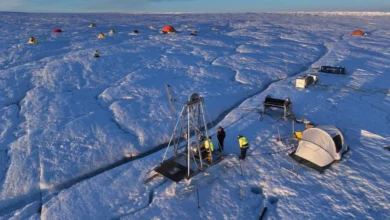
Perhaps the most alarming aspect of methane is its role in "positive feedback loops." As the climate warms, natural sources of methane become more active. Arctic permafrost, which contains massive stores of frozen organic matter, is beginning to thaw. As it melts, microbes awaken and begin to decompose the material, releasing methane that triggers further warming, which in turn melts more permafrost. This self-reinforcing cycle risks reaching a "tipping point," where the climate system experiences irreversible changes that are beyond human control.
Official Responses and Policy Implications
The International Energy Agency (IEA) has stated that the oil and gas sector could reduce its methane emissions by 70% using existing, cost-effective technologies. However, the implementation gap remains wide. While 159 nations have signed the Global Methane Pledge, only 13% of global methane emissions are currently covered by comprehensive national reduction policies.

Industry groups have historically resisted strict regulation, citing the costs of monitoring and upgrading infrastructure. However, the economic case for capture is strengthening; in many instances, the methane captured from leaks can be sold as natural gas, creating a secondary revenue stream that partially offsets the cost of mitigation technology.
Public Health and Economic Impacts
Beyond its role in global heating, methane is a precursor to ground-level ozone. Ozone is a major respiratory irritant that causes half a million premature deaths annually. By curbing methane emissions, nations would not only stabilize the climate but also realize immediate public health benefits. Reducing every million metric tons of methane would prevent thousands of asthma-related emergencies and hospitalizations, while also preserving crop yields—specifically wheat, soy, and rice—that are currently damaged by ozone-polluted air.
Mitigation Strategies: A Path Forward
Addressing methane requires a multi-pronged approach:

- Agricultural Reform: Shifting toward more sustainable diets and reducing global food waste can curtail the need for intensive livestock production. Furthermore, the use of feed additives, such as seaweed supplements, has been shown to reduce cattle-methane emissions by over 50% without compromising animal health.
- Infrastructure Overhaul: For the fossil fuel sector, the priority is the immediate repair of leaks and the banning of routine venting and flaring. Transitioning to renewable energy sources remains the only long-term solution to eliminate methane from the energy lifecycle.
- Waste Management: Transitioning to a "zero-waste" circular economy, where organic waste is diverted from landfills into composting or biogas-capture facilities, is essential.
- Individual Action: While systemic change is required, individual choices—such as opting for electric heat pumps over gas furnaces, reducing meat consumption, and supporting local municipal composting programs—contribute to the overall reduction of demand for methane-intensive services.
The Urgent Opportunity
The dual nature of methane—its high potency and its relatively short lifespan—presents a unique window of opportunity. Unlike CO2, which lingers in the atmosphere for centuries, the rapid reduction of methane would lead to a near-immediate cooling effect on the planet. The IPCC has concluded that a 34% reduction in methane by 2030 is mandatory if the world is to keep the 1.5 degrees Celsius target within reach.
As the world grapples with the escalating costs of extreme weather and climate instability, methane mitigation stands out as the most efficient lever for short-term temperature control. Whether the global community can bridge the gap between voluntary pledges and concrete, enforceable industrial policy will determine the severity of the climate crisis in the coming decades. With satellite technology now providing absolute transparency into the sources of emissions, the era of ignoring "invisible" pollution has effectively come to an end.