Beyond Resilience: Why Indigenous Governance is the Global Frontline of Climate Adaptation



From the remote mountain ranges of Nepal to the dense rainforests of the Ecuadorian Amazon and the expansive grasslands of Canada, Indigenous communities are finding themselves at the epicenter of a rapidly shifting climate. These regions are increasingly besieged by catastrophic weather events—ranging from unprecedented wildfires to flash floods—that are no longer occurring in isolation. Instead, they are manifesting as compounding crises, where one disaster compounds the vulnerabilities left by the last. Yet, as a landmark report from the nonprofit Land Is Life makes clear, these communities are not merely passive victims; they are the architects of highly effective, time-tested climate solutions that the global community has largely failed to empower or fund.
The report, released during the 2024 New York Climate Week, synthesizes data from 46 countries and over 200 individual case studies to demonstrate that the most successful climate adaptation strategies are those rooted in Indigenous self-determination and local governance. While international policymakers have begun to acknowledge the value of Indigenous "traditional ecological knowledge," the report argues that this recognition remains superficial. True resilience, the authors contend, does not stem from knowledge alone, but from the political and legal autonomy that allows Indigenous peoples to apply that knowledge to their territories.
The Anatomy of Compounding Crises
The modern climate crisis is characterized by its layering effect. According to the Land Is Life survey, more than 80 percent of Indigenous respondents reported that they are currently navigating two or more climate-related disasters simultaneously. Over 90 percent noted a marked increase in the frequency of these events over the last decade. This "stacking" of disasters—such as a flood destroying a harvest, followed by a drought that prevents recovery, and an ensuing pest outbreak—creates a cycle of instability that conventional, top-down emergency management systems are ill-equipped to address.
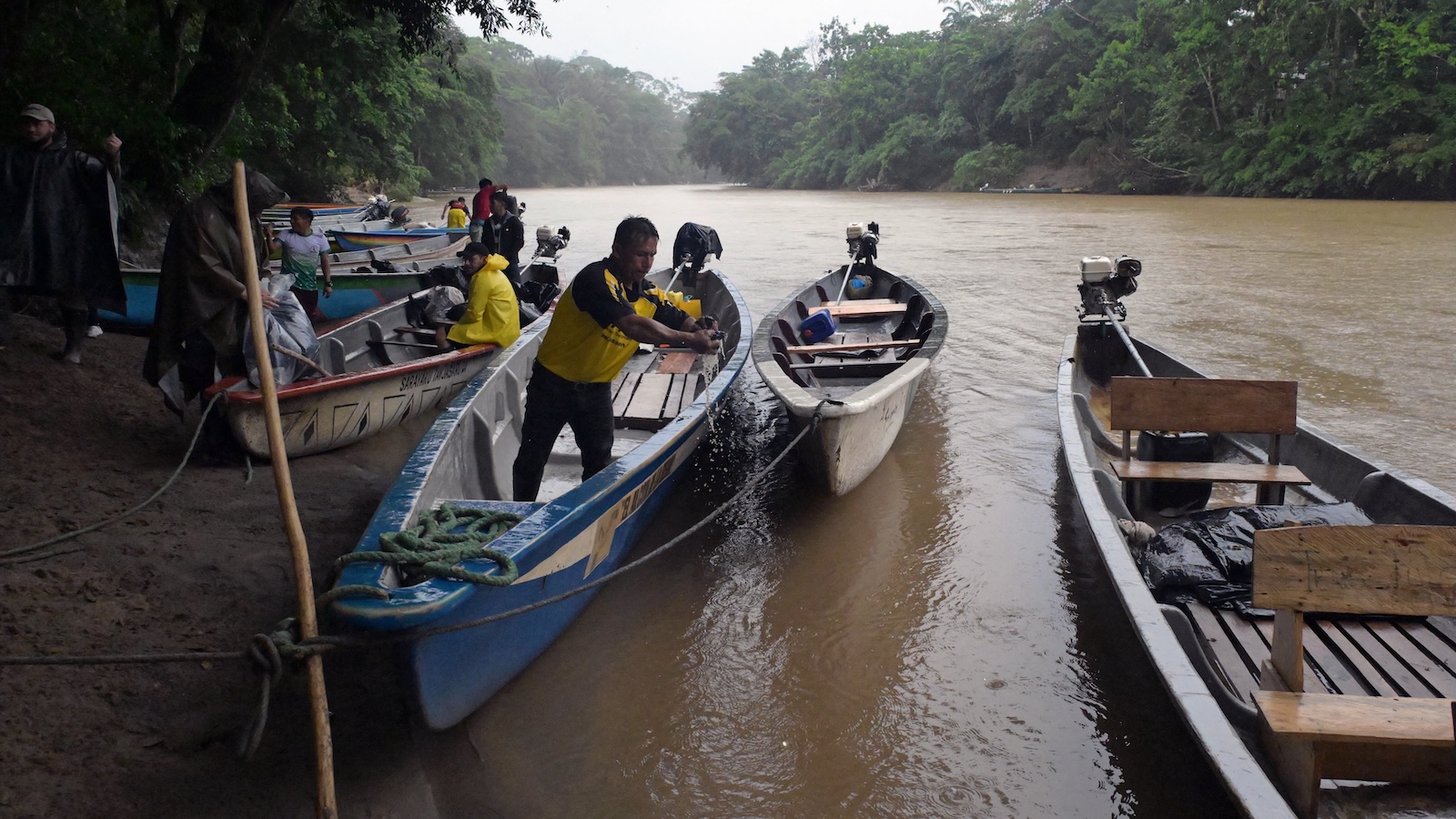
This phenomenon is evident in the experience of the Kichwa People of Sarayaku in the Ecuadorian Amazon. In 2019, the community faced a devastating flood along the Bobonaza River. The disaster was not merely a meteorological event; it was a test of the community’s internal cohesion. Because the Sarayaku maintained robust, autonomous governance structures, they were able to mobilize immediate response teams, organize emergency housing, and communicate effectively with external agencies.
"This organization makes it possible to confront any problem and any threat," said Daniel Santi, president of the Sarayaku community. The success of their response was guided by minga, a Kichwa philosophy of collective responsibility and solidarity, which ensured that no family was left to face the recovery process in isolation.
A Chronology of Indigenous Innovation
The history of Indigenous-led environmental stewardship long predates current climate discourse, but recent years have marked a shift toward formalizing these practices into global adaptation models.
- Pre-2015: Indigenous knowledge is primarily viewed by international climate bodies through the lens of cultural heritage rather than as a primary tool for scientific climate adaptation.
- 2015-2019: The Paris Agreement and subsequent IPCC reports begin to explicitly mention the role of Indigenous peoples in climate mitigation, particularly regarding land-use and forest preservation.
- 2020-2023: The "Compounding Crisis" era begins. Indigenous networks in the Amazon and Sub-Saharan Africa report that traditional seasonal indicators—such as bird migrations or blooming cycles—are failing due to extreme weather volatility.
- 2024: The Land Is Life report is published, shifting the conversation from "Indigenous knowledge" as a static asset to "Indigenous governance" as a dynamic, scalable, and essential political strategy for climate risk reduction.
In Kenya, the Endorois and Tugen women have demonstrated this transition in real-time. Facing recurring droughts that decimated traditional monocrop agriculture, these communities pivoted to the cultivation of ancestral, drought-resistant varieties of sorghum and millet. This wasn’t just a technical adjustment; it was a governance decision to prioritize food sovereignty over market-driven agricultural trends. The result was a harvest that provided a critical nutritional buffer during years when surrounding regions faced acute famine.
The Financing Gap: A Systemic Failure
Despite the evidence that Indigenous-led initiatives are cost-effective and highly successful, financial support remains abysmal. While billions of dollars in climate finance have been pledged by developed nations and international development banks, the "last-mile" delivery of these funds to Indigenous territories is almost non-existent.
Data suggests that Indigenous peoples and local communities hold rights to at least 25 percent of the world’s land surface, which stores approximately 300 billion metric tons of carbon. Yet, research from organizations like the Rainforest Foundation and Land Is Life consistently finds that less than 1 percent of global climate finance reaches these communities directly.
Anisha Buda, a program officer at the National Indigenous Women Forum in Nepal, highlighted the systemic nature of this exclusion. "It’s so frustrating," Buda said. "There are so many projects that are supposed to be for Indigenous peoples, but they are implemented by non-Indigenous organizations and non-Indigenous peoples."
This creates a paradox: international aid agencies often fund large-scale, third-party projects that attempt to "teach" adaptation strategies to Indigenous communities, while simultaneously ignoring or even criminalizing the local governance structures that have kept these ecosystems intact for centuries.
Analysis: Beyond Knowledge to Governance
The core of the issue, according to report author Gisela Hurtado, is the refusal of national governments to provide legal recognition to Indigenous land rights. When a community does not have legal title to their territory, they are unable to enforce zoning, manage water resources, or prevent external encroachment—all of which are necessary for climate resilience.
Furthermore, many national emergency alert systems are provided exclusively in dominant colonial languages, effectively excluding Indigenous elders and isolated populations from critical life-saving information. The report identifies this as a "communication gap" that exacerbates the impact of natural disasters.
The implications for global climate policy are clear: if the goal is to reduce the risk of climate-induced catastrophes, policymakers must pivot away from short-term, donor-driven projects. Instead, they must move toward a model of "direct support." This includes:
- Legal Security: Streamlining the process for land titling and the recognition of Indigenous self-governance.
- Flexible Financing: Providing direct, long-term funding to Indigenous organizations that can be adapted to evolving, compounding crises.
- Collaborative Research: Moving from a model where Western researchers study Indigenous practices to one where Indigenous leaders guide, authorize, and co-design research projects—similar to the successful model seen in Peru’s Ausangate Regional Conservation Area.
Looking Toward the Future
As the climate continues to destabilize, the traditional knowledge of Indigenous peoples is increasingly being seen as a "canary in the coal mine." However, as Hurtado notes, it is time for the global community to stop viewing Indigenous peoples only as early-warning systems and start viewing them as the primary solution-bearers.
"What they are seeing in the territories, we’re going to see it also in the future," Hurtado said. "They are the ones that are much more connected with the Earth to know what is going to happen in the future."
The urgency of this transition is heightened by the current geopolitical climate. With major donor nations in the Global North retracting climate commitments and redirecting budgets toward defense and conflict, the resources available for climate adaptation are shrinking. In this context, the argument for investing in what already works—Indigenous governance—is not just an ethical one; it is a pragmatic necessity.
By empowering the communities that have the deepest historical and ecological ties to the land, the global community has the best chance of building a climate-resilient future. The evidence is present, the solutions are already functioning, and the structures of governance are already in place. The missing component, the report concludes, is not the capacity of Indigenous peoples to lead, but the willingness of the global powers to step aside and provide the resources and respect necessary for them to do so.