Political tensions reached a fever pitch across Australia following a series of major developments spanning federal immigration policy, energy markets, industrial manufacturing, and international diplomacy. At the center of the political storm is One Nation’s sweeping new proposal to slash 750,000 temporary visas over three years—a policy that has ignited fierce economic warnings from major political parties and financial experts alike.
Appearing on the Australian Broadcasting Corporation’s (ABC) second National Forum, former deputy prime minister and One Nation MP Barnaby Joyce defended the controversial migration framework. Pressed repeatedly by panellists and moderators regarding the macroeconomic impact and the lack of formal modeling from the Parliamentary Budget Office (PBO), Joyce remained defiant. He dismissed the necessity of pre-legislative economic forecasting, arguing that the Australian public is fatigued by relying on economists to quantify the human and social values of political decisions.
"The issue of what it’s going to cost is contentious," Joyce stated during the forum. When questioned about why One Nation bypassed the PBO, he added, "The Australian people are sort of tired of the fact that you have to go to an economist to come up with policy… We will deal with it no matter the cost." Asked if he feared potential negative findings from the PBO, Joyce remarked that budget analysts are unelected bureaucrats, whereas he holds a democratic mandate.

Economic Backlash and Opposition Scrutiny
The backlash against One Nation’s immigration blueprint was swift and severe. Political commentator and journalist George Megalogenis launched a blistering critique during the forum, asserting that a net reduction of migration on this scale has no precedent in modern Australian public policy. Megalogenis warned that executing such a sharp contraction over a compressed three-year window would artificially "tank the economy," comparing its potential destructive scale to the severe economic depression of the 1890s.
The fallout also exposed fractures within the conservative opposition. Liberal frontbencher Andrew Hastie, appearing alongside Joyce on the panel, openly questioned One Nation leader Pauline Hanson’s decision to unveil the monumental policy via a prerecorded social media video rather than facing the press corps directly.
"We haven’t seen her at all today," Hastie said, taking direct aim at Hanson’s leadership ambitions. "And this is someone who wants to be the prime minister of Australia. And she hasn’t had the courage to front the media today and explain the budgetary, the economic, and the human impact of these policy changes that she’s suggesting."
Despite his criticisms of the rollout and lack of transparency, Hastie noted that he supports certain isolated elements of the broader conservative immigration debate. The exchange highlighted a delicate balancing act for the Liberal Party as they navigate how to respond to One Nation’s populist platform without ceding political ground.
Government Response and Multicultural Affairs
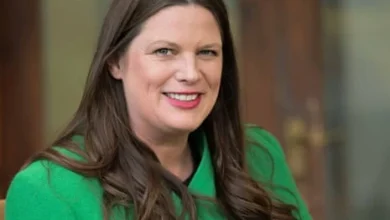
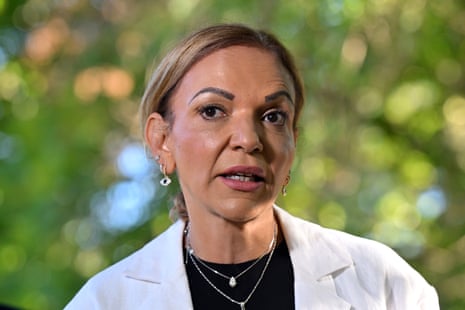
Representing the federal Labor government on the panel, Multicultural Affairs Minister Anne Aly pushed back against the rhetoric surrounding immigration and social cohesion. Aly defended the government’s approach to managing migration levels sustainably while emphasizing the foundational role multiculturalism plays in modern Australian identity.
"That’s the Australia that I know, and I fear that that is the Australia that we’re losing," Aly said, reflecting on her own upbringing. "Every time we talk about immigration, multiculturalism, it comes from a deficit point of view. Social cohesion becomes the burden of people from different countries… The fact is that multiculturalism is who we are."
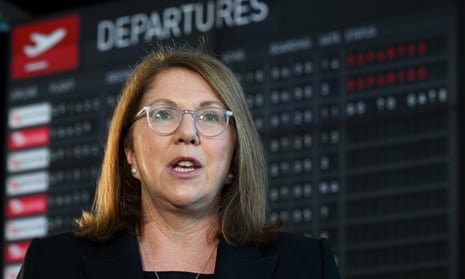
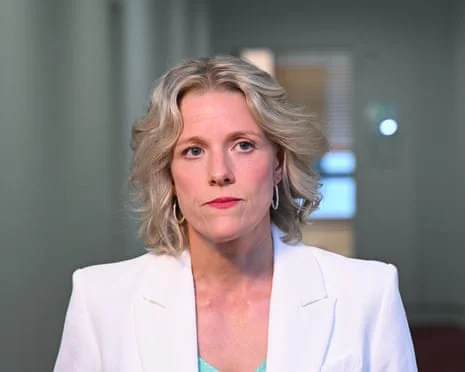
Meanwhile, Housing Minister Clare O’Neil used morning media appearances to pivot the national conversation toward broader cultural and political standards. O’Neil launched a fierce attack on historical remarks made by Pauline Hanson—specifically a resurfaced comment labeling Indigenous Australians as a "primitive race."
Characterizing Hanson’s rhetoric as "rotten, awful, and ugly," O’Neil warned against the importation of divisive American-style political discourse into Australia. Liberal Senator Michaelia Cash distanced herself from Hanson’s specific phrasing during her own media rounds, though she urged the government to refocus public attention away from political slanging matches and back toward pressing legislative challenges, such as closing the socio-economic gap for Indigenous communities.
Industrial Crisis: Whyalla Steelworks Blast Furnace Closure
Away from the Canberra beltway, industrial manufacturing faced a critical juncture in South Australia. State Premier Peter Malinauskas addressed the media from Whyalla, donned in high-visibility safety gear, following the dramatic announcement that a major blast furnace at the local steelworks had ceased operations, threatening more than 500 jobs.

Describing the announcement as a moment marked by disappointment, heartbreak, and a grim sense of inevitability, Malinauskas expressed cautious optimism regarding the plant’s long-term viability. The blast furnace, originally constructed in 1965, had operated for six decades without the routine, major structural realignments typically required every couple of decades—a delay the premier described as nearly miraculous in its longevity.
The South Australian government, working in tandem with federal authorities, is championing a $1.9bn support and sale package designed to recapitalize the facility before the end of the year. "If we lose this capacity behind me, this country doesn’t have structural steelmaking capacity and we can’t afford that," Malinauskas warned, emphasizing the critical national security and economic implications of maintaining domestic steel production.
Global Energy Pressures and Domestic Fuel Excise Debate
In federal economic portfolios, Minister for Climate Change and Energy Chris Bowen moved to dampen public expectations regarding potential relief at the petrol pump. Addressing a renewed surge in global oil prices triggered by coordinated drone attacks that forced Saudi Arabia to shut down its vital east-west crude pipeline, Bowen confirmed that the government is monitoring international markets closely. However, he explicitly ruled out the reintroduction of federal fuel excise relief.

"It’s not the only cost-of-living measure that we put in place," Bowen stated. "At the same time, I’m very much focused on ensuring our ongoing fuel supply in this very difficult international circumstance… We’re not going to respond to every daily movement on the world oil price."
Describing the geopolitical situation in the Middle East as "deeply concerning," Bowen confirmed plans to travel to Saudi Arabia the following week for bilateral talks with his Saudi counterpart, Abdulaziz bin Salman Al Saud.
Bowen also addressed domestic political appointments, defending the placement of former federal opposition leader Sussan Ley onto the board of Snowy Hydro. Despite past ideological clashes over the Coalition’s historical climate policies and energy pricing debates, Bowen brushed aside political affiliation, praising Ley as an individual of substantial "talent and ability."
Diplomatic Engagement at the Highest Level
Rounding out a packed 24 hours of domestic and international affairs, Prime Minister Anthony Albanese revealed that he engaged in a direct telephone conversation with King Charles III.
Reflecting on the discussion via social media, Albanese described it as a distinct privilege to speak with the monarch, noting that the King’s personal warmth and affection for the Australian public remain undiminished. The prime minister formally extended the nation’s collective best wishes to the sovereign and the wider royal family, maintaining a traditional diplomatic touchpoint amidst a week dominated by intense domestic political friction.