Ancient Dinosaur Blood Preserved Inside 115 Million Year Old Fossilized Bones Challenges Fundamental Laws of Paleontology

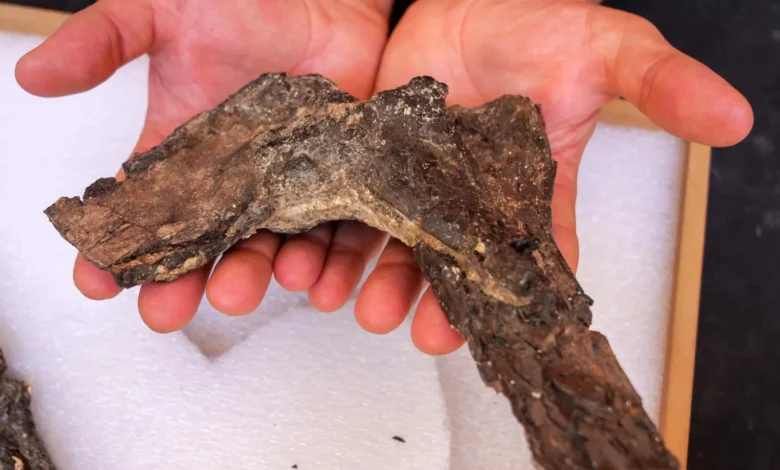
In a discovery that forces a radical reassessment of biological decay and the limitations of the fossil record, an international team of researchers has identified remarkably preserved traces of dinosaur blood within 115-million-year-old skeletal remains. This breakthrough, led by scientists at Curtin University, provides the first definitive chemical confirmation of heme-derived molecules extracted from the fossilized red blood cells of a theropod dinosaur. The findings, published in the Proceedings of the National Academy of Sciences, suggest that delicate biological molecules—long thought to be incapable of surviving the relentless march of geological time—can persist under specific, extraordinary environmental conditions.
The subject of this study is the Aratasaurus museunacionali, a predatory, meat-eating theropod discovered in the Crato Formation of northeastern Brazil. By employing advanced analytical techniques to examine the dinosaur’s limb bones, the research team identified mineralized red blood cells housed within vascular canals—the microscopic channels that once facilitated the flow of blood throughout the creature’s body. Beyond the mere identification of these cellular structures, the team utilized chemical analysis to detect heme molecules, the oxygen-carrying component of hemoglobin, and amino acids associated with collagen.
A Chronology of Discovery and Analytical Rigor
The path to this discovery began with the initial excavation of the Aratasaurus specimen in Brazil, a region renowned for its exceptionally preserved fossils. However, the true significance of the find remained hidden until the involvement of the WA-Organic and Isotope Geochemistry Centre at Curtin University. Under the leadership of John Curtin Distinguished Professor Kliti Grice, the team embarked on a multi-year effort to analyze the chemical composition of the fossilized remains.
While paleontologists have reported finding structures resembling red blood cells in ancient fossils in the past, previous attempts to verify their chemical contents often lacked the definitive evidence required to silence skeptics. Critics had long argued that such structures were likely microbial contaminants or mineral artifacts. This study breaks that cycle by providing clear, unequivocal chemical signatures. By isolating the mineralized cells, researchers demonstrated that the internal molecular structure matched that of hemoglobin, effectively distinguishing ancient biological remnants from modern environmental interference.
The project required a sophisticated, cross-disciplinary approach, involving experts from the Japan Agency for Marine-Earth Science and Technology, the Brazilian National Museum, the Regional University of Cariri, and Johns Hopkins University. This global collaboration underscores the complexity of modern paleontology, where traditional fossil hunting must now be paired with high-energy physics, mass spectrometry, and organic geochemistry to unlock the secrets held within rock.
The Science of Preservation: The Role of Hausmannite
One of the most compelling questions raised by the discovery is how organic material could survive the chemical degradation that occurs over 115 million years. Typically, hemoglobin and collagen proteins are among the first to break down, succumbing to oxidation, hydrolysis, and microbial consumption within a few thousand years of an organism’s death.
The researchers identified that the secret to this preservation lies in the presence of hausmannite, a manganese-rich mineral. In the specific micro-environment of the dinosaur’s bones, this mineral appears to have acted as a chemical stabilizer. As the organic material began to decay, the mineralized environment created a "natural time capsule," encasing the biological structures in a protective layer that shielded them from external chemical fluctuations and microbial activity.
Furthermore, the environmental conditions at the time of the dinosaur’s death played a pivotal role. The team believes the Aratasaurus was entombed rapidly in sediment within an oxygen-depleted environment. This lack of oxygen prevented the typical aerobic decay process, while the rapid mineral replacement process effectively "fossilized" the blood cells before they could lose their structural integrity. This combination of mineralogical stabilization and rapid, anaerobic burial provides a blueprint for where researchers might look for similar biological remnants in other fossils.
Official Perspectives and Academic Impact
The implications of these findings have sent shockwaves through the paleontological community. Professor Kliti Grice, who served as the study’s lead and is an Australian Research Council Laureate Fellow, emphasized the transformative nature of the work. "To detect intact heme-derived molecules in 115-million-year-old red blood cells is astonishing," she stated. "This really is a landmark discovery. It not only extends the known fossil record of blood, but also offers a direct molecular window into the physiology of long-extinct animals so we may better understand them and the world they lived in."
Professor Martin Van Kranendonk, head of the School of Earth and Planetary Sciences at Curtin University, echoed these sentiments, noting that the research fundamentally alters the current understanding of "deep time." According to Van Kranendonk, the study serves as a masterclass in how institutional coordination can push the boundaries of science. By bridging the gap between Earth sciences and planetary biology, the researchers have opened a new chapter in how we interpret the durability of life’s chemical building blocks.
Challenging the Limits of Molecular Paleontology
For decades, the "molecular clock" hypothesis—the idea that biomolecules have a definitive, relatively short shelf life—has been a cornerstone of evolutionary biology and paleontology. The assumption was that the degradation of proteins and lipids was an absolute constant, effectively creating a "hard ceiling" beyond which no biological information could be retrieved.
The Aratasaurus discovery effectively shatters this ceiling. By proving that hemoglobin-derived molecules can survive for over 100 million years, the study necessitates a re-evaluation of thousands of existing fossil specimens held in museum collections worldwide. If these molecules can survive in the Crato Formation, they may also be preserved in other geological sites previously dismissed as "too old" or "too altered" to contain useful organic data.
This shift in perspective is expected to drive a surge in "molecular-level paleontology." Researchers are now likely to revisit existing fossils with more sensitive mass spectrometry equipment, looking for the tell-tale chemical signatures of metabolism, activity levels, and even dietary habits that were once thought to be permanently lost to time.
Astrobiological Implications: The Search for Life Beyond Earth
Perhaps the most provocative aspect of this research lies in its potential application to astrobiology. The search for life on other planets, such as Mars or the moons of Jupiter and Saturn, is currently constrained by the expectation that we are looking for evidence of life that is either extant or recently deceased. The assumption is that biological signatures will have degraded beyond recognition over billions of years.
However, if life on Earth can leave behind identifiable molecular signatures after 115 million years, the methodology developed by the Curtin University team could provide a template for space exploration. Scientists searching for signs of ancient life on Mars, for example, could focus their efforts on mineralized environments similar to the Crato Formation—areas where specific minerals might have acted as protective shields for organic matter.
"These insights could be valuable to astrobiology," Professor Van Kranendonk noted. "If biological molecules or their chemical signatures can persist under the right conditions for more than 100 million years, scientists may need to reconsider where and how they look for evidence of ancient organisms." This research essentially expands the "search window" for extraterrestrial life, suggesting that the geological record of other planets may hold far more biological data than previously hypothesized.
Conclusion: A New Era of Discovery
The discovery of blood-derived molecules in the Aratasaurus museunacionali is more than a mere curiosity; it is a fundamental shift in the scientific paradigm. By confirming that the molecular record can survive geological timescales that were once considered impossible, the international research team has provided a new set of tools for understanding the history of life on Earth.
As the scientific community begins to digest these findings, the focus will undoubtedly shift toward replicating these results in other species and geological formations. The study, supported by the 2021 Australian Research Council Laureate Fellowship, serves as a testament to the power of interdisciplinary inquiry. It reminds us that the history of our planet is not just written in the shapes of bones and the layers of rock, but is also encoded in the resilient, microscopic chemical remnants that defy the decay of millions of years. As we continue to refine our ability to read this molecular script, we may find that the secrets of the distant past—and perhaps the evidence of life elsewhere in the universe—have been waiting in the fossils all along.