A New Frontier in Orbit: How Isar Aerospace’s Successful Spectrum Launch Is Reshaping the Satellite Servicing Market

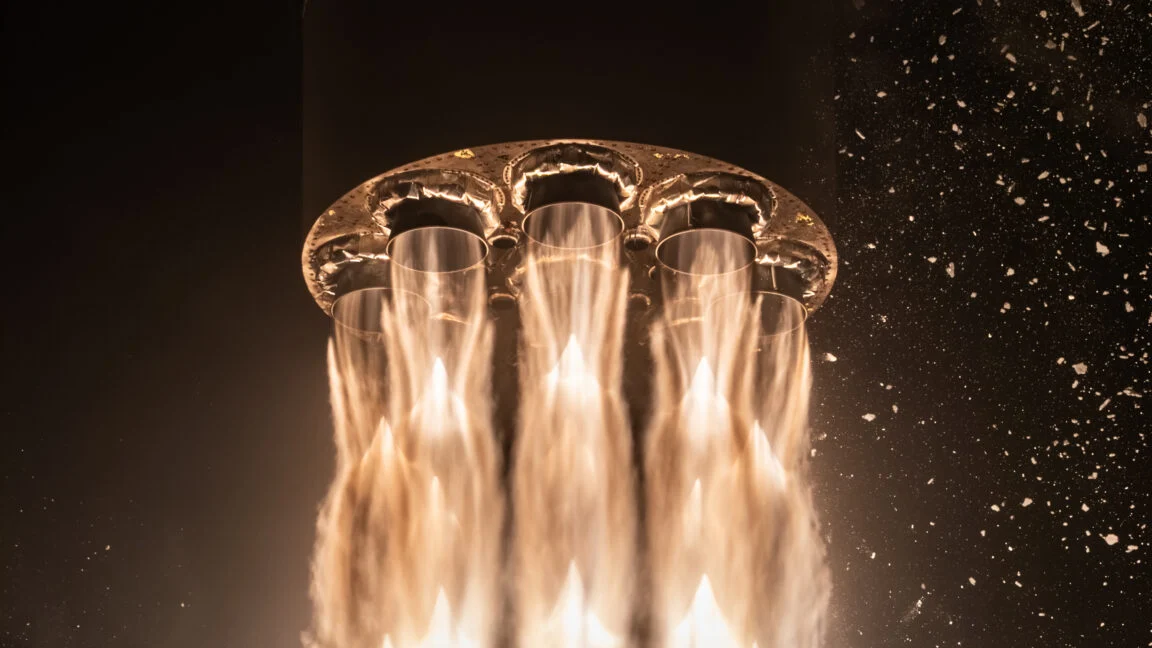
The successful orbital deployment of the Spectrum rocket by Germany’s Isar Aerospace marks a significant turning point for the European space industry, signaling a shift toward a more robust, competitive, and specialized launch market that is increasingly vital for the emerging satellite-servicing sector. For years, the global space industry has been dominated by the cadence of SpaceX’s Falcon 9, creating a bottleneck that has left many specialized satellite operators, particularly those in the nascent debris-removal and on-orbit servicing fields, searching for dedicated, reliable, and cost-effective access to space. Isar Aerospace’s achievement—reaching orbit after a difficult first test flight last year—is more than just a technological milestone for a European startup; it is the realization of a critical, underserved demand for custom orbital placement.
A Shifting Landscape in Orbital Access
The global appetite for launch services has reached a fever pitch, yet the supply of dedicated, mid-sized launch capacity remains remarkably thin. While SpaceX continues to lead in volume, the company is recalibrating its Falcon 9 program, and its next-generation Starship remains primarily focused on internal Starlink deployments, leaving external commercial customers with mounting uncertainty. For companies like Astroscale, a leader in the space-junk mitigation market, this lack of reliable, dedicated launch options has been a persistent strategic challenge.

Astroscale’s decision to commit to Isar Aerospace—even before the Spectrum rocket reached orbit—underscores the desperation and the necessity for "boutique" launch providers. In the satellite servicing industry, one cannot simply rely on the "rideshare" model that has become the gold standard for small-satellite operators. Because these missions involve rendezvous, proximity operations (RPO), and docking with specific, often uncooperative targets, the orbital parameters must be exact. A standard rideshare mission might deliver a satellite to the general vicinity of an orbit, but it rarely provides the precise insertion required for complex, fuel-sensitive servicing maneuvers.
The Chronology of an Emerging Partnership
The partnership between Isar Aerospace and Astroscale has evolved rapidly. In March 2026, the two companies formalized an initial launch agreement, a bold move considering the unproven status of the Spectrum vehicle at the time. This was followed by a secondary contract to launch another critical Astroscale mission. The confidence shown by the Japanese-headquartered satellite company was not blind; it was backed by intensive due diligence. Astroscale’s engineering teams conducted exhaustive on-site assessments at Isar’s manufacturing facilities and held extensive technical discussions with the German company’s leadership.
When Isar finally cleared the launch pad in northern Norway, the mission was watched globally with bated breath, particularly by Astroscale’s leadership in Japan, who monitored the webcast in the early hours of the morning. The success of the mission—delivering CubeSats to low-Earth orbit—confirmed that the technical hurdles encountered during the company’s maiden flight in 2025 had been effectively resolved. For Isar, the path forward is now clear, with a substantial backlog of government-backed missions from the European Space Agency (ESA), the European Union, and the governments of Norway and Germany, all of whom have a vested interest in fostering a sovereign European launch capability.

Technical Demands and the "1-Ton" Gap
The market for launch vehicles capable of carrying payloads between 500 kilograms and 1 metric ton is remarkably sparse. Historically, companies like Relativity Space and Astra attempted to capture this niche, but as the industry trended toward larger, heavier rockets, these smaller launch vehicles were either retired or pivoted. This created a "1-ton gap," where satellites that are too large for the smallest micro-launchers but too specialized to share a ride on massive, heavy-lift rockets find themselves without a home.
Astroscale’s mission requirements are highly specific. Its current fleet, including the ELSA-M spacecraft designed to deorbit a OneWeb satellite, and the ADRAS-J2 mission, which aims to capture a defunct Japanese rocket body, require precise orbital delivery. According to Chris Blackerby, Group Chief Operating Officer at Astroscale, the "Venn diagram" of their needs—dedicated launch, specific payload mass, and a sustainable budget—left very few options on the table. "When you get that Venn diagram that throws in all of those various requirements, Isar really fit the bill," Blackerby noted in a recent interview.
Lessons from ADRAS-J: The Path to Commercial Viability
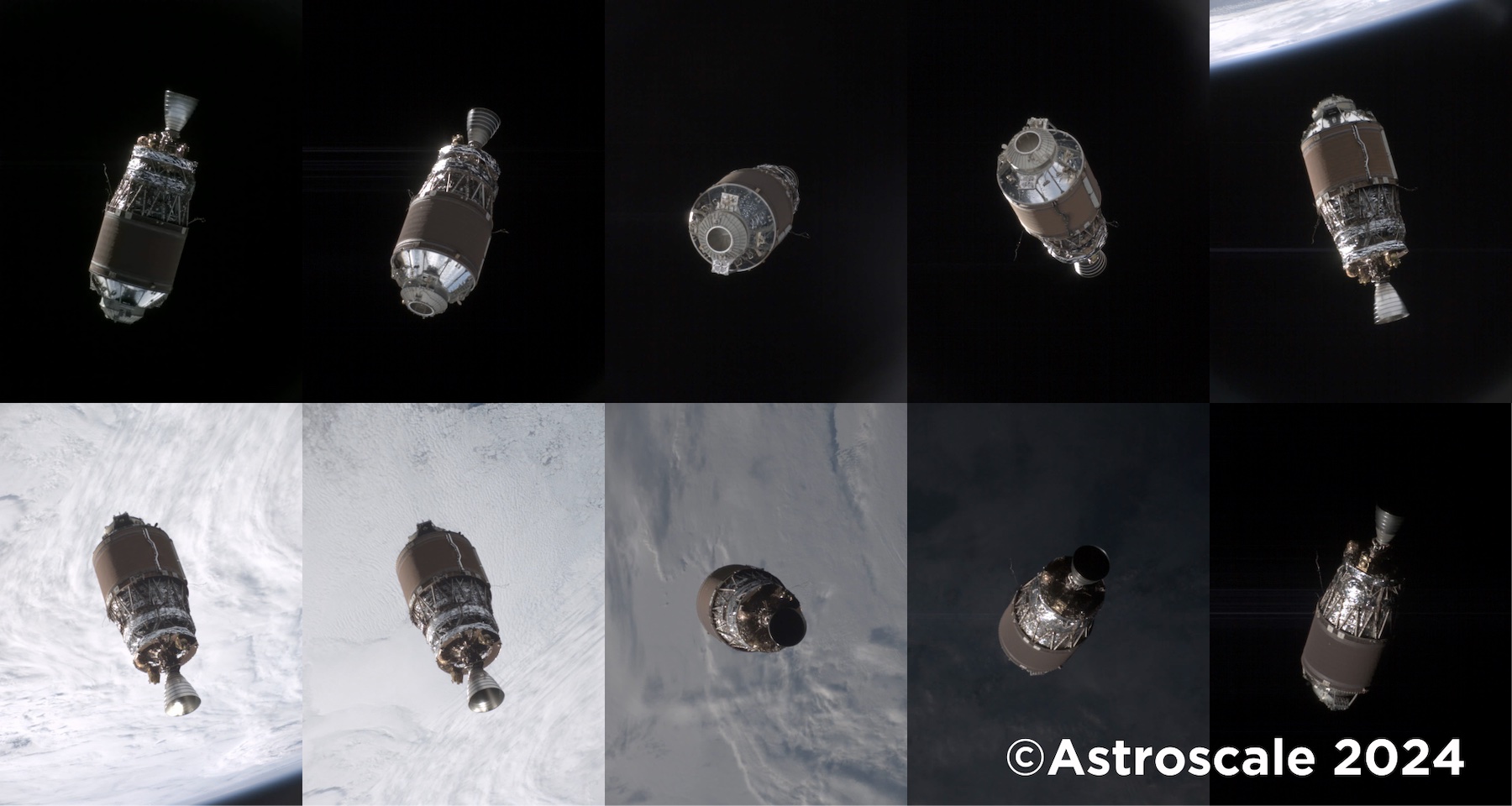
The success of Astroscale’s previous mission, ADRAS-J, which in 2024 performed a ground-breaking approach to a non-communicative H-IIA rocket upper stage, provided the critical data needed for future servicing operations. The mission proved that a commercial entity could safely approach and inspect an unprepared, uncooperative object in orbit. The high-resolution imagery obtained during the mission allowed engineers to confirm the state of the target—specifically, that it was not spinning and that its payload adapter was intact.

This knowledge is transformative. By understanding the condition of the target, engineers can design the capture mechanisms for ADRAS-J2 with far greater precision. However, each mission brings new challenges. The upcoming ISSA-J1 mission, which aims to inspect two decommissioned Japanese satellites, introduces the added complexity of solar arrays and potential rotation, requiring more advanced guidance, navigation, and control systems. These incremental steps—crawling, walking, and eventually running—are the foundation of the space-servicing ecosystem Astroscale is building.
Broader Implications for Space Sustainability
The financial and operational implications of this progress extend well beyond the companies involved. As government agencies like the U.S. Space Force and the Japanese Ministry of Defense increase their interest in "refueling-as-a-service" and "deorbit-as-a-service," the necessity for a robust, reliable launch market becomes a matter of national security. The U.S. Defense Innovation Unit (DIU) has already begun exploring deorbit contracts, and companies like Astroscale are positioning themselves to meet this demand.
Refueling, in particular, is viewed as the "holy grail" of the next decade. If a satellite can be refueled or serviced on-orbit, its operational lifespan can be extended indefinitely, reducing the amount of debris created by end-of-life satellites. This shift toward a circular economy in space is not just an environmental goal; it is an economic imperative for the future of orbital commerce.
A Competitive European Future
Isar Aerospace’s success is a signal to other European players—such as Rocket Factory Augsburg and Spain’s PLD Space—that the European space sector is ready to break free from the stagnation that has hampered it in recent years. With The Exploration Company also working on advanced heavy-lift engines, the continent is diversifying its technological portfolio.
For the global space industry, the message is clear: the monopoly of the giants is being challenged by a tier of agile, dedicated, and highly specialized providers. While the risks of choosing an unproven launch vehicle remain, the alternative—a lack of access to orbit—is a risk that many companies are no longer willing to take. As we look toward the 2030s, the combination of sophisticated on-orbit servicing technology and a reliable, diverse launch market will be the defining pillars of a sustainable and commercially viable space economy. The success of the Spectrum rocket is not just a triumph for German engineering; it is the opening of a new door for every company that dreams of doing more than just putting a satellite in space—it is about keeping it there, maintaining it, and ensuring the long-term viability of the orbital environment.