The Great Data Diaspora: How International Scientists Are Building a Digital Ark Against Political Interference

In a nondescript, five-story facility located in the heart of Hamburg, Germany, technicians are methodically installing gray metal server racks to expand the capacity of the German Climate Computing Center (DKRZ). This expansion is not merely an upgrade in infrastructure; it is an act of digital preservation. The DKRZ, already one of the world’s most significant repositories for climate simulation data, is adding 5 petabytes of storage to its existing 254-petabyte archive. This effort is part of a growing, urgent international campaign to safeguard critical scientific data from being erased, buried, or manipulated by the current United States administration.
The project, colloquially dubbed CMIP7-ark, acts as a high-tech lifeboat for climate simulations destined for the next major United Nations climate assessment, scheduled for 2029. With the U.S. government having systematically slashed research budgets, removed climate change references from federal websites, and restricted the ability of satellites to monitor environmental shifts, global scientists are taking matters into their own hands. The initiative represents a fundamental shift in how the international community views the vulnerability of publicly funded knowledge in an era of rising political volatility.
A Chronology of Scientific Erosion
The seeds of this data crisis were sown over several years, marking a departure from the long-standing tradition of open-access government science in the United States.

- January 2025: The U.S. government formally withdrew from both the U.N. Intergovernmental Panel on Climate Change (IPCC) and the U.N. Framework Convention on Climate Change. This exit sent shockwaves through the global scientific community, signaling a departure from the collaborative environmental policies of previous decades.
- April 2025: The Department of Government Efficiency, led by figures associated with the current administration, oversaw the total removal of datasets from the NASA Socioeconomic Data and Applications Center (SEDAC). These 300+ datasets, which bridged the gap between remote sensing and human-centered social science, were only saved through the frantic, last-minute intervention of academic institutions that scraped the data before it vanished.
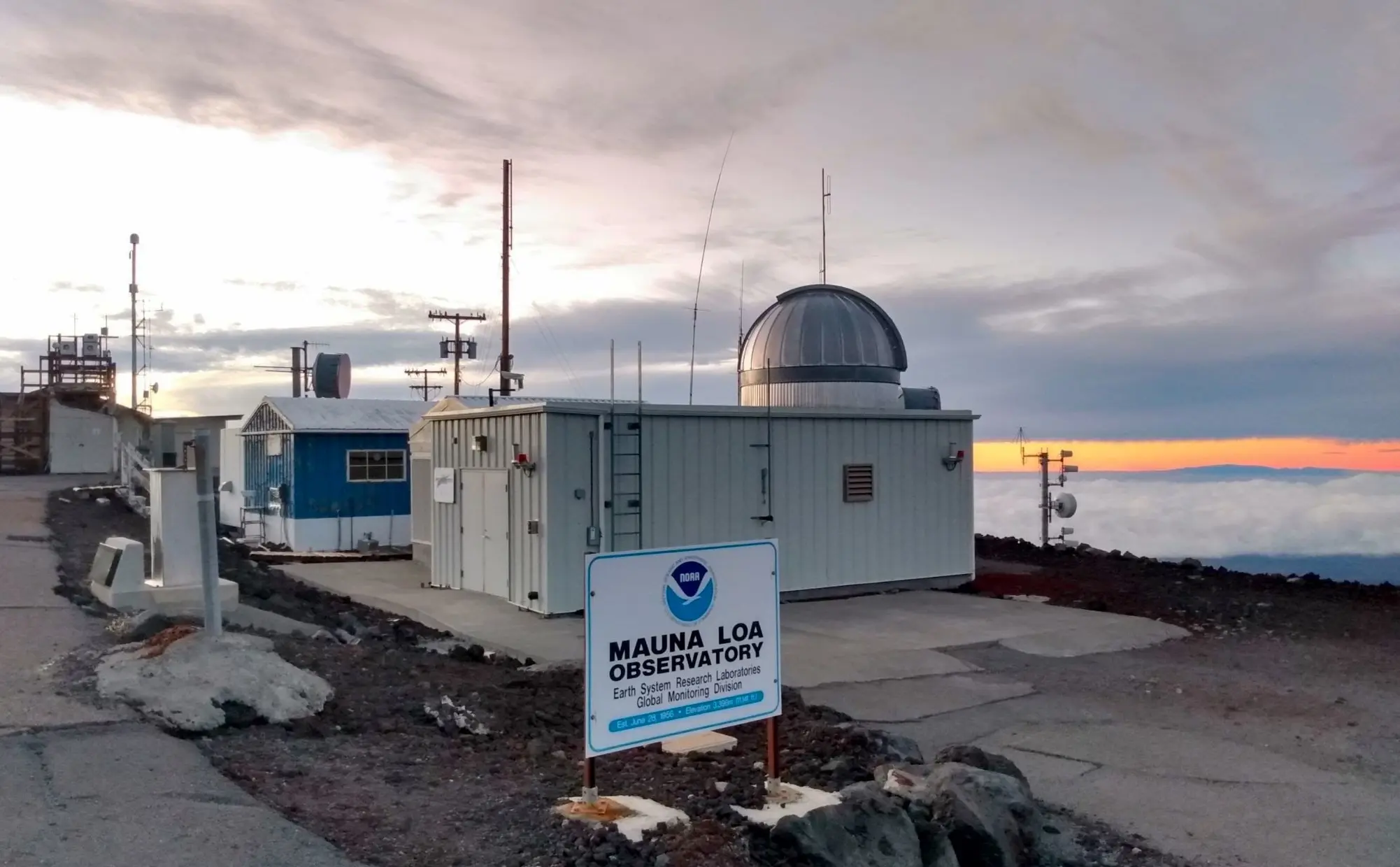
- Summer 2025: Attempts to defund the Mauna Loa Observatory—the site of the world’s longest-running record of atmospheric carbon dioxide—highlighted the precarious nature of even the most foundational climate monitoring stations. While Congress blocked the attempt, the incident served as a wake-up call for researchers worldwide.
- Late 2025: The German Research Foundation (DFG) launched a $35 million program specifically designed to provide a "safe haven" for U.S. public-domain data, formalizing the effort that would eventually lead to projects like SHIELD (Secure Holdings for International Earth-science Linked Data) and SEND (Secure Endangered Earth Data).
The Technical Challenges of Data Sovereignty
The physical logistics of moving petabytes of information are daunting. A single petabyte is equivalent to roughly 200 million high-resolution images. Transferring such volumes via the internet is often impractical due to bandwidth limitations and the exorbitant costs of dedicated fiber-optic lines. Consequently, scientists have returned to the "sneakernet"—physically transporting hard drives and magnetic tapes by air, sea, or land—to ensure the integrity of the data.
This manual process underscores the fragility of modern scientific infrastructure. For decades, the assumption was that government-funded data would remain in the public domain in perpetuity. However, the current geopolitical climate has exposed the flaws in this logic. If a dataset exists in only one physical location, it is susceptible to everything from natural disasters and technical failures to intentional state-sponsored erasure.
Global Reactions and the Role of the AGU
The American Geophysical Union (AGU), representing over 60,000 Earth and space scientists, has become the de facto clearinghouse for these resilience efforts. Following the U.S. administration’s refusal to send government experts to IPCC meetings in 2025, the AGU established the U.S. Academic Alliance for the IPCC. This organization mobilized nearly 300 U.S. researchers to contribute to the next global climate assessment as independent authors, effectively bypassing the administration’s blockade.
At a summit held in Berlin this March, AGU leadership and representatives from global research institutions emphasized that "triage" is no longer sufficient. Ben Zaitchik, the AGU president-elect, argued that the community must move toward a decentralized, globally redundant architecture for scientific data. "We have clearly arrived at a moment where we must fundamentally reimagine data organization and maintenance for long-term viability and growth," Zaitchik stated.
Broader Implications for Empirical Science
The consequences of this "data migration" extend far beyond climate change. Environmental research, biodiversity tracking, and industrial engineering all rely on historical datasets that are now being treated as strategic assets.
The threat to science is not limited to the United States. In Ukraine, the ongoing conflict has resulted in the destruction of research institutes and the targeting of scientific infrastructure, forcing researchers to relocate data to servers in Germany and Poland to prevent the loss of centuries of meteorological and ecological records. Similarly, institutions in Croatia and Germany have faced sophisticated ransomware attacks, highlighting how cyber warfare can be used to paralyze academic progress.
Data experts Jennifer Gibson and Kaitlin Thaney have noted that digital asset management is often the most overlooked component of the scientific process until it is too late. The current crisis has forced a cultural change: scientists who once viewed their data as a local, private concern are now viewing it as a public trust that requires a global network of guardians.
Analysis: A New Era of Science Diplomacy
The movement to "save the data" represents a new, defensive form of science diplomacy. By creating a cross-border, decentralized network of backups, the international scientific community is effectively stripping political actors of their ability to control the historical narrative.
However, this transition is not without risks. Frank Oliver Glöckner, a professor of Earth systems data science at the University of Bremen, suggests that the current antagonism toward science has paradoxically strengthened the movement toward open, globally shared data. "President Trump has, to a certain extent, done science a favor by making it clear how important it is to not just hoard data in one place but to truly share it with the global scientific community," Glöckner observed.
Nevertheless, the project faces long-term challenges regarding funding, standardization, and the legal hurdles of hosting data across national borders. There is also the lingering concern that this political volatility is not unique to the United States. Christopher Kadow of the DKRZ points to the rise of far-right, climate-skeptic parties in Europe as a reminder that no region is entirely immune to the political pressures currently reshaping the U.S. scientific landscape.
As researchers look toward the 2029 IPCC assessment, the work in Hamburg, Berlin, and beyond serves as a testament to the resilience of the scientific method. The goal is no longer just the creation of knowledge, but the fortification of the record against an increasingly unpredictable geopolitical future. By building digital pipelines that allow for the instantaneous transfer and mirroring of information, the global scientific community is working toward a day where a single government’s shift in policy can no longer threaten the continuity of human understanding. The "lifeboat" of CMIP7-ark is a precursor to a more robust, decentralized future for global science—one where data is not just stored, but protected by the collective will of the international community.
Related posts: