Federal Appeals Court Rules Constitution Does Not Guarantee Right to Clean Drinking Water in Landmark Jackson Case

A federal appellate court has delivered a consequential ruling that effectively narrows the scope of constitutional protections in the United States, determining that there is no fundamental, federally protected right to safe drinking water. The decision, handed down by the Fifth U.S. Circuit Court of Appeals on September 4, stems from a protracted legal battle brought by residents of Jackson, Mississippi, who alleged that city and state officials knowingly exposed them to lead-contaminated water and misled the public regarding its safety. By affirming the dismissal of the lawsuit, the court has established a significant legal precedent: that systemic failure in essential public utilities does not necessarily constitute a violation of the U.S. Constitution, regardless of the health outcomes for the affected population.
The ruling is the latest blow to a city that has become the national epicenter for conversations surrounding environmental justice, racial equity, and the failure of public infrastructure. For the residents of Jackson—a city that is over 80% Black with a poverty rate nearly double the national average—the judicial decision underscores a feeling of abandonment by the federal system. As Judge Kurt Engelhardt noted in his opinion, while the court acknowledged that safe water is an "important" interest, it does not meet the legal threshold of a right "deeply rooted in our Nation’s history and tradition."
A History of Systemic Failure
To understand the gravity of the Fifth Circuit’s decision, one must look at the decades of neglect that preceded the 2021 crisis. Jackson’s water system has been in a state of slow-motion collapse for generations. The challenges are multi-faceted, stemming from a shrinking tax base, a lack of institutional investment, and aging infrastructure that includes lead pipes and outdated treatment facilities.
The chronology of the crisis is marked by several inflection points:
- Early 2000s–2010s: Long-term neglect of water mains and treatment plants begins to manifest in frequent "boil water" notices and intermittent pressure loss.
- March 2020: The Environmental Protection Agency (EPA) issues an emergency order, declaring that Jackson’s water system presents an "imminent and substantial endangerment" to public health due to failing infrastructure and improper maintenance.
- February 2021: A severe winter storm event causes pipes to burst across the city, leaving tens of thousands of residents without running water, heat, or sanitation for several weeks.
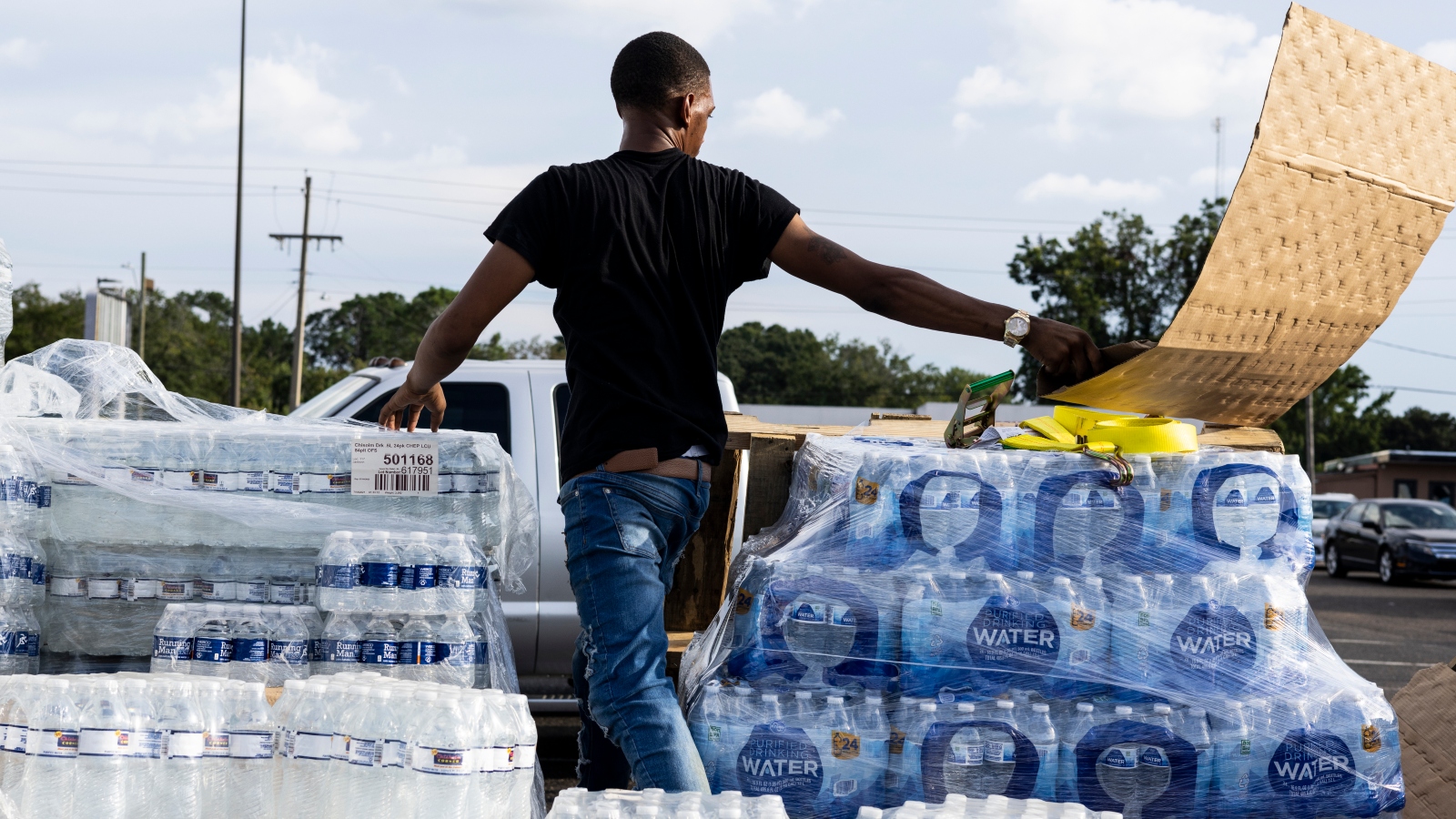
- August 2022: Heavy rainfall and subsequent flooding overwhelm the O.B. Curtis Water Treatment Plant, leading to a total failure of the system and a complete loss of water pressure for the city’s 150,000 residents.
- 2022–Present: The federal government appoints a third-party manager, JXN Water, to oversee the stabilization and reconstruction of the water system, funded in part by significant federal grants.
Despite these interventions, the legal pursuit of accountability for the residents’ health has hit a wall. The lawsuit filed in 2022 argued that officials, by providing false assurances about the water’s safety, violated the residents’ 14th Amendment right to bodily integrity. The court’s rejection of this claim effectively insulates government officials from liability for failing to warn citizens of health risks related to utility services.
The Disproportionate Burden on Black Communities
The Jackson crisis is not an anomaly, but rather a reflection of a broader, systemic issue in the United States. Federal data from the Environmental Protection Agency consistently indicates that water systems serving Black communities are significantly more likely to incur health-based violations under the Safe Drinking Water Act than those serving predominantly white neighborhoods.
Furthermore, research suggests that when these systems fail, they remain broken for longer periods. The "time-to-fix" metric is often correlated with the racial demographics and economic status of a community. In Jackson, the reliance on an eroding municipal tax base meant that needed repairs were deferred for years to balance the budget. Critics argue that the state’s failure to distribute federal infrastructure funds equitably to the capital city contributed directly to the current state of the utility.
Danyelle Holmes, a senior national organizer with Mississippi’s Poor People’s Campaign, summarized the frustration felt by many residents: "Jackson residents did everything this country tells poor people to do. They organized, they testified, they boiled their water, they filed suit, they trusted the courts. And at every step the answer has been no."
Legal Implications and Judicial Reasoning
The Fifth Circuit’s reasoning hinges on a narrow interpretation of constitutional rights. Judge Engelhardt argued that the court could not equate the government’s failure to provide safe water with a direct, unconstitutional government intrusion into bodily autonomy, such as forced medical procedures or the extraction of evidence.

"The Constitution does not provide redress for every governmental wrongdoing," Engelhardt wrote. This sentiment reflects a judicial philosophy that prioritizes limited government intervention in the administration of state and local services. However, the dissenting opinion from Judge Catharina Haynes highlighted a critical counterpoint: the plaintiffs plausibly alleged that officials knowingly placed citizens in danger. By choosing to prioritize administrative convenience or fiscal constraints over the provision of safe water, officials arguably created a condition that directly impacted the physical health of the citizenry.
The implications of this ruling are profound. By confirming that the Constitution does not guarantee a right to truthful information during a public health crisis, the court has set a precedent that could limit future litigation in other cities facing environmental crises, such as those grappling with lead pipe exposure or toxic industrial runoff.
The Path Forward: Finance and Oversight
As the city continues to navigate federal oversight, the burden of funding the necessary infrastructure repairs is increasingly shifting to the residents. Under the management of JXN Water, the city has implemented a series of rate hikes. In March, a court-approved increase raised the average bill to approximately $88 per month—a significant sum for a city where many residents live at or below the poverty line.
Projections show continued increases in 2027, 2028, and 2029. While these funds are intended to finance the essential modernization of the water treatment plant and distribution grid, they exacerbate the economic strain on a community already suffering from the long-term health consequences of lead exposure. Studies, including those published in journals like JAMA, have repeatedly linked lead consumption to permanent cognitive impairment, particularly in children, and a host of chronic health issues in adults.
Broader Impact and Conclusion
The Jackson water crisis has evolved from a local infrastructure issue into a litmus test for the American legal system’s capacity to address environmental racism. The EPA’s previous determination that the city could not access support through the Civil Rights Act of 1965, combined with the recent appellate court ruling, paints a picture of a legal landscape that is increasingly resistant to addressing systemic inequities through litigation.
For residents like Brooke Floyd, who has spent her life witnessing the decline of the water system, the ruling confirms a long-held suspicion that the judicial system is ill-equipped to protect the most vulnerable. "I do think the ruling would have been different if the majority of our city looked different, was in a different tax bracket, and had a different ZIP code," Floyd stated.
As the city moves forward, the focus remains on the logistical challenge of rebuilding a failing system. Yet, the legal question remains unresolved in the minds of many: if the Constitution does not protect the right to safe water, what mechanism remains for citizens to hold the state accountable for the essential requirements of human survival? For now, the answer provided by the federal judiciary is that such protections must be sought through legislation and policy, not through the courts. This leaves the residents of Jackson, and other communities facing similar crises, to look toward political mobilization as their final, and perhaps only, recourse.