Federal Appeals Court Rules Constitution Does Not Guarantee Right to Clean Drinking Water in Landmark Jackson Case

A federal appeals court has delivered a consequential ruling that effectively establishes that the United States Constitution does not provide a fundamental right to safe or clean drinking water. The decision, handed down on September 4 by the Fifth U.S. Circuit Court of Appeals, arose from a protracted legal battle involving the residents of Jackson, Mississippi—a city where systemic infrastructure failure has left the population, which is more than 80% Black, navigating a chronic public health crisis. By affirming a lower court’s dismissal of the lawsuit, the appellate panel has effectively shuttered a significant avenue for legal recourse for citizens seeking to hold government entities accountable for the provision of basic life-sustaining services.
The ruling is not merely a procedural victory for the City of Jackson and its officials; it represents a significant narrowing of the scope of constitutional protection regarding government transparency and bodily integrity. Beyond the denial of a right to clean water, the court further held that the Constitution does not mandate a "right to truthful information" from public officials during a health crisis. This creates a challenging legal precedent for environmental justice advocates who argue that marginalized communities often bear the brunt of administrative negligence while being denied the tools to seek justice in federal courts.
A History of Infrastructure Decay and Distrust
The crisis in Jackson is not a singular event but the culmination of decades of deferred maintenance, a dwindling tax base, and a catastrophic failure to modernize aging treatment facilities. The city’s water woes have been a subject of intense scrutiny for years, but the situation gained national prominence in early 2021 when a severe winter storm crippled the city’s already fragile water system. Pipes burst across the capital, and residents were left without running water for weeks, forcing them to rely on bottled water and boiling notices to survive.
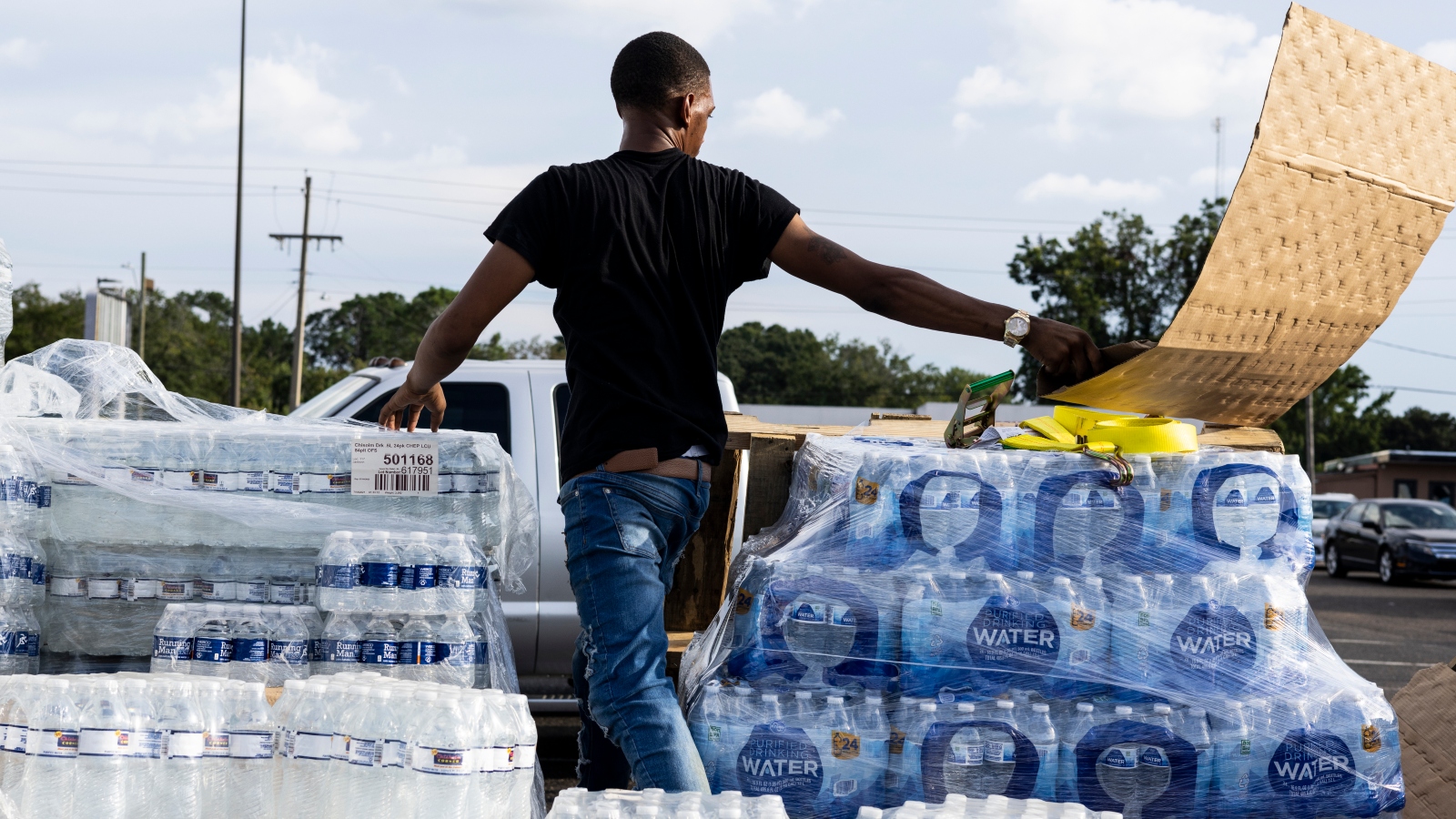
The chronology of the city’s decline is extensive. The O.B. Curtis Water Treatment Plant, the primary facility serving the area, has been plagued by operational inefficiencies for years. In March 2020, the Environmental Protection Agency (EPA) issued an emergency order, declaring that the water system presented an "imminent and substantial endangerment" to public health. The warning cited severe vulnerabilities in both treatment and distribution. Despite these warnings, conditions worsened. In 2022, flooding exacerbated these existing failures, resulting in a total collapse of water pressure for the city’s 150,000 residents, rendering the water non-potable and prompting federal intervention.
The plaintiffs in the lawsuit, which included local residents, argued that their 14th Amendment rights to bodily integrity had been violated. They alleged that municipal and state officials knowingly allowed lead-contaminated water to reach homes while simultaneously assuring the public that the supply was safe. For residents like Gwendolyn Reed-Davis, who reported health complications she attributes to the water, the ruling is a final dismissal of their lived experience. Studies have long established a correlation between lead exposure and lifelong cognitive impairment, particularly in children. Research from organizations like the National Institutes of Health has consistently shown that the burden of lead exposure in the United States falls disproportionately on Black communities, a phenomenon often tied to the age of housing stock and the neglect of municipal infrastructure in lower-income districts.
The Judicial Rationale
The Fifth Circuit’s decision was authored by Judge Kurt Engelhardt. In his opinion, Engelhardt acknowledged that while access to clean water is a vital public good, it fails to meet the legal threshold required for constitutional protection. The court applied the "deeply rooted" test, which requires that for a right to be protected under the Due Process Clause of the 14th Amendment, it must be historically recognized as a fundamental element of American tradition.
"The Constitution does not provide redress for every governmental wrongdoing," Judge Engelhardt wrote. The court rejected the argument that lying about water quality is analogous to unconstitutional state actions like forced medical procedures or the extraction of evidence from criminal suspects. By framing the issue as a failure of policy rather than a violation of physical liberty, the court effectively removed the constitutional mandate for state accountability in the management of public utilities.

Judge Catharina Haynes offered a dissenting voice, suggesting that the plaintiffs had successfully made a plausible claim that the city had placed residents in danger with deliberate indifference. Her dissent underscores the growing tension between strict constitutional originalism and the reality of modern environmental health crises in historically disenfranchised urban centers.
The Broader Implications for Environmental Justice
The ruling arrives at a time when the federal government is attempting to balance the need for infrastructure investment with the legal realities of municipal oversight. Following the 2022 crisis, the EPA appointed a third-party manager, JXN Water, to oversee the rehabilitation of the system. While JXN Water reports progress in operational stability, the financial burden of these improvements has fallen directly on the residents.
A court-approved rate increase of 12% in March brought the average residential bill to approximately $88 per month. With additional hikes scheduled for 2027, 2028, and 2029, the economic pressure on Jackson’s residents—where the poverty rate is more than double the national average—is mounting. Critics argue that this creates a paradox: the community most harmed by the failure of the system is now being tasked with the highest per-capita cost to fix it, without the leverage of constitutional protection to demand equitable treatment or state-level accountability.
Data from the EPA and other researchers confirm that Jackson is not an anomaly. Black communities across the United States are statistically more likely to be served by water systems that violate the Safe Drinking Water Act. Furthermore, when these systems fail, repairs in Black neighborhoods take significantly longer to complete than in predominantly white, wealthier municipalities. This "environmental racism" is increasingly the focus of advocacy groups like the Poor People’s Campaign, which views the court’s ruling as a betrayal of the democratic process.
The Road Ahead
The legal landscape for citizens seeking to challenge government neglect in environmental matters has become significantly more difficult. By limiting the reach of the 14th Amendment in this context, the Fifth Circuit has signaled that future challenges to public utility failures must likely be litigated under statutory law, such as the Safe Drinking Water Act or civil rights legislation, rather than constitutional claims. However, even these avenues have faced hurdles; the EPA previously determined that Jackson could not successfully seek support through the Civil Rights Act of 1965, leaving advocates with few remaining levers of power.
Mayor John Horhn has expressed support for the court’s decision, emphasizing the city’s ongoing commitment to safety, yet the frustration among the populace remains palpable. For residents like Brooke Floyd, the ruling is indicative of a broader systemic dismissal. "I do think the ruling would’ve been different if the majority of our city looked different, was in a different tax bracket, and had a different ZIP code," Floyd noted following the verdict.
The struggle in Jackson continues to serve as a bellwether for the rest of the nation. As climate change increases the frequency of extreme weather events—the very events that brought Jackson’s system to its knees—the question of whether the government has a constitutional duty to provide safe water will only become more pressing. For now, the Fifth Circuit has provided a definitive, if controversial, answer: the protection of the water supply is a matter of administrative policy, not a fundamental right protected by the highest law of the land.
As the city moves forward under federal oversight, the residents of Jackson continue to navigate a reality where they must manage their own health risks and financial burdens. Their story serves as a reminder of the fragility of infrastructure and the limitations of the legal system in addressing the compounding impacts of poverty, race, and environmental neglect. Whether this ruling will lead to a new movement for state-level constitutional protections or a renewed push for federal legislative action remains to be seen. In the interim, the people of Jackson are forced to advocate for their own basic needs in an environment where, according to the court, the Constitution offers no guarantee of a clean glass of water.
Related posts: