Slash’s Groundsnake: How the Guns N’ Roses Guitarist Inspired a New Scientific Discovery in New Guinea

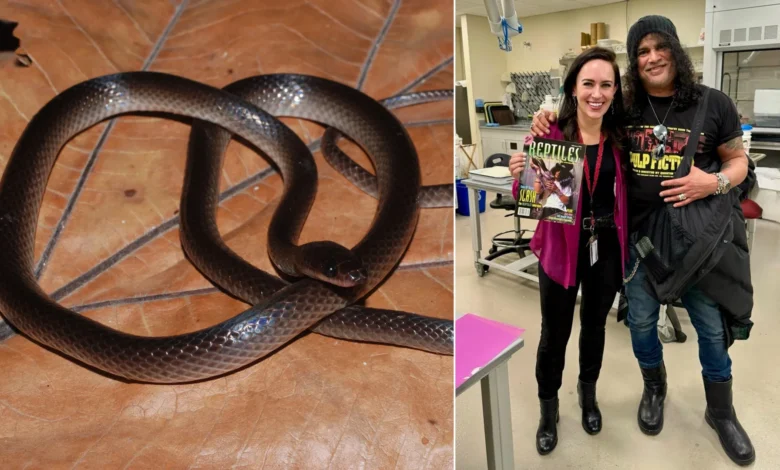
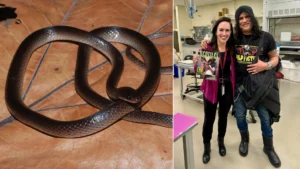
For decades, Saul Hudson—better known to the world as the iconic Guns N’ Roses guitarist Slash—has been synonymous with leather jackets, top hats, and blistering guitar solos. Yet, beyond the stadium lights and recording studios, Hudson has nurtured a lifelong, private passion for the world of herpetology. That devotion to reptiles has now been cemented in the scientific record with the formal identification and naming of a previously undocumented snake species from the remote forests of New Guinea: Lielaphis slashi, commonly referred to as Slash’s groundsnake.
The discovery, published in the peer-reviewed journal Zootaxa, represents more than just a nod to a rock legend; it serves as a critical milestone in the ongoing efforts to catalogue the immense, yet fragile, biodiversity of the New Guinea wilderness. For the scientific team led by the Field Museum’s Associate Curator of Herpetology, Dr. Sara Ruane, the naming of the species is both a tribute to a personal hero and a serious contribution to global biological research.
The Intersection of Rock and Research: A Personal History
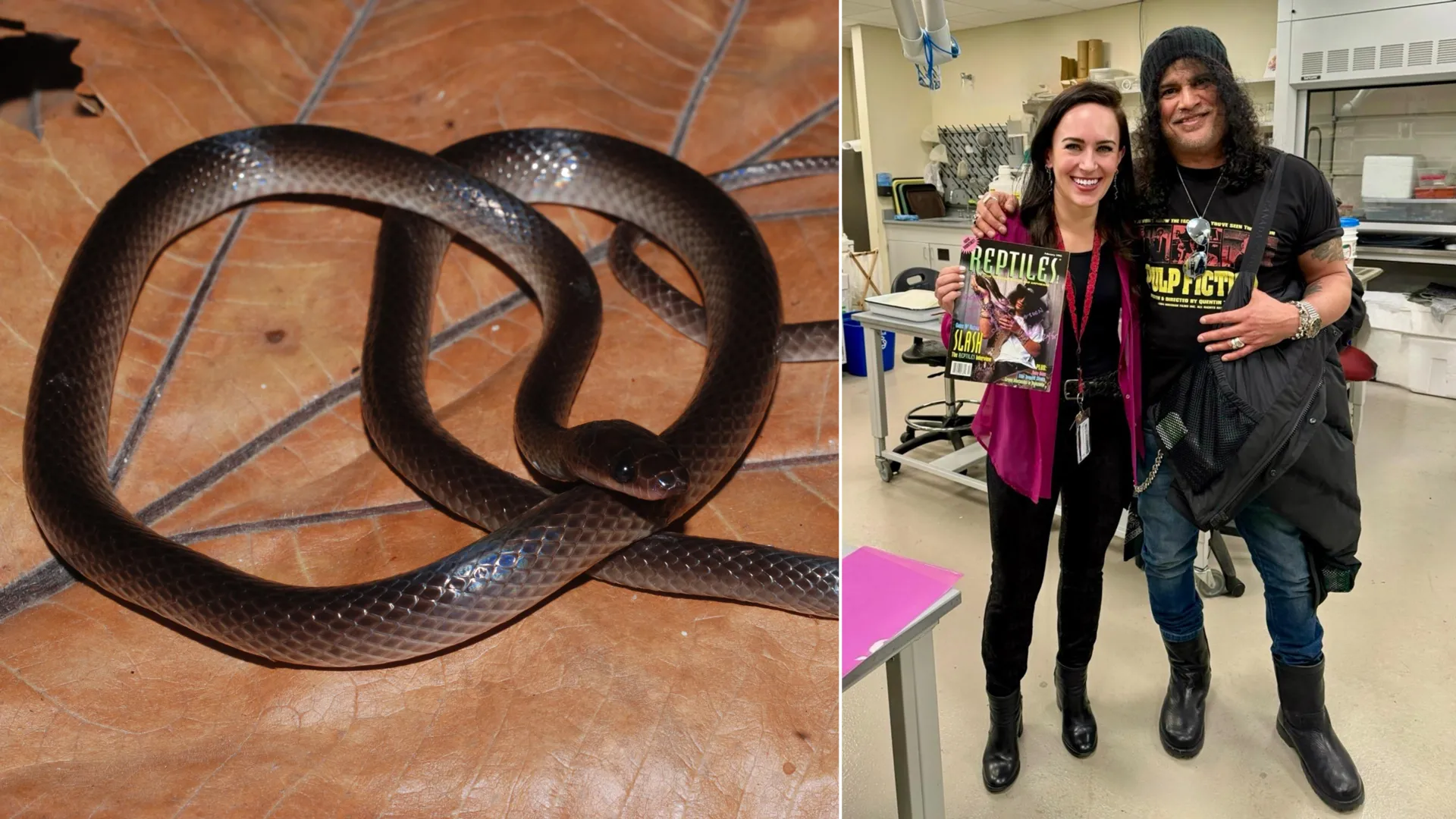
The genesis of this scientific honor traces back to the formative years of Dr. Ruane, who grew up as a self-described "herpephile." Her fascination with the natural world was mirrored by her fandom for Guns N’ Roses. In a narrative that bridges the gap between pop culture and academia, Ruane recalls a pivotal moment during her childhood in the 1990s. While reading a copy of Reptiles Magazine, she encountered a cover story featuring Slash cradling a large reticulated python.
"When I was twelve years old and got my copy of Reptiles Magazine in the mail and it had a picture of Slash holding his pet reticulated python on the cover, I thought, ‘This guy is so cool,’" Ruane noted. Years later, when her professional path led her to the prestigious role of a taxonomist, she revisited that interview. She found that the musician’s public advocacy for zoos, museums, and the preservation of natural history was not a hollow branding exercise, but a genuine intellectual curiosity. When the opportunity to name the newly discovered Lielaphis species arose, the decision was a natural convergence of her professional life and her childhood inspirations.
Upon learning of the honor, Slash expressed his genuine surprise and gratitude. "As a long-time herpephile, I am extremely honored and humbled to have Lielaphis slashi from New Guinea named after me. It is really exciting, I never would have imagined this moment would arrive," he stated.
Chronology of a Discovery: From Fieldwork to the Lab
The story of L. slashi began nearly two decades ago, long before it reached the pages of a scientific journal. In 2006, Dr. Chris Austin, a prominent professor and curator of herpetology at the Louisiana State University Museum of Natural Science, was conducting nocturnal fieldwork in the dense, tropical forests of New Guinea.
New Guinea, the world’s second-largest island, is a biodiversity hotspot that remains one of the least explored regions on Earth. During a night expedition, Austin encountered a specimen that did not match the physical descriptions of any known species in the region. Nocturnal surveys in these forests are notoriously difficult and hazardous; researchers must contend with treacherous terrain, dense humidity, and the presence of highly venomous snakes that often mimic the appearance of their non-venomous counterparts.
The specimen remained a subject of study for years as researchers grappled with the complexities of New Guinean herpetology. It was not until Dr. Ruane began collaborating with Austin in 2016 that a rigorous, multi-year analysis of the specimen’s DNA and physical characteristics commenced. Under the guidance of post-doctoral researcher Tianqi Huang, the team utilized advanced genetic sequencing alongside traditional morphological analysis to confirm that the snake was, indeed, distinct from its closest relatives within the genus Lielaphis.
Genomic and Ecological Distinctiveness
The classification of L. slashi was determined through a combination of cutting-edge molecular phylogenetics and traditional taxonomic methods. By comparing the genetic markers of the new specimen against known groundsnake populations, the researchers were able to quantify the evolutionary distance that separated the species.
"Using multiple cutting-edge genetic analyses, we found that L. slashi is genetically distinct from other similar snakes in the same genus," explained Tianqi Huang. Beyond the genomic data, the team performed a detailed morphological count, noting subtle but significant differences in the arrangement and number of scales. Furthermore, the researchers employed ecological modeling—a method of predicting a species’ distribution based on environmental variables—to demonstrate that L. slashi occupies a specific niche, preferring a habitat distinct from that of its congeners.
This comprehensive approach is vital in modern taxonomy. As DNA barcoding becomes more prevalent, scientists are increasingly able to distinguish "cryptic species"—animals that look identical to the naked eye but have evolved into separate, genetically isolated populations over thousands of years.
Biology and Behavior of the New Species
While scientists have successfully identified the species, much of its behavioral ecology remains a mystery. The snake measures approximately 28 inches in length and features a distinct reddish-brown coloration. Its anatomy provides clues to its hunting strategy: rather than the constriction techniques used by larger snakes like boas or pythons, L. slashi possesses large, specialized teeth in the back of its mouth.
Researchers hypothesize that these teeth are adapted for grasping and consuming slippery prey, such as small lizards or reptilian eggs. Despite the "dangerous" reputation of its namesake’s band, L. slashi poses no threat to human beings. It is non-venomous and generally elusive, choosing to retreat into the undergrowth rather than engage with potential predators.
The Fragile State of New Guinea’s Biodiversity
The discovery of L. slashi serves as a poignant reminder of the urgency of conservation in New Guinea. The island’s tropical forests are currently under significant pressure from industrial expansion, including large-scale coffee farming and intensive mining operations.
"The habitats that Slash’s groundsnake is from are under threat from industries like coffee farming and mining," Dr. Ruane warned. "That’s part of why describing the species that live there is important. Every species should be recognized in order for us to better understand how ecosystems work, how everything fits into the environment. We can’t conserve animals or other living things that we don’t know about."
This sentiment is echoed by the broader scientific community, which views taxonomic description as the first, most essential step in environmental protection. Without a name, a species cannot be included in conservation management plans, nor can it be protected under local or international endangered species legislation. By formally recognizing L. slashi, the researchers have provided the baseline data necessary for future monitoring and habitat protection efforts.
Implications for the Future of Conservation
The study, which included a diverse group of international researchers from institutions such as the Papua New Guinea National Museum and Art Gallery, the Virginia Museum of Natural History, and the University of Kentucky, represents a collaborative model for modern science.
The inclusion of international partners is critical for the long-term success of New Guinean biodiversity studies. By training local researchers and involving indigenous institutions, the scientific community ensures that the knowledge gained from these studies remains accessible to the people who inhabit and protect the land.
As climate change and habitat fragmentation continue to accelerate, the race to document species before they vanish becomes increasingly vital. Lielaphis slashi stands as a symbol of both the wonder of the natural world and the reality of the threats it faces. For Slash, the musician, the honor is a permanent legacy—a small, reddish-brown snake living in the depths of a New Guinean forest, bearing his name and reminding the world of the vast, unseen life that remains to be discovered, studied, and protected.