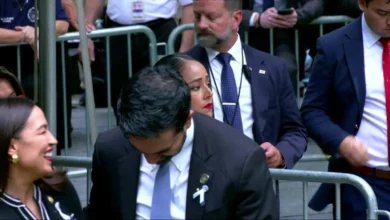
Newly Unsealed FBI Files Shed Light on the 2008 Rod Blagojevich Senate Seat Scandal Involving Barack Obama and Rahm Emanuel

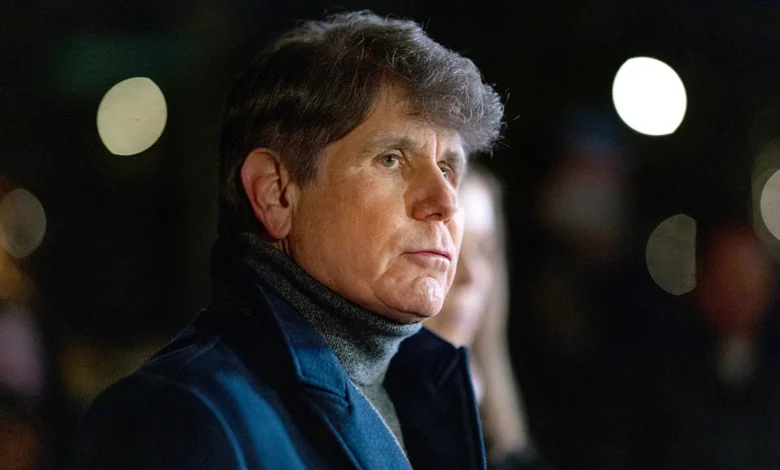
Nearly two decades after a political scandal that shook the state of Illinois and captivated the nation, newly unsealed federal investigative files are offering a fresh look at the high-stakes maneuvering behind the vacancy of Barack Obama’s U.S. Senate seat. Newly obtained and partially redacted FBI FD-302 interview reports—withheld from public view and criminal trial proceedings for over fifteen years—detail the frantic behind-the-scenes communications involving President-elect Barack Obama, incoming White House Chief of Staff Rahm Emanuel, and top aides to then-Governor Rod Blagojevich.
The documents, secured by Fox News, provide granular insight into the final days of the Blagojevich administration before the governor’s dramatic dawn arrest in December 2008. They also lend partial support to Blagojevich’s long-standing claims regarding a potential appointment deal involving Lisa Madigan, while illuminating the internal friction within Obama’s transition team over who should inherit the influential seat.
The Core Controversy and the Lisa Madigan Nexus
For years following his conviction on multiple corruption charges, Rod Blagojevich has steadfastly maintained his innocence regarding allegations that he attempted to sell Obama’s vacant Senate seat to the highest bidder. Serving nearly eight years in federal prison before having his sentence commuted by President Donald Trump in 2020 and receiving a full pardon in 2025, Blagojevich has continually argued that he was on the verge of executing a legitimate political arrangement rather than a criminal transaction.
According to Blagojevich, that arrangement centered on Lisa Madigan, who at the time served as the Illinois Attorney General. More significantly, she is the daughter of Michael Madigan, the extraordinarily powerful and long-serving Speaker of the Illinois House of Representatives. (The elder Madigan has since faced separate federal corruption convictions.) Blagojevich has long asserted that he intended to appoint Lisa Madigan to the U.S. Senate in exchange for her father’s legislative support on critical state matters, specifically a comprehensive health care package and the state budget.
The newly surfaced FBI interview records—documenting conversations agents conducted with Barack Obama on December 18, 2008, and Rahm Emanuel on December 20, 2008—confirm that this exact scenario was actively discussed at the highest levels of the incoming presidential administration.
According to the documents, Emanuel and senior advisor David Axelrod met with U.S. Senator Dick Durbin (D-IL) on December 8, 2008. During that meeting, the trio agreed that Lisa Madigan would be an exceptionally strong and acceptable candidate to fill the vacant seat. Subsequently, Emanuel reached out to Blagojevich’s chief of staff, John Harris, to communicate the perceived merits of appointing Lisa Madigan. Less than twenty-four hours after that outreach, federal agents descended on Blagojevich’s Chicago home, arresting him in what federal prosecutors described as a desperate political corruption crime spree.
A Chronology of the 2008 Senate Vacancy Crisis
To fully understand the weight of the newly unsealed FBI files, it is essential to reexamine the timeline of events that unfolded between November 4, 2008, when Barack Obama was elected the 44th President of the United States, and December 9, 2008, the day of Governor Blagojevich’s arrest.
- November 4, 2008: Barack Obama wins the presidential election, creating an immediate vacancy in his U.S. Senate seat representing Illinois. Under the U.S. Constitution and Illinois law, the sitting governor—Rod Blagojevich—holds the exclusive authority to appoint a successor to serve out the remainder of the term until the next general election.
- Late November 2008: Discussions begin within the Obama transition team regarding preferred successors. Initial preferences point toward Valerie Jarrett, a close personal friend and longtime advisor to Obama. However, internal debate arises over whether Jarrett’s talents are better utilized inside the incoming West Wing.
- December 8, 2008: Rahm Emanuel, David Axelrod, and Senator Dick Durbin meet in Washington, D.C. They reach a consensus that Illinois Attorney General Lisa Madigan would be a strong, viable candidate for the seat. Emanuel subsequently contacts Blagojevich’s chief of staff, John Harris, to discuss the potential appointment.
- December 9, 2008: Federal agents arrest Governor Rod Blagojevich at his Chicago residence at approximately 6:00 a.m. U.S. Attorney for the Northern District of Illinois Patrick Fitzgerald announces the arrest, declaring that authorities intercepted a "political corruption crime spree" involving attempts to auction off the Senate appointment for personal or political gain.
- December 18, 2008: FBI agents interview President-elect Barack Obama regarding his knowledge of contacts between his transition team and the Blagojevich administration.
- December 20, 2008: FBI agents interview incoming White House Chief of Staff Rahm Emanuel regarding his communications with the governor’s office.
- December 30, 2008: Despite his looming legal troubles, Governor Blagojevich appoints former state Attorney General Roland Burris to fill the vacant Senate seat. Burris serves out the term but declines to seek re-election in 2010.
- November 2010: Republican Mark Kirk wins the high-stakes Senate race to secure the seat, holding it until his defeat by Democrat Tammy Duckworth in 2016.
- 2011–2025: Following lengthy legal battles, Blagojevich is convicted, sentenced to 14 years, has his sentence commuted by President Trump in 2020, and ultimately receives a full presidential pardon in February 2025.
Inside the Transition: The Tug-of-War Over Valerie Jarrett
Beyond the Lisa Madigan discussions, the newly unsealed FD-302 documents shed light on competing factions within Obama’s inner circle regarding who should inherit the Senate platform.
Initially, President-elect Obama favored Valerie Jarrett, a foundational pillar of his political network, to take the Senate seat. However, Obama ultimately reversed course early in the deliberation process, concluding that Jarrett was needed by his side in the White House as a senior advisor.
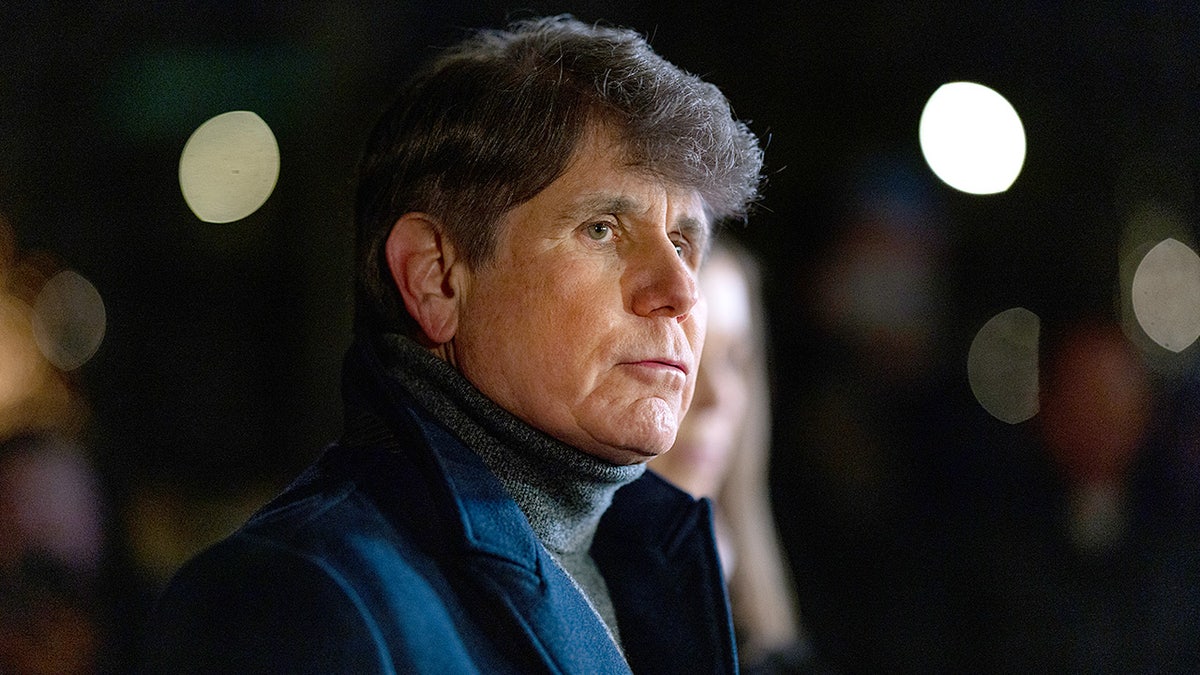
The documents indicate that Rahm Emanuel pushed back against this pivot, advocating instead for Jarrett to take the Senate seat rather than enter the West Wing staff. Emanuel reportedly argued that placing the president-elect’s closest confidante directly on the White House staff would create operational and optical awkwardness.
Reflecting on Emanuel’s maneuvers in light of the newly released records, Blagojevich characterized his former adversary as a cunning and pragmatic political operator. "Rahm’s a crafty, political, crafty, cunning and very effective political operator," Blagojevich remarked. "He was interested in being closer to the king."
Ultimately, Obama remained resolute in his decision regarding Jarrett, telling Emanuel that her place was in the White House and that the matter was closed. With Jarrett out of the running, a wide field of prominent Illinois Democrats emerged for consideration, including Tammy Duckworth, Representative Jan Schakowsky, and Representative Jesse Jackson Jr.—the latter of whom would also eventually face federal corruption charges and a prison sentence in an unrelated matter.
Broader Implications and Reactions
The release of these historical documents has reignited debate over the tactics used by federal prosecutors during the high-profile public corruption crackdowns of the late 2000s. Patrick Fitzgerald, the aggressive U.S. Attorney who prosecuted Blagojevich, maintained at the time that swift intervention was necessary to halt a series of ongoing, brazen shakedowns that included leveraging the Senate seat for campaign contributions, a cabinet post, or high-paying non-profit positions.
However, Blagojevich insists the newly unsealed records validate his defense that routine, hard-nosed political horse-trading—such as negotiating policy concessions in exchange for administrative appointments—was mischaracterized as criminal extortion.
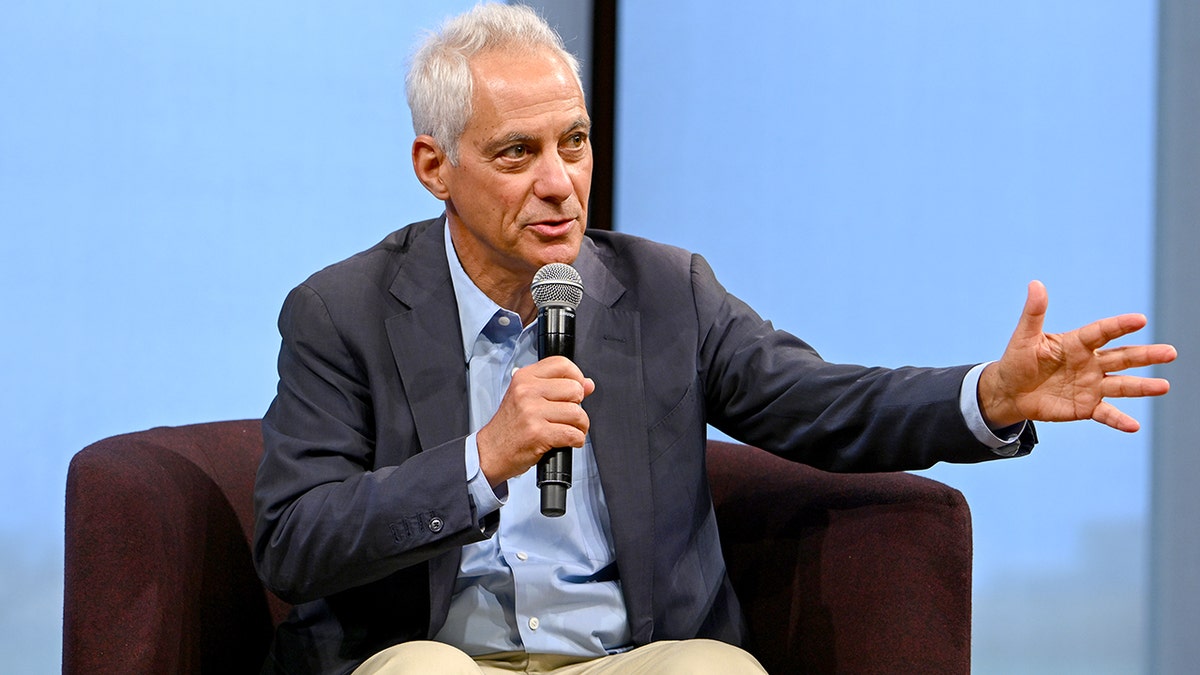
"That just proves the Madigan deal was very much front and center. It was something I was about to do," Blagojevich asserted following the unsealing of the files. "There never was a crime spree that Mr. Fitzgerald, the U.S. Attorney, said he was stopping to justify arresting a sitting governor in his home."
Legal experts note that while the documents confirm the Obama transition team was actively engaging with the Blagojevich administration regarding potential candidates like Lisa Madigan, they do not inherently clear Blagojevich of the separate, more damaging allegations involving explicit demands for personal financial enrichment or tangible political payoffs that formed the core of his criminal conviction.
Fox News reached out to both former President Barack Obama and Rahm Emanuel for comment regarding the unsealed interview notes, but neither official responded prior to publication. As historians and legal scholars continue to parse the redacted files, the documents serve as a stark reminder of the volatile intersection where raw political ambition, backroom deal-making, and federal law enforcement collided in the heart of Illinois politics.