Iran Claims Attacks on Strait of Hormuz Ships Amid Fresh US Strikes, Regional Tensions Mount

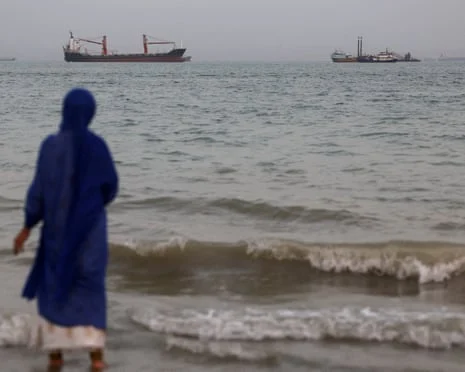
The Middle East is grappling with a rapidly escalating crisis, marked by direct confrontations, proxy conflicts, and complex diplomatic maneuvers across multiple flashpoints. A recent Iranian attack on a tanker in the Strait of Hormuz and an immediate maritime blockade declared by Yemen’s Iran-backed Houthi rebels in the Red Sea have significantly heightened global concerns over vital shipping lanes. These developments unfold amidst a sustained campaign of US airstrikes targeting Iranian interests and infrastructure, now in its tenth consecutive night, and a series of retaliatory attacks by Tehran against US allies and assets in the region.
Escalation in Critical Maritime Chokepoints

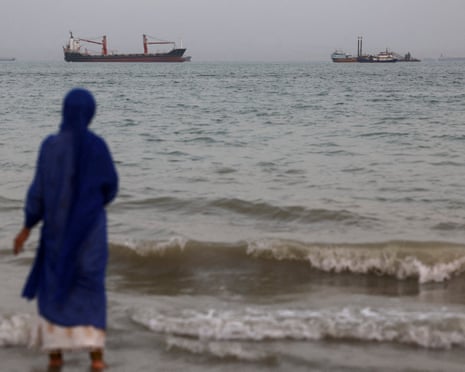
Early on Tuesday, a commercial tanker in the Strait of Hormuz, a waterway critical for global energy supplies, came under attack from Iranian forces, forcing its crew to abandon the vessel. This incident follows two other reported attacks on ships in the same strait on Monday, both also claimed by Iran’s Islamic Revolutionary Guard Corps (IRGC). The Strait of Hormuz is arguably the world’s most important oil transit chokepoint, with approximately 20% of the world’s total petroleum liquids consumption, or roughly 21 million barrels per day, passing through it. Disruptions here send immediate ripples through international energy markets.
Concurrently, Yemen’s Houthi movement, a powerful Iran-backed group, announced an "immediate maritime blockade" of Saudi Arabia in the Red Sea. A Houthi official cited the kingdom’s "unjust blockade on Yemenis for over 10 years" as the justification for this drastic measure. The blockade specifically targets the Bab al-Mandeb strait, located at the southern end of the Red Sea, a narrow passage through which an estimated 12% of global trade, including significant volumes of oil and liquefied natural gas, typically transits. This declaration marks a dangerous escalation, coming just a week after the Houthis and Saudi forces exchanged fire for the first time in years, shattering a fragile period of relative calm. Saudi Arabia promptly responded, stating it would take "all necessary measures to protect its vessels in accordance with international law," signaling a potential for direct naval confrontation in these crucial shipping lanes.
The immediate economic impact was evident, with global oil prices exhibiting volatility. While Brent crude futures softened slightly by 0.4% to $88.87 a barrel and US West Texas Intermediate crude for September delivery held steady at $82.47 a barrel on Tuesday morning, these figures followed a significant surge in the previous session, reaching their highest levels in over a month. This fluctuation underscores the market’s sensitivity to any perceived threat to Middle Eastern oil flows.
US-Iran Direct and Proxy Confrontations
The latest maritime incidents are set against a backdrop of intensifying direct military exchanges between the United States and Iran. The US has carried out its tenth consecutive night of airstrikes, primarily aimed at "degrading" Iran’s ability to attack commercial shipping in the Strait of Hormuz. These strikes, according to the US military’s Central Command, have targeted Iranian military command centers, as well as missile and drone launch sites. Iranian state media, in turn, reported strikes in several parts of the country, including Bandar Abbas, Tabriz, and Bushehr, the latter being home to Iran’s only operational civilian nuclear power plant. The targeting of Bushehr raises particular concerns about potential collateral damage or a broader attack on Iran’s nuclear infrastructure, even if unintentional.
Iran has not been passive in its response. The Iranian army claimed to have launched a drone attack against US military targets at the Sheikh Isa airbase in Bahrain, asserting that the base was being used as a launchpad for attacks against Tehran. Separately, the IRGC claimed to have targeted "infrastructure belonging to the US company Amazon in Bahrain," though there was no official confirmation from Bahraini authorities, and Reuters could not independently verify the incident. Furthermore, the Jordanian military confirmed shooting down five drones launched from Iran overnight, reporting no casualties or damage. Sirens had also sounded in Amman, the capital of Jordan, on Monday evening. This series of retaliatory attacks, also extending to Kuwait, which hosts US forces, highlights Iran’s strategy of targeting countries allied with the US in the Gulf region.
The human cost of this escalating conflict is becoming increasingly apparent. The Pentagon admitted that nearly 100 US service members have been injured over the last two weeks of escalating strikes. While Pentagon spokesperson Sean Parnell stated that the "vast majority" suffered only "minor concussions" and 96% had since returned to duty, these figures still represent a significant number of casualties. Parnell denied accusations, notably from a New York Times report, that the Pentagon was withholding information about troop injuries. This admission comes in the wake of three US soldiers being killed in Iranian strikes in Jordan and Iraq in the past week. The climbing casualty count has ignited a fierce political debate in the United States, with Democrats urging President Donald Trump to "urgently reverse his resumption of the war with Iran," reflecting widespread anxiety over the potential for a larger, more protracted conflict.
Diplomatic Maneuvers Amidst Regional Strife
Amidst the military escalation, diplomatic efforts, though challenging, are underway. Iran’s Interior Minister, Eskandar Momeni, traveled to Pakistan for meetings with key mediators. Pakistan has historically played a crucial role in de-escalation efforts, notably brokering a short-lived interim agreement between the US and Iran last month, which unfortunately proved to be brief. Momeni’s schedule included meetings with Pakistan’s army chief Asim Munir and Prime Minister Shehbaz Sharif, signaling Iran’s willingness to engage diplomatically even while its military activities continue. These closed-door negotiations underscore the international community’s desperate attempts to find an off-ramp from the brink of a wider regional war.
A notable voice of restraint came from Israel. The far-right Israeli Finance Minister, Bezalel Smotrich, publicly stated that Israel has "no interest" in joining US military operations against Iran. Israel has largely maintained a distance from the renewed fighting between the US and Iran in recent weeks, a position reportedly requested by Washington to allow negotiations to proceed after the April ceasefire. Smotrich’s comments, reported by the Israeli newspaper Haaretz, emphasized this strategic neutrality: "The current situation, in which there is a limited conflict between Iran and the United States, is the right and the best one for us. We’re not looking to push ourselves in." This stance suggests a calculated effort by Israel to avoid broadening the conflict, despite its deep-seated rivalry with Iran.
Gaza’s Evolving Landscape: A New Barrier
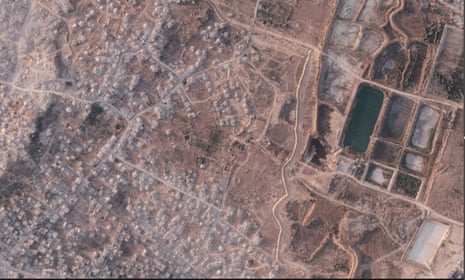
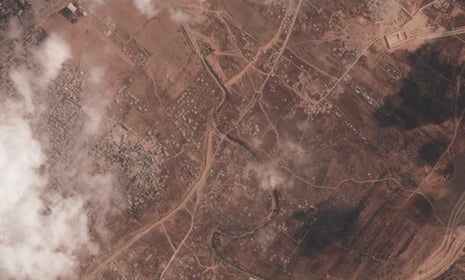
Further compounding the regional complexities, new satellite imagery analyzed by the Associated Press reveals that the Israel Defense Forces (IDF) have constructed a substantial 14-mile (23km) long earthen barrier within the Gaza Strip. This barrier effectively separates a significant portion of the Palestinian territory occupied by Israel from the remaining areas of the strip. The imagery shows the barrier cutting through central Gaza, including areas where Palestinian communities have been extensively demolished by the IDF. Measuring over 23 kilometers, this new structure covers more than half the length of the Gaza Strip, which is approximately 40 kilometers (25 miles) long and 11 kilometers (7 miles) wide.

The construction is not confined to one area. A section in southern Gaza, specifically, was extended by over 2 kilometers (1.2 miles) in just two weeks in July, from 500 meters (0.3 miles) on July 1 to 2.4 kilometers (1.5 miles) by July 15. This particular extension serves to splice the Israel-controlled ruins of Rafah from al-Mawasi, an area that has become home to some of the largest Palestinian tent camps for displaced persons. The AP reported that if construction continues in its current direction, this section will eventually connect with a nearly unbroken 17-kilometer (10-mile) stretch of the barrier that runs from the southern city of Khan Younis to near Gaza City in the north.
The IDF confirmed to the Associated Press that it is indeed building a physical barrier in the vicinity of the "yellow line," which designates the boundary of Israeli-occupied land within Gaza. The military justified its actions by stating that it has developed a "security zone" around this line, equipped with advanced intelligence and technological assets. The IDF explicitly stated that the barrier’s primary purpose is to "prevent infiltration and protect Israeli troops and Israeli communities near Gaza." While the IDF declined to provide specific details on the barrier’s full intended route or its ultimate length, its construction raises significant humanitarian concerns. Critics argue that further partitioning Gaza will exacerbate the already dire humanitarian situation, complicate aid delivery, and potentially lead to a more permanent fragmentation of the Palestinian territory, impacting the lives and movement of hundreds of thousands of displaced individuals.
De-escalation Efforts in Southern Lebanon
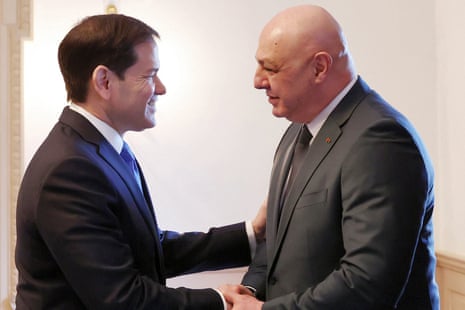
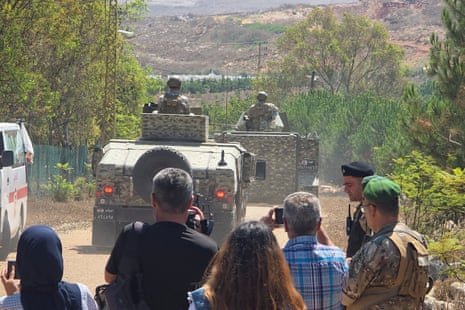
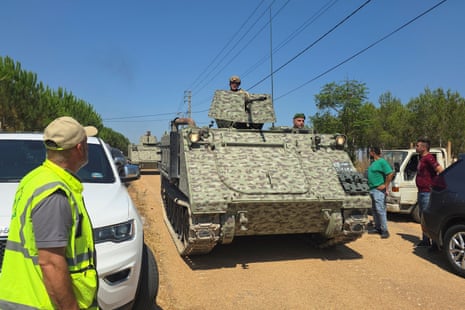
In a contrasting development offering a sliver of hope for localized de-escalation, Lebanon’s army has initiated the deployment of troops to Zawtar al-Gharbiyeh, a southern Lebanese village. This move, confirmed by Reuters citing a security official and later by the Lebanese army itself, is part of a "pilot zone program" established under a US-brokered framework agreement between Lebanon and Israel. The US State Department announced yesterday that two other villages, Froun and Srifa, will also trial the implementation of this program.
The framework agreement, signed by Lebanon, Israel, and the US on June 26, outlines a phased withdrawal of the Israeli military from areas it currently occupies in southern Lebanon. In exchange, security responsibilities for these areas will be handed over to the Lebanese armed forces, which are also tasked with overseeing the disarmament of Hezbollah, the powerful Iran-backed Shiite militant group. Images circulating show Lebanese soldiers and military tanks entering Zawtar al-Gharbiyeh, with local residents observing the deployment. The Lebanese army command issued a statement urging citizens to avoid the town until the security situation stabilizes and to adhere to the instructions of the deployed military units, prioritizing public safety during this transition.
However, the path to full implementation remains fraught with challenges. The agreement notably lacks a clear timeline for the withdrawal of Israeli troops, which could become a point of contention. More critically, Hezbollah has openly rejected the plan, insisting that any decisions regarding Lebanon’s future should be intrinsically linked to the broader, ongoing negotiations between the United States and Iran. This stance by Hezbollah highlights the deep regional interconnections of these conflicts and suggests that a purely localized de-escalation might be difficult to achieve without addressing the wider geopolitical chessboard.
Despite Hezbollah’s objections, the high-level diplomatic engagement continues. Lebanon’s President, Joseph Aoun, is scheduled to meet with US President Donald Trump today, marking the culmination of a four-day visit to Washington. This meeting is particularly significant as Aoun, elected in January 2025, is the first Lebanese head of state in nearly two decades to visit the White House. He previously met with US Secretary of State Marco Rubio on Sunday. These discussions, occurring concurrently with the regional military tensions, underscore the US’s attempt to stabilize at least one front in the complex Middle East crisis.
Broader Implications and Outlook
The current concatenation of events paints a picture of profound instability across the Middle East. The direct military exchanges between the US and Iran, coupled with proxy actions in the Red Sea, signal a dangerous departure from previous periods of indirect confrontation. The economic implications of disrupted shipping in key chokepoints like the Strait of Hormuz and Bab al-Mandeb are severe, threatening global trade and energy markets. Politically, the rising US casualty count intensifies domestic pressure on the Trump administration, while the diverse responses from regional actors like Israel and Pakistan demonstrate the complex web of alliances and rivalries.
The construction of a new barrier in Gaza, regardless of its stated security intentions, further solidifies the fragmentation of the Palestinian territory and raises pressing humanitarian questions. Simultaneously, efforts to de-escalate tensions in southern Lebanon, though fragile, represent a potential model for managing other regional conflicts, provided the interests of all key players, including Hezbollah and its Iranian patrons, can be adequately addressed. The absence of a clear path to a comprehensive diplomatic resolution for the overarching US-Iran conflict suggests that the region may continue to experience a volatile mix of military action, economic disruption, and intermittent diplomatic overtures for the foreseeable future. The coming days will likely determine whether the current escalations can be contained or if they will spiral into a broader, more devastating regional conflagration.
Related posts: