Tag Red Flag Warnings

Red Flag Warnings: Understanding Wildfire Risk and Public Safety
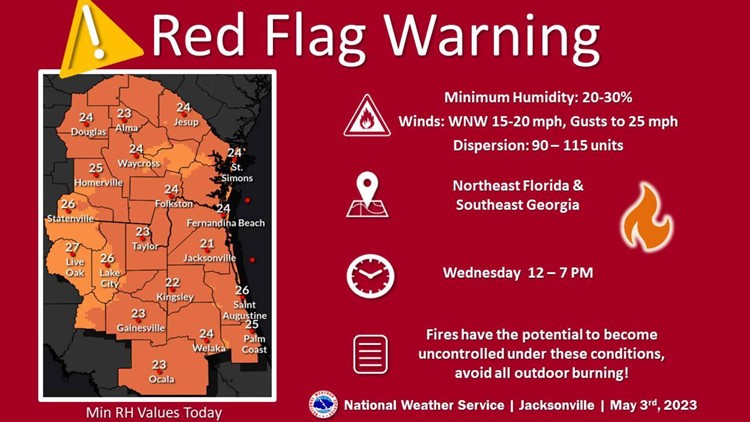
Red Flag Warnings are crucial alerts issued by meteorologists and fire management agencies to signal a period of critical fire weather. These warnings are not simply predictions of fire; they represent conditions that are highly conducive to the rapid and extreme spread of wildfires. Understanding the components of a Red Flag Warning, their implications, and how to respond is paramount for public safety, especially in fire-prone regions. The primary drivers behind a Red Flag Warning are a combination of low humidity, high winds, and dry fuels. Low relative humidity means that vegetation, from the smallest grass blades to the largest trees, has lost a significant amount of its moisture content, making it far more flammable. When humidity levels drop below a certain threshold, typically 15-20%, the risk of ignition and rapid fire spread increases dramatically. This desiccation process is exacerbated by other weather factors.
High winds are another critical component of Red Flag Warnings. Winds not only supply oxygen to a fire, intensifying its combustion, but they also serve as a powerful tool for its propagation. Strong gusts can carry embers, or “firebrands,” long distances, igniting new fires ahead of the main blaze. This process, known as spotting, can cause a fire to spread exponentially and make containment incredibly challenging. The direction and speed of the wind are therefore closely monitored when assessing fire weather. The third, and equally important, factor is the condition of the fuels. Dry vegetation, whether it’s dead grass, leaf litter, or drought-stricken trees and shrubs, acts as the fuel for wildfires. Even with high winds and low humidity, if the available fuels are not sufficiently dry, the fire’s behavior will be less extreme. However, during periods designated as Red Flag Warnings, it is assumed that fuels are sufficiently dry to support rapid fire growth. Fire management agencies often use fuel moisture models and on-the-ground assessments to determine the flammability of vegetation.
The National Weather Service (NWS) in the United States, in collaboration with local fire weather forecasters and land management agencies, is responsible for issuing Red Flag Warnings. These warnings are typically issued for a specific geographical area and for a defined period, often 12 to 48 hours. The criteria for issuing a Red Flag Warning can vary slightly by region, depending on the local climate, vegetation types, and historical fire behavior. However, the core elements remain consistent: a significant increase in fire danger due to the combination of low humidity, strong winds, and dry fuels. These warnings are disseminated through various channels, including the NWS website, local news media, radio broadcasts, and increasingly, through social media platforms and mobile alerts. The goal is to reach as many people as possible in the affected areas to ensure they are aware of the elevated risk.
The implications of a Red Flag Warning are significant and demand immediate action from individuals and communities. During a Red Flag Warning, most outdoor activities that could spark a fire are strongly discouraged or prohibited. This includes, but is not limited to, open burning, campfires, discarding cigarettes improperly, and the use of any equipment that could generate sparks, such as chainsaws or welding equipment, without extreme caution and proper fire suppression resources on hand. Many local jurisdictions will implement fire restrictions, such as burn bans, during these periods. These restrictions are enforced by law enforcement and fire departments, and violations can result in substantial fines. The primary objective of these restrictions is to prevent human-caused ignitions, as these are often the most preventable sources of wildfires, particularly during critical weather events.
Understanding the specific components that trigger a Red Flag Warning is essential for effective risk mitigation. The threshold for low relative humidity is a primary concern. In many areas, this threshold is set at 15% or lower. When the air becomes this dry, even the smallest spark can ignite receptive fuels. The duration of this low humidity is also a factor; sustained periods of dryness are more dangerous than brief dips. High wind speeds are another critical factor, typically above 20-25 mph, with gusts potentially much higher. These winds not only fuel existing fires but can also carry embers for miles, starting new ignitions and creating a highly unpredictable fire scenario. The combination of these factors creates an environment where wildfires can spread with astonishing speed and intensity, often outpacing the efforts of firefighters.
The concept of "critical fire weather" is central to the issuance of Red Flag Warnings. This term encompasses the confluence of meteorological conditions that maximize the likelihood of wildfire ignition and spread. These conditions are often cyclical, influenced by larger weather patterns such as high-pressure systems, which can bring dry air and strong winds. Conversely, the passage of a cold front can also bring drier air and increased wind speeds, leading to elevated fire danger. Fire weather forecasters meticulously analyze various meteorological data, including surface observations, satellite imagery, and numerical weather prediction models, to anticipate these critical fire weather events. They consider not only current conditions but also the forecast for the next 12 to 48 hours.
The "fuels" component of Red Flag Warnings refers to the availability and condition of burnable material. This includes everything from fine, flashy fuels like dry grasses and pine needles to heavier fuels like dead shrubs, logs, and standing dead trees. The moisture content of these fuels is a critical determinant of their flammability. During extended dry periods, the moisture content of all fuel types decreases significantly. The National Fire Danger Rating System (NFDRS) and other fire danger rating systems utilize sophisticated models to estimate fuel moisture content based on weather data and fuel type. When these models indicate critically low fuel moisture levels, it contributes to the determination that conditions are ripe for a Red Flag Warning.
The impact of Red Flag Warnings extends beyond immediate fire prevention. They can lead to significant disruptions in daily life and economic activities. Closures of parks, campgrounds, and forest areas are common. Restrictions on industrial activities, such as logging or construction in forested areas, may be imposed. Emergency services are placed on higher alert, and resources are often pre-positioned to respond to potential ignitions. The economic consequences can include lost revenue for businesses dependent on outdoor recreation and potential damage to property and infrastructure if wildfires do occur.
Effective communication and public awareness campaigns are vital to the success of Red Flag Warnings. Educating the public about what these warnings mean and what actions they should take is crucial. This includes understanding the specific actions to avoid, such as careless use of fire, and knowing how to report suspicious smoke or fire quickly and accurately. The role of social media and emergency alert systems in disseminating this information has become increasingly important, allowing for rapid and widespread notification. Partnerships between fire agencies, weather services, and local communities are essential for developing comprehensive and effective communication strategies.
Beyond the immediate response during a Red Flag Warning, understanding the broader context of wildfire management is important. Red Flag Warnings are a tool within a larger framework of wildfire prevention, preparedness, and suppression. This framework includes long-term strategies such as forest thinning, prescribed burns to reduce fuel loads, and the development of defensible space around homes and communities in fire-prone areas. These proactive measures aim to reduce the overall risk and impact of wildfires, making periods of critical fire weather less catastrophic.
The science behind Red Flag Warnings is complex and relies on continuous monitoring and sophisticated modeling. Meteorologists track a variety of atmospheric variables, including temperature, humidity, wind speed and direction, and precipitation. They also consider factors such as the amount of dead and dry vegetation and its moisture content. This data is fed into complex computer models that predict fire weather potential. The determination of a Red Flag Warning is a collaborative effort, involving input from meteorologists, fire behavior analysts, and land managers.
The "red flag" itself is a visual metaphor for danger, and the warning serves as a clear signal to the public to exercise extreme caution. It signifies a period where human-caused fires are particularly likely to start and spread rapidly, and where natural ignitions, such as lightning, can also have devastating consequences. The potential for rapid fire growth means that fires can quickly become unmanageable, threatening lives, homes, and natural resources. This underscores the importance of heeding these warnings and taking all necessary precautions.
In conclusion, Red Flag Warnings are a critical component of wildfire management and public safety. They are issued when a combination of low humidity, high winds, and dry fuels creates an environment highly conducive to extreme wildfire behavior. Understanding the criteria for these warnings, their implications for outdoor activities, and the recommended safety measures is essential for reducing the risk of human-caused ignitions and mitigating the devastating impact of wildfires. Effective communication, public education, and collaborative efforts between fire agencies, meteorologists, and communities are paramount to ensuring that these warnings are understood and acted upon.