Federal Funding for Oakland Coal Terminal Ignites New Legal and Environmental Battles Amid National Energy Policy Shift

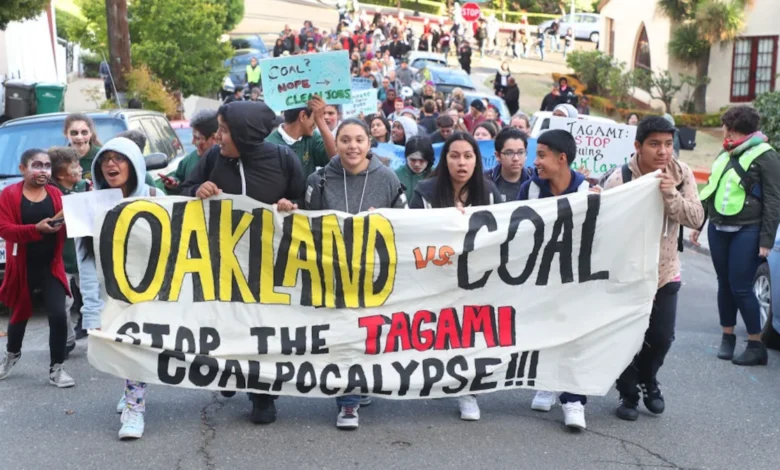
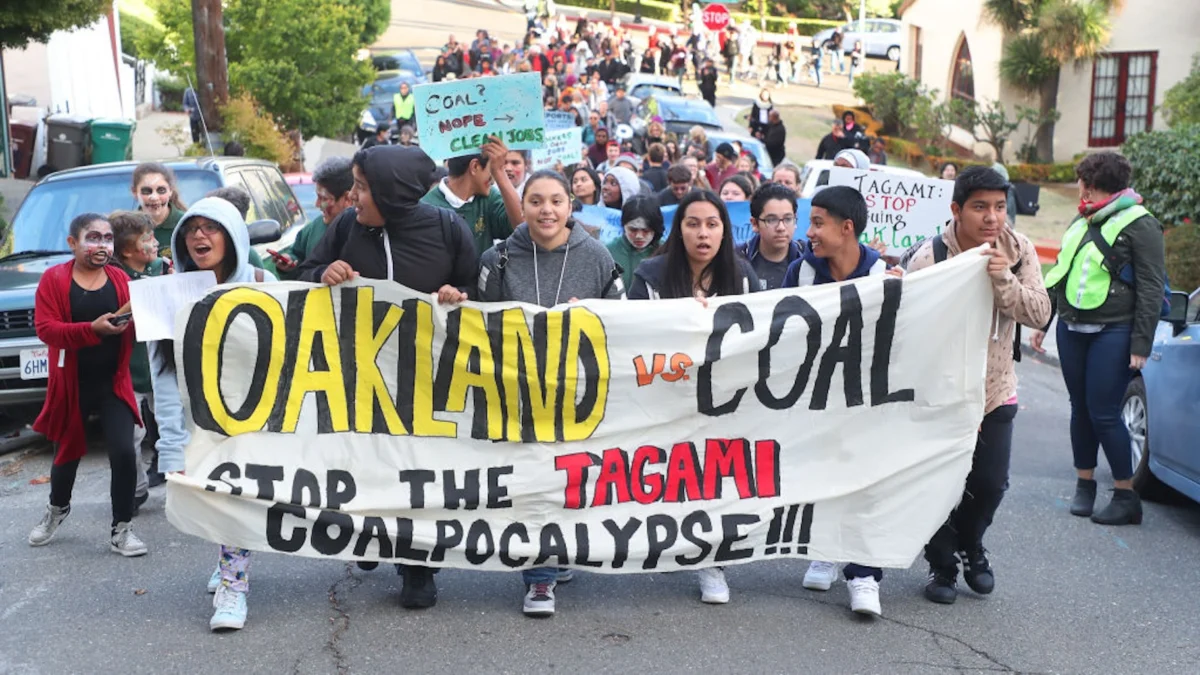
The long-standing conflict over the construction of a massive export terminal in Oakland, California, has entered a volatile new chapter following a significant infusion of federal support. The U.S. Department of Energy (DOE) recently announced it would provide up to $75 million in funding to facilitate the completion of the terminal, a move that directly contradicts local environmental policies and revitalizes a project that many observers considered to be on the brink of financial collapse. This federal intervention, part of a broader $400 million package aimed at bolstering the domestic coal industry, utilizes the Defense Production Act to expand coal capacity, signaling a sharp escalation in the tension between federal energy mandates and municipal self-governance.
For more than a decade, the proposed terminal at the former Oakland Army Base has been the centerpiece of a complex legal and political saga involving real estate developers, city officials, and environmental advocates. What began as a plan for a multi-commodity logistics hub has transformed into a high-stakes battle over the future of fossil fuel infrastructure in one of the most progressive regions of the United States. The recent federal funding serves as a "life preserver," according to critics, for a project that has been mired in bankruptcy proceedings and exhaustive litigation across three presidential administrations.
The Genesis of the Oakland Bulk and Oversized Terminal
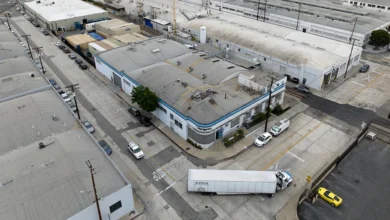
The project’s origins date back to 2013, when the City of Oakland entered into a development agreement with California Capital & Investment Group (CCIG), led by prominent local investor Phil Tagami. The plan was to redevelop a portion of the decommissioned Oakland Army Base on the city’s west side into a modern "bulk and oversized terminal." At the time of the initial negotiations, Tagami and his partners assured the public and city leaders that the facility would be an all-purpose terminal designed to recapture shipping traffic lost to other West Coast ports.
However, the nature of the project became a point of intense public scrutiny in 2015. A report by the Salt Lake Tribune revealed that the developers had secretly negotiated a deal with four Utah counties to use the terminal as a primary conduit for exporting coal from Utah’s mines to Asian markets. This revelation sparked immediate and widespread backlash in Oakland, a city with a long history of environmental activism and a community in West Oakland already burdened by some of the highest rates of air pollution and asthma in the state.
The discovery of the coal deal led the Oakland City Council to conduct a series of public hearings regarding the health and safety impacts of coal dust. In 2016, the council passed a landmark ordinance banning the storage and handling of coal and coke within city limits. This legislative move effectively halted the project’s original business model and set the stage for a decade of legal warfare.
A Decade of Litigation: The Legal Chronology
The legal battle over the Oakland terminal has centered on the interpretation of the 2013 development agreement. The developers argued that the agreement provided them with "regulatory certainty," essentially freezing the city’s ability to apply new regulations to the project for the duration of the contract.
- The 2016 Ordinance and Initial Lawsuit: Following the city’s ban on coal, the developers sued in federal court, alleging a breach of contract. They argued that the city’s health and safety concerns were a pretext for political opposition.
- The 2018 Federal Ruling: U.S. District Judge Vince Chhabria ruled in favor of the developers. While the judge did not dismiss the potential dangers of coal dust, he found that the city’s administrative record was "riddled with inaccuracies" and failed to provide substantial evidence that the terminal posed a "substantial danger" to the public—the specific legal threshold required to override the development agreement.
- The Lease Termination Battle: Unable to proceed with coal but emboldened by the court ruling, the project remained stagnant. In 2018, the City of Oakland moved to terminate the developers’ lease, citing a failure to meet construction milestones. This triggered a second wave of litigation in state court.
- Bankruptcy and Damage Claims: Insight Terminal Solutions (ITS), the company slated to operate the terminal, eventually filed for Chapter 11 bankruptcy in Kentucky. During these proceedings, the firm sought over $650 million in damages from the City of Oakland, blaming the city’s legal maneuvers for its insolvency. While a bankruptcy judge initially supported these claims, a federal district court vacated the ruling in late 2023, providing a temporary financial reprieve for the city.
Federal Intervention and the Defense Production Act
The recent announcement by the U.S. Department of Energy represents a dramatic shift in the project’s momentum. By invoking the Defense Production Act—a Korean War-era law typically reserved for national emergencies—the federal government is positioning coal export capacity as a matter of national security and "energy dominance."
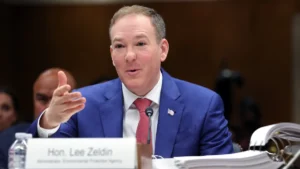
Energy Secretary Chris Wright defended the $75 million allocation, stating that limited export capacity on the West Coast has long constrained the United States’ ability to move energy resources to global markets. The administration’s perspective is that American coal remains a vital commodity for international partners, particularly in the Indo-Pacific region, where energy demand continues to grow despite the global transition toward renewables.
This federal support arrives at a time when the domestic coal industry is facing an unprecedented decline. According to data from the U.S. Energy Information Administration (EIA), coal’s share of U.S. electricity generation has plummeted from roughly 50% in 2005 to less than 15% in 2023. For the first time in history, renewable energy sources like solar and wind have begun to consistently outperform coal in the national power grid. Critics argue that the DOE’s funding is an attempt to artificially sustain an industry that is no longer economically viable on its own.
Environmental and Public Health Implications
The prospect of coal trains moving through West Oakland remains a primary concern for local residents and environmental groups. West Oakland is a community that already faces significant environmental injustices, with residents experiencing disproportionately high levels of diesel particulate matter from the nearby Port of Oakland and adjacent freeways.
The San Francisco Baykeeper and Earthjustice have been at the forefront of the opposition, arguing that coal dust—which contains arsenic, lead, and mercury—poses a severe respiratory threat. Ben Eichenberg, an attorney for San Francisco Baykeeper, noted that the terminal project was "drowning" before the federal government provided a "life preserver." Environmental advocates contend that the federal government is disregarding the health of local citizens to satisfy the interests of out-of-state mining companies.
Supporting data from health impact assessments suggests that even with "covered" rail cars, significant amounts of coal dust can escape during transit and handling. Fine particulate matter (PM2.5) is linked to aggravated asthma, decreased lung function, and increased mortality from heart and lung diseases. In a city like Oakland, which has committed to aggressive climate goals, the infrastructure for a "dirty" fuel source is seen by many as a step backward.
Economic Viability and Future Permitting Hurdles
Despite the $75 million federal grant, the completion of the Oakland terminal is far from guaranteed. The project must still navigate a gauntlet of state and regional regulatory requirements that the federal government cannot easily bypass.
The Bay Area Air Quality Management District (BAAQMD) holds significant authority over the facility’s air quality permits. Local advocates have already begun campaigning for the most stringent possible regulations, which could make the operation of a coal terminal prohibitively expensive or technically unfeasible. Furthermore, the State of California has historically used its authority under the Clean Water Act to scrutinize and block fossil fuel infrastructure projects that threaten coastal and bay ecosystems.
Economically, the project faces headwinds beyond the legal fees. The global coal market is notoriously volatile. While demand remains high in parts of Asia, the long-term trend is toward decarbonization. If the terminal is completed but international demand shifts more rapidly than anticipated, the facility could become a "stranded asset," leaving the city and federal taxpayers with the burden of an underutilized and environmentally hazardous site.
Conclusion: A Precedent for Federal-Local Conflict
The Oakland coal terminal saga is a microcosm of the broader national debate over energy policy, local autonomy, and environmental justice. The federal government’s decision to use the Defense Production Act to fund a project explicitly opposed by the host city sets a provocative precedent. It suggests that in the pursuit of "energy dominance," the federal executive branch is willing to override the stated health and safety priorities of municipal governments.
For the residents of Oakland, the fight is far from over. As the permitting process moves forward, the focus will shift from the courtrooms of Kentucky and San Francisco to the regulatory offices of the Bay Area. Whether the terminal eventually ships coal or remains a stalled relic of the fossil fuel era will depend on the resilience of local opposition and the evolving economic realities of the global energy market. For now, the $75 million lifeline ensures that the firestorm of controversy surrounding Phil Tagami’s decade-old proposal will continue to burn for the foreseeable future.