The Global Energy Pivot: How Rising Gas Prices and Middle East Conflict are Reshaping Transportation and Accelerating Demand Destruction


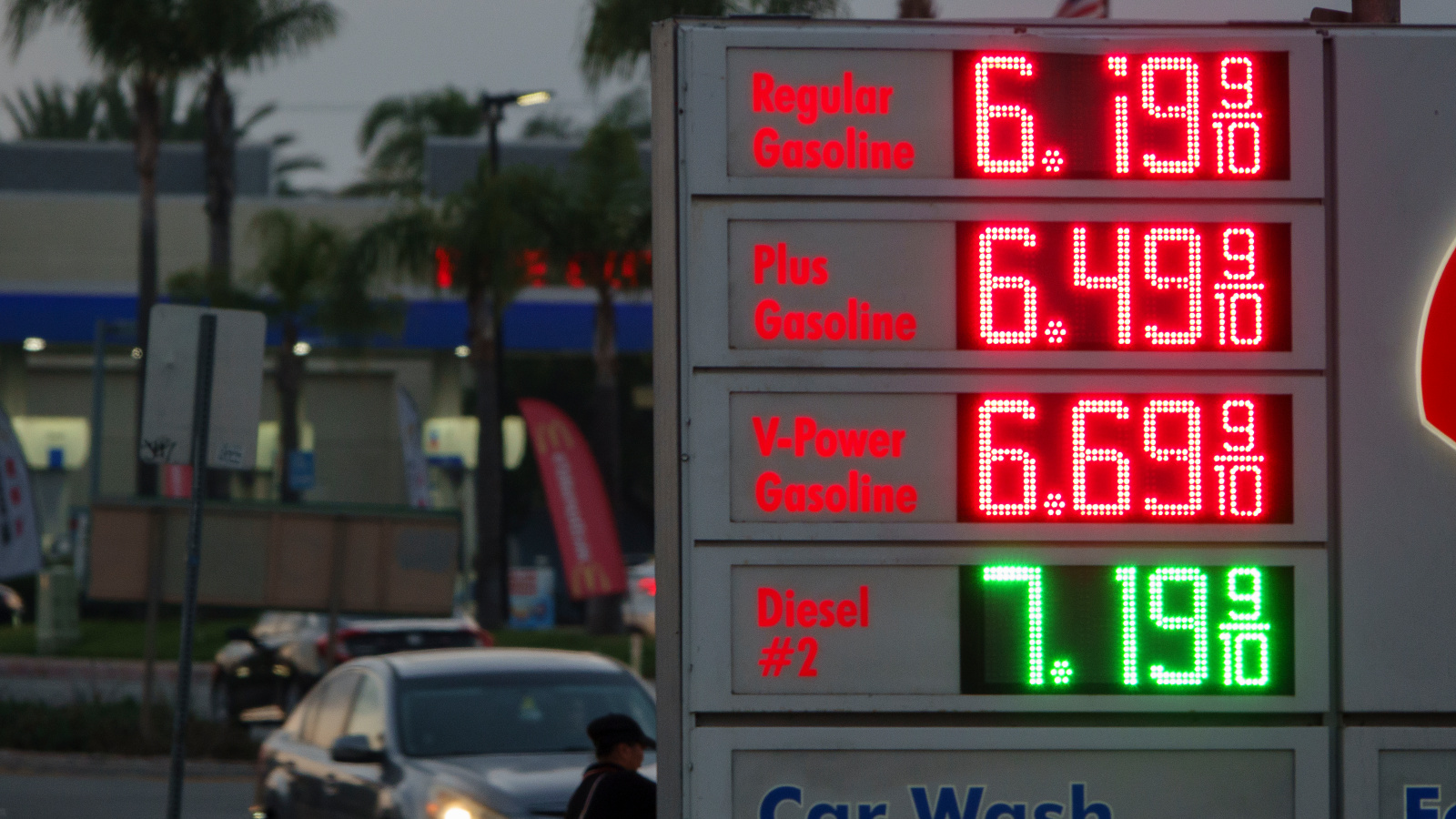
The United States energy landscape is currently navigating what experts describe as the most significant oil supply disruption in modern history, with the average price of gasoline surging past $4.50 a gallon. This 40 percent increase since the outbreak of hostilities in Iran in late February has triggered a cascade of economic and behavioral shifts, forcing millions of Americans to reconsider their reliance on the internal combustion engine. As the nation grapples with a $45 billion spike in fuel costs compared to previous years, the crisis is acting as a catalyst for a broader, potentially permanent transition toward public transit, electric mobility, and renewable energy.
The Immediate Economic Impact on American Households
The financial strain of the current energy crisis is being felt acutely across the American demographic spectrum. According to a joint survey conducted in late April by ABC News, The Washington Post, and Ipsos, approximately 44 percent of U.S. adults have reported cutting back on driving specifically due to high fuel costs. This "price at the pump" anxiety is not merely a psychological burden; it represents a tangible rupture in the national economy. Estimates suggest that U.S. drivers are collectively paying $45 billion more for gasoline and diesel than they did during the same period last year, diverting capital from other sectors of consumer spending.
While the United States remains a nation largely built around highway infrastructure and suburban sprawl, the current price shock has exposed the vulnerabilities of car-centric urban planning. For low- and middle-income families, the surge to $4.50 a gallon is more than an inconvenience; it is a budgetary crisis that has necessitated immediate lifestyle alterations. These changes range from consolidating errands and carpooling to more drastic measures like seeking remote work opportunities to eliminate the daily commute entirely.
A Resurgence in Public Transit and Alternative Mobility
As driving becomes prohibitively expensive, Americans are turning to public infrastructure in numbers not seen in years. Municipalities from Cincinnati to Los Angeles have reported significant upticks in ridership. In Southern California, Metrolink has seen a surge in commuters seeking refuge from the high costs of navigating the region’s infamous freeway system. Similarly, national rail provider Amtrak has reported ridership figures that exceed typical seasonal averages, suggesting a shift in long-distance travel preferences.
The shift is not limited to heavy rail and buses. The micro-mobility sector—comprising electric bikes and shared scooters—has seen a corresponding boom. Companies like VeoRide have noted that a substantial portion of their new user base is explicitly citing gas prices as the primary reason for switching to two-wheeled transport. Furthermore, the automotive market itself is reflecting this pivot; sales of used electric vehicles (EVs) and hybrid models have grown substantially over the last quarter. For many, the current crisis has served as the final push needed to transition away from traditional gasoline-powered vehicles, viewing the upfront cost of an EV as a long-term hedge against volatile oil markets.
The Concept of Demand Destruction
Economists are increasingly pointing to a phenomenon known as "demand destruction" to describe the current global situation. Unlike a temporary dip in consumption, demand destruction refers to a structural shift where the source of demand is permanently altered or eliminated. Kenneth Gillingham, a professor of environmental and energy economics at Yale University, notes that the term is most accurate when applied to long-term transitions.
“To me, the term ‘demand destruction’ really only makes sense if you’re talking about it as a longer-term thing,” Gillingham explained. “It’s truly destroyed the source of demand.”
The International Energy Agency (IEA) has already begun to quantify this trend, forecasting a contraction of 420,000 barrels of oil per day this year. This contraction is driven by a combination of high prices, behavioral changes, and the rapid adoption of more efficient technologies. While the U.S. has the relative wealth to absorb higher costs longer than many other nations, the strain is nonetheless pushing the domestic market toward a tipping point where oil demand may never return to its pre-crisis peaks.
Asia: The Epicenter of the Global Shift
While the American response is significant, experts believe the true future of global oil demand will be decided in Asia. Prior to the current conflict, Asia was projected to account for nearly all the world’s growth in oil and gas consumption over the next several decades. However, the closure of the Strait of Hormuz—through which roughly 20 percent of the world’s oil shipments pass—has forced Asian economies to rethink their energy security.
Daan Walter, who leads strategy research at the energy think tank Ember, suggests that we may be living through the "peak year" of oil. “If Asia turns around and says, ‘No, we’re not going to grow with fossil fuels, we are going to grow with electrotech,’ that means fossil fuels will peak sooner than we think,” Walter said.
The evidence of this pivot is already surfacing. In Japan, demand for naphtha—a key petrochemical used in plastics—has fallen by 25 percent year-over-year as factories scale back production. In South Korea, gasoline demand has dropped by 5 percent. South Korean President Lee Jae Myung has responded to the crisis by calling for an aggressive shift to renewable energy, stating that the nation’s future is at risk if it continues to rely on the "unreliable" fossil fuel market.
Perhaps most tellingly, China’s exports of solar panels, batteries, and electric vehicles surged in the month following the start of the conflict. This suggests that while the West is dealing with the crisis through conservation, the East is accelerating a manufacturing and infrastructure overhaul aimed at total electrification.
Chronology of a Crisis: From Ukraine to Iran
To understand the depth of the current shift, it is necessary to view it as the second major energy shock of the 2020s. The 2022 Russian invasion of Ukraine initially rattled global markets, but the current conflict involving Iran has proved even more disruptive.
- Late February 2026: Conflict begins, immediately impacting shipping routes in the Middle East.
- March 2026: The Strait of Hormuz is partially obstructed; oil prices begin their climb toward $100+ per barrel.
- April 2026: U.S. gas prices hit a national average of $4.50. Consumer surveys show nearly half of the population is altering driving habits.
- May 2026: The IEA confirms global demand destruction is underway. Nations like Pakistan and the Philippines implement four-day work weeks to conserve fuel.
This "twin fossil shock" mirrors the oil crises of the 1970s, which led to the first major push for fuel efficiency and nuclear energy. However, the 2020s offer a different technological landscape. Unlike the 70s, there are now scalable, cost-competitive alternatives in the form of wind, solar, and advanced battery storage.
Behavioral Science and the Permanence of Change
A critical question for policymakers and economists is whether these new habits will stick once the conflict ends and prices eventually stabilize. President Donald Trump has asserted that oil prices will "drop like a rock" once the war concludes, but energy analysts warn that the return to "normal" may be slow. Wells that have been capped and refineries that have been damaged or shuttered take months, if not years, to return to full capacity.
Susan Handy, a professor of environmental science and policy at the University of California, Davis, argues that shocks—while painful—are often the only way to break entrenched behaviors. “A shock like the big increase in gas prices, or an earthquake that closes a freeway, is really helpful in getting people to change behavior,” Handy said.
She notes that while many people will return to their cars once prices drop, a significant percentage will have discovered the benefits of alternatives. Whether it is the realization that a commute by train allows for reading and relaxation, or that an e-bike is faster for short urban trips, these "forced trials" of alternative transportation often result in permanent shifts for a portion of the population.
The Broader Implications: A Green Silver Lining?
The current geopolitical and economic turmoil presents a grim reality for the global economy, yet it also offers a "silver lining" for climate goals. The acceleration of "electrotech" and the move away from import-dependent fossil fuels are aligning national security interests with environmental imperatives.
The report from Ember highlights that the "import dependency" of fossil fuels is now viewed by many governments as an unacceptable risk. By transitioning to domestic renewable energy and electric transportation, countries can insulate themselves from the volatility of Middle Eastern politics and the disruptions of global shipping lanes.
As the world navigates this period of high prices and restricted supply, the legacy of the 2026 oil crisis may not be the record-high prices at the pump, but rather the moment the global community finally decoupled economic growth from oil consumption. While the path back to a "stable" fossil fuel system remains uncertain, the path toward a diversified, electrified energy future has never been clearer. For millions of drivers currently opting for the bus or an e-bike, the "temporary" adjustments of today may very well become the standard lifestyle of tomorrow.