Canberra’s political landscape faced an intense parliamentary sitting week marked by a collision of fiscal anxieties, foreign policy debates, and social media reform proposals. As inflation figures continue to squeeze household budgets, leading figures from across the political spectrum have traded blows over the root causes of the economic strain and the appropriate policy responses.
At the center of the economic debate is the lingering burden of cost-of-living pressures. Recent data indicating a headline inflation rate of 4.3% through September has stoked widespread fears of an impending interest rate hike by the Reserve Bank of Australia. These concerns have amplified political friction, with the opposition arguing that government overspending is fueling the fire, while the administration points to persistent international shocks.

Alongside economic policy, Parliament has grappled with contentious debates regarding Australia’s international alliances, domestic gas security, a proposed free trade agreement with the European Union, and major regulatory crackdowns on social media algorithms. Meanwhile, state-level politics in Victoria has introduced ambitious environmental proposals, further broadening the scope of public discourse.
Fiscal Policy Clashes Over Inflation and Interest Rates
The specter of rising interest rates has prompted sharp warnings from the federal opposition. Liberal MP Andrew Hastie voiced strong concerns on behalf of Australian mortgage holders and families, characterizing inflation as a pernicious "silent tax" that continuously erodes household wealth. Hastie argued that the most effective antidote available to the federal government is aggressive spending restraint and rigorous fiscal management to cool the domestic economy.
The federal government, however, has defended its economic stewardship by highlighting the profound impact of external pressures. Assistant Treasurer Daniel Mulino addressed the latest consumer price index data, emphasizing that Australia’s economic trajectory cannot be viewed in isolation from global events. Mulino pointed to prolonged and severe conflict in the Middle East—specifically involving Iran—which has driven international energy prices higher than previously forecasted, creating inflationary ripples across advanced economies worldwide.
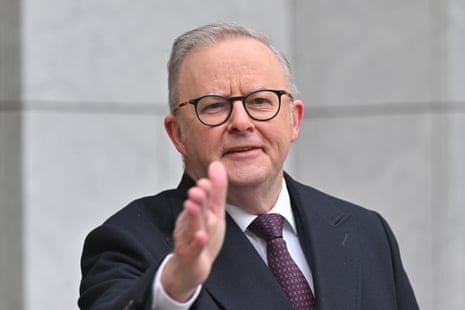
When pressed on why other nations have managed to suppress inflation more effectively, Mulino maintained that Australia’s robust labor market outcomes and employment resilience set it apart, arguing that the government’s balanced approach avoids the severe employment shocks seen in other jurisdictions. Nevertheless, the ongoing debate underscores the delicate balancing act facing Canberra as it attempts to manage domestic demand without stifling broader economic activity.
Trade Policy and the European Union Agreement
Trade policy emerged as another major flashpoint in Parliament, with Prime Minister Anthony Albanese forcefully defending the long-stalled Australia-European Union free trade agreement. Albanese warned that opposition to the deal risks pushing the political landscape toward isolationist, protectionist, and nativist tendencies that run counter to the nation’s core economic interests.
The prime minister stressed that as an island continent, Australia’s long-term prosperity, economic growth, and productivity rely heavily on robust global engagement. He cautioned that for a political party historically aligned with free markets, backing away from the European trade pact would undermine its foundational principles.

Despite the government’s push, the $10 billion agreement continues to face significant hurdles, primarily driven by concerns from agricultural sectors regarding market access and regulatory alignment. The debate highlights ongoing tensions between pursuing broad geopolitical and commercial integration and protecting domestic primary producers.
Simultaneously, the lower house turned its attention to domestic energy security, debating and voting on a revised gas reservation policy. Prime Minister Albanese defended the policy as a vital mechanism for increasing domestic supply and placing downward pressure on soaring household and industrial energy prices, reinforcing findings that Australian manufacturing remains heavily reliant on gas for the foreseeable future.
Shifting Geopolitical Perceptions and Regional Alliances
Broader shifts in public sentiment regarding international relations were laid bare by a new YouGov survey commissioned by the Australia Institute. The polling data reveals a notable evolution in how Australians view traditional allies compared to immediate geographic neighbors.

According to the findings, only half of polled Australians view the United States as a "friend," while 42% perceive the superpower as a "threat," defined as a nation viewed with caution or suspicion. Among younger demographics, skepticism is even more pronounced, with over half of young voters labeling the US a threat and just 4% viewing it as a close friend. Confidence in Donald Trump’s handling of global affairs sat at a modest 21%, outranking only the leaders of China, Russia, and North Korea.
In contrast, Indonesia emerged as a more trusted partner, outperforming the United States by 14 percentage points in the positive sentiment category. Analysts note that these findings reflect a growing public preference for regional diplomacy and economic interdependence within Southeast Asia, challenging traditional assumptions about Australia’s primary strategic alignments.
Social Media Reforms and the Political Discourse on Hate
Away from macroeconomic and foreign policy debates, the federal government continued its push for sweeping digital regulatory reforms. Prime Minister Albanese urged the Senate to pass legislation targeting social media algorithms, arguing that the reforms are necessary to return autonomy to individual users rather than allowing foreign-based tech conglomerates to dictate digital consumption through engagement-driven algorithms.
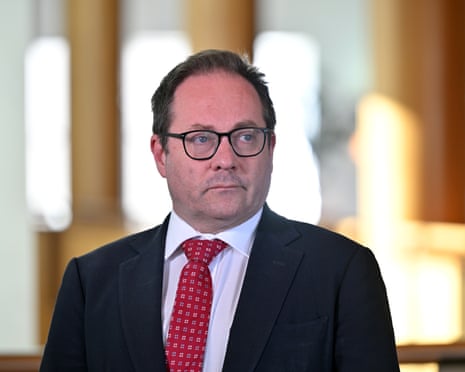
The legislative push coincides with growing bipartisan concern over the tone of public discourse. Treasurer Jim Chalmers delivered a sharp critique of digital platforms at the Political Book of the Year awards in Canberra, describing social media as an "assembly line for mass-production" of hate and toxicity.
Reflecting on an alleged physical attack against Indi MP Helen Haines outside her electorate office, Chalmers argued that contemporary political hostility is systematically monetized by algorithmic rage-bait. He highlighted a distinct rise in digital misogyny targeting women in public life, warning that the current digital ecosystem actively incentivizes extremism while penalizing nuance. Police have since charged a 43-year-old man in connection with the incident, while Haines recovers in hospital.
Environmental Commitments: The Push for a Swimmable Yarra River
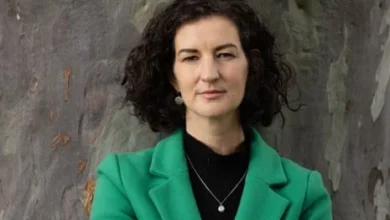
At the state level, the Victorian political arena saw a notable environmental pledge from the Victorian Greens, who announced a $70 million election commitment aimed at making Melbourne’s iconic Yarra River fully swimmable within the next decade.

The comprehensive plan allocates $50 million toward upgrading pollution and stormwater management infrastructure within the urban catchment zone. An additional $20 million would be distributed as grants to community organizations, environmental groups, and First Nations communities to support the ecological health of the river and its tributaries.
The proposal includes legislated targets to make sections of the river safe for swimming within five years and the entire waterway swimmable by 2036, backed by stricter penalties for industrial polluters and mandatory government progress reporting. Victorian Greens leader Ellen Sandell drew comparisons to European urban renewal efforts, such as swimming initiatives in the Seine in Paris, arguing that revitalizing the waterway is an achievable goal for Melbourne’s future.
The announcement builds upon recent momentum from local councils and Melbourne Water, which earlier in the month pledged a long-term vision to restore the river’s ecological health by 2050, nearly six decades after swimming was largely restricted due to industrial contamination in the 1960s.