U.S. Intelligence Memo Alleges Chinese State Security Recruited Executive to Target Nvidia CEO Jensen Huang

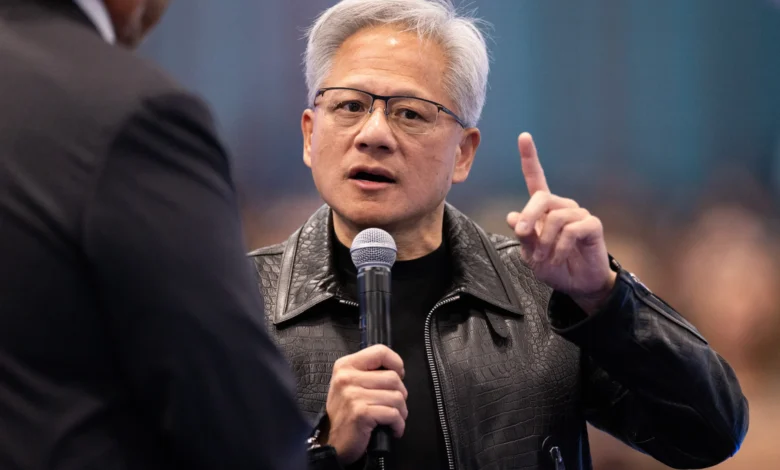
An intelligence memo circulated earlier this year has sparked intense scrutiny across geopolitical and technology sectors after alleging that a technology executive was recruited by China’s Ministry of State Security to spy on Nvidia Chief Executive Officer Jensen Huang. The revelation, initially brought to light by major investigative reporting and subsequently corroborated by multiple international outlets, highlights the growing convergence of national security, industrial espionage, and the global semiconductor supply chain amid escalating technological competition between the United States and China.
The document, which reportedly originates from U.S. intelligence assessments, places the spotlight on Alice Huang, an executive previously associated with Megaspeed, a Singapore-based technology firm. According to the reporting, the Chinese intelligence apparatus sought to leverage her professional and personal proximity to the head of one of the world’s most valuable and strategically significant technology companies. As advanced microprocessors become the vital currency of the artificial intelligence revolution, the integrity and security surrounding industry leaders like Jensen Huang have transformed into matters of paramount national interest.
The Anatomy of the Intelligence Allegations
The public disclosure of the intelligence memo unfolded in stages through prominent journalistic investigations. The New York Times was the first to publish details indicating that Jensen Huang had been explicitly targeted by Chinese intelligence operatives. Shortly thereafter, the Financial Times expanded upon those findings, reporting that the intelligence memo also detailed an alleged romantic relationship between Jensen Huang and Alice Huang.
While the allegations touch upon high-stakes espionage and personal connections, security experts emphasize that targeting executives of critical infrastructure and semiconductor giants is a standard playbook for foreign intelligence services seeking proprietary insights into artificial intelligence roadmaps, hardware architecture, and export compliance loopholes. Nvidia, whose graphics processing units (GPUs) form the backbone of modern generative AI development globally, occupies a uniquely influential position at the geopolitical crossroads of Washington and Beijing.
In response to the mounting media inquiries, an Nvidia spokesperson addressed the situation by characterizing Jensen Huang’s interactions with Alice Huang as "not unusual." Furthermore, the company firmly reiterated its commitment to corporate security protocols, emphasizing that Nvidia does not share classified or unauthorized proprietary information with its customers or external parties. The spokesperson also underscored the company’s domestic prioritization, stating that Nvidia sells "the first, best and most of our technology in America," highlighting adherence to strict regulatory frameworks governing international technology sales.
The Broader Ecosystem: Front Companies and Export Controls
The release of the intelligence memo coincides with heightened regulatory scrutiny regarding how advanced American hardware finds its way into restricted jurisdictions. In a parallel investigative report published by The New York Times, journalists scrutinized New Matrix, a Chinese enterprise that had successfully obtained authorization from the U.S. Commerce Department to purchase advanced Nvidia semiconductors.

However, upon physical inspection of the corporate address registered by New Matrix, reporters discovered what was described as "a hollow gray shell"—an empty office space lacking the operational footprint of a legitimate, high-volume technology importer. This discovery has amplified concerns among lawmakers and regulators that authorized entities may occasionally serve as front companies or intermediaries for blacklisted private equity firms, military-affiliated entities, or sanctioned enterprises seeking to circumvent stringent U.S. export controls.
The intersection of these two narratives—alleged espionage targeting a chief executive and concerns over porous export compliance mechanisms—illustrates the multifaceted pressure facing the semiconductor industry. As the United States implements sweeping export restrictions designed to maintain a technological lead in artificial intelligence and supercomputing, foreign intelligence agencies have increasingly turned to human intelligence (HUMINT) operations, supply chain infiltration, and complex shell corporations to bridge the capability gap.
Chronology of Events and Escalating Scrutiny
To understand the current crisis, it is necessary to examine the timeline of events leading up to the public disclosure of the intelligence findings:
- Early 2026: U.S. intelligence agencies circulate a classified memo detailing foreign intelligence operations targeting prominent American technology leaders, specifically highlighting the recruitment of Alice Huang by China’s Ministry of State Security.
- Mid-2026: Investigative journalists begin piecing together the scope of the intelligence assessment, focusing on the interactions between the targeted executive, Megaspeed, and Nvidia leadership.
- November 6, 2026: The New York Times publishes the initial report revealing that Jensen Huang was targeted by Chinese intelligence, based on the U.S. intelligence memo.
- Shortly After (November 2026): The Financial Times releases supplementary details from the memo, outlining the alleged personal connections between the individuals involved and prompting official statements from corporate representatives.
- November 7, 2026: Further reporting emerges regarding authorized export recipients like New Matrix, intensifying debate over the efficacy of the U.S. Commerce Department’s vetting processes for advanced semiconductor shipments.
This compressed timeline underscores how rapidly national security concerns can spill over into the public domain, forcing corporations to navigate delicate public relations and legal landscapes while managing global operations.
Industry Implications and the Future of Corporate Security
The allegations surrounding Nvidia and its leadership carry profound implications for the broader technology sector. As artificial intelligence evolves into a critical pillar of national power, executive leadership teams at companies like Nvidia, AMD, Intel, and TSMC are effectively treated as geopolitical assets.
- Heightened Executive Protection: Technology companies are reevaluating the physical and digital security protocols surrounding their C-suite executives. Travel to foreign jurisdictions, particularly regions with high strategic friction, is expected to face much stricter internal oversight and risk assessment.
- Stricter Compliance and Vetting: The discovery surrounding New Matrix’s physical office footprint is likely to trigger a severe legislative and regulatory backlash. Lawmakers are anticipated to pressure the U.S. Commerce Department and the Bureau of Industry and Security (BIS) to implement more rigorous, on-the-ground verification processes for any foreign entity applying to purchase high-end AI accelerators.
- Geopolitical Polarization: Incidents of this nature reinforce the decoupling narrative between Western and Eastern technology ecosystems. As trust deteriorates, compliance costs will inevitably skyrocket, forcing companies to adopt zero-trust architectures not only in their software and hardware development but also in their partnership and customer vetting pipelines.
Ultimately, the disclosure of the U.S. intelligence memo serves as a stark reminder of the high-stakes environment in which modern technology enterprises operate. While Nvidia continues to defend its operational integrity and emphasize its compliance with American regulatory frameworks, the episode highlights that the battle for technological supremacy is fought not only in research laboratories and legislative chambers, but also through the complex web of human intelligence and global corporate networks.