Tragic Rampage in Kraków Left Six Dead and Dozens Injured as Prime Minister Donald Tusk Condemns Unprecedented Act of Terrorism

The historic cultural heart of Poland was plunged into profound shock and sorrow following a devastating mass shooting that left six people dead and over a dozen injured in Kraków’s bustling Main Market Square. The perpetrator, identified by authorities as a 25-year-old Polish national with known ultranationalistic leanings, opened fire indiscriminately from a moving vehicle into crowds of weekend tourists and locals. The tragedy, which has sent shockwaves across Europe, prompted Prime Minister Donald Tusk to categorize the event unequivocally as an act of terrorism—a grim milestone for a nation unaccustomed to violence of such unprecedented magnitude.
As the city reels from the onslaught, international leaders have expressed deep solidarity, while domestic security agencies scramble to uncover the full scope of the radicalization network that may have motivated the shooter. The incident not only shatters Poland’s perception of domestic safety but also raises urgent questions regarding the radicalization of youth through fringe far-right ideologies and the accessibility of high-powered weaponry.
Chronology of the Attack and Police Intervention
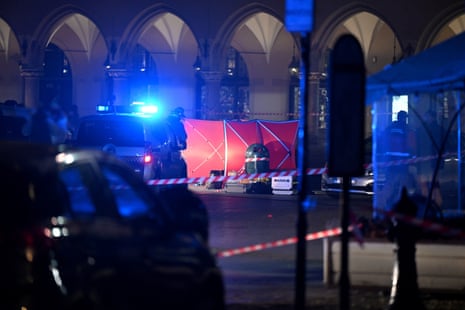
The sequence of horrifying events began late Saturday afternoon, transforming a peaceful weekend in one of Europe’s most visited cultural destinations into a war zone. At approximately 3:00 PM local time (2:00 PM GMT), emergency dispatchers began receiving frantic calls reporting that a dark-colored vehicle had breached the pedestrian-heavy zone of Kraków’s Main Market Square.
According to eyewitness testimonies and preliminary police reconstructions, the driver rolled down the window and began firing indiscriminately into the crowds using an AR-15 semi-automatic rifle. Konrad, a witness who spoke with local media outlet Interia, recounted the terrifying moments: “I saw shots being fired from the driver’s side window, and smoke was coming out. I ran to the police station in the main market square; when I burst inside, it was full of people hiding on the floor.”

Another witness, a 67-year-old man identified only as Julek, narrowly missed the line of fire. “If we had been two minutes earlier, we might have been shot,” he told Reuters, describing how the vehicle abruptly appeared, unleashed a barrage of bullets, and sped away from the immediate scene.
Law enforcement response was swift. Officers converged on the area, engaging the perpetrator in a high-stakes confrontation. The gunman was shot and wounded by police before being safely detained and transported under heavy guard to a local hospital. During the firefight and subsequent security operations, two police officers sustained injuries, with one listed in serious condition.
Casualties and International Toll
Polish police chief Marek Boron confirmed during a late-evening press briefing that the death toll had climbed to six victims, comprising four women and two men. Among the confirmed dead are three Polish women and one British national, highlighting the international footprint of the victims who happened to be visiting the historic square. Two other fatalities remain officially unidentified pending forensic analysis.
The gravity of the assault extended far beyond the deceased. At least 16 people were hospitalized with varying degrees of injuries. Interior Minister Marcin Kierwinski revealed that five of the hospitalized survivors are foreign nationals, underscoring the cosmopolitan nature of Kraków’s tourism sector. Among the wounded foreigners is a Portuguese woman, whose condition was officially confirmed by the Portuguese Foreign Ministry as she receives ongoing hospital care.
In total, 15 to 16 individuals suffered trauma, ranging from gunshot wounds to injuries sustained during the chaotic stampede as crowds scrambled for cover behind historic monuments, outdoor cafes, and surrounding alleyways.
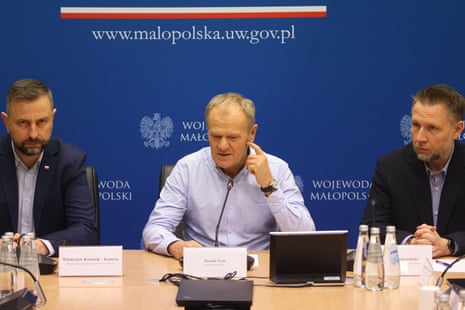
Investigation Focuses on Far-Right Extremism and Family Tragedy
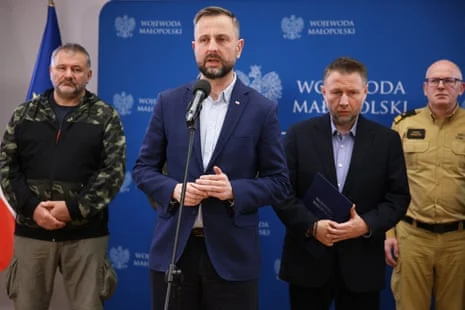
As investigators pieced together the perpetrator’s background, senior government officials disclosed alarming details regarding his ideological leanings and domestic life. Interior Minister Kierwinski stated unequivocally during a press briefing that preliminary evidence strongly suggests the 25-year-old Polish gunman was heavily influenced by far-right, ultranationalistic ideologies.
“Everything points to the fact that the shooter was influenced by far-right ideology, a matter that will also be subject to investigation,” Kierwinski declared, noting that personnel from the Internal Security Agency (ABW) had been deployed alongside local police units to secure both the crime scene and the suspect’s residence.
In a grim escalation of the investigation, Prime Minister Donald Tusk announced that authorities utilizing drone surveillance discovered three additional bodies—two women and one man—inside the gunman’s private home. Officials believe these victims are members of the shooter’s immediate family. The discovery of these additional bodies raised profound concerns regarding whether the attack began as a domestic dispute or a premeditated multi-stage rampage before spilling into the public square.
Police spokesperson Andrzej Fijolek confirmed to broadcaster TVN 24 that the assailant possessed a legally obtained firearms license, which allowed him to acquire the AR-15 rifle used in the atrocity. This revelation has already sparked fierce domestic debate regarding Poland’s gun control laws, background check efficacy, and the monitoring of individuals exhibiting extremist tendencies. Furthermore, Defense Minister Wladyslaw Kosiniak-Kamysz felt compelled to issue a public denial addressing rampant social media rumors, firmly clarifying that the suspect had never served as a soldier in the Polish Armed Forces and had no formal ties to the military.
Official Reactions and Domestic Appeals for Calm
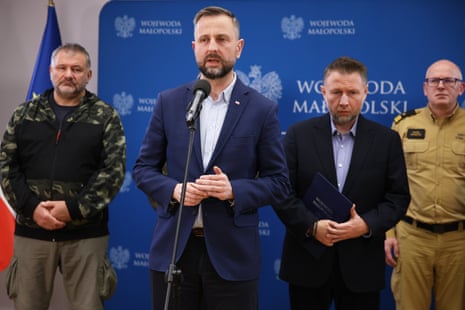
The magnitude of the violence elicited immediate, solemn responses from Poland’s highest-ranking political figures. Prime Minister Donald Tusk, addressing the nation from Kraków, did not mince words regarding the classification of the assault.
“Until now in Poland we haven’t had such drastic cases of terrorism,” Tusk told reporters. “That’s what we have to call this cruel attack on people’s lives here in Krakow.”
In subsequent statements on social media, Tusk praised the bravery of the responding officers who risked their lives to neutralize the threat. He also issued a direct plea to political factions across the spectrum: “My deepest condolences to the families and loved ones of the victims… And a heartfelt appeal to politicians of all stripes: do not exploit this tragedy. We will establish all the circumstances of this crime.”
Justice Minister Waldemar Żurek similarly appealed for national unity and calm, assuring the public that the state apparatus would ensure the perpetrator faces the harshest possible judicial penalties. “A terrible tragedy in Kraków’s Main Market Square. I share the grief of the families and loved ones of the victims… The state is taking action,” Żurek stated.
Local leadership in Kraków has moved quickly to honor the victims while signaling resilience. Mayor Łukasz Gibała announced that the city would observe a period of official mourning extending through Wednesday. Despite the heartbreak, Gibała struck a defiant and reassuring tone in a video address posted to social media, vowing that Kraków would remain a welcoming international destination. “The square will belong to us again,” Gibała affirmed.
International Solidarity
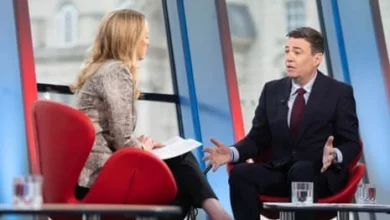
The attack reverberated far beyond Poland’s borders, prompting expressions of grief and solidarity from European leaders and international counterparts. UK Prime Minister Andy Burnham took to social media to voice his horror at the loss of a British citizen and express solidarity with the Polish nation.
“I’m shocked and saddened by the appalling shooting in Kraków today,” Burnham wrote. “My thoughts are with the families of those who have lost their lives, everyone injured and all those affected by this senseless violence. The United Kingdom stands in solidarity with the people of Poland.”
Broader Implications and Societal Impact
The Kraków shooting marks a critical inflection point for Polish society and security policy. Poland has historically prided itself on maintaining low rates of violent street crime and a relative immunity to large-scale extremist mass shootings compared to other Western nations. The revelation that a radicalized young citizen could legally acquire an assault-style rifle and execute a vehicular drive-by shooting in a premier public space lays bare vulnerabilities in domestic intelligence sharing, radicalization monitoring, and firearm regulation.
Security analysts suggest that the incident will likely accelerate legislative efforts to tighten background checks, reevaluate the criteria for issuing firearms licenses to individuals exhibiting extremist sympathies, and enhance surveillance on fringe online subcultures propagating far-right extremism.
As forensic teams continue to process the extensive evidence gathered from both the Main Market Square and the gunman’s residence, the city of Kraków prepares to bury its dead. The collective trauma left in the wake of the November 7 attack will undoubtedly reshape Poland’s security landscape for years to come, forcing a reckoning with domestic radicalization and the tragic fragility of public safety in modern Europe.